Preview
 Send
Send Share
Share
 Details

 Download
 Similars
 X-Ray
X-Ray Diaporama
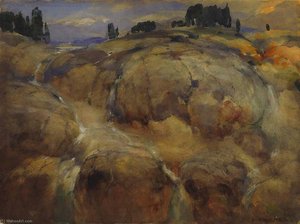
Maryland Wheat Fields
 39.0 x 51.0 cm
 Read More
Giclée / Art Print
Museum-quality giclée or canvas print with fast production and flexible finish options. ( Buy Hand Made Painting Buy Image)




































Pick from our preset sizes that match the artwork's original proportions.

You may enter your own dimensions to fit a specific frame or space. If your selected size does not match the original image's proportions, we will either crop the artwork or extend the image with a mirrored or solid-fill edge. A digital mockup will be sent for your approval before production begins.
Please note that the on-screen preview does not reflect the actual cropping or extension. Only the mockup will accurately show the final composition.
While custom sizes are available, we recommend selecting a dimension from the predefined list to preserve the original proportions.
Worldwide Delivery () in 2 weeks instead of standard 4/5 weeks. (27 August)

Free Worldwide Express Shipping

High-Quality Linen Canvas

Full Shipping Insurance

Customs Tax Refund Guarantee

True Color Matching Guarantee

60-Day Return Policy (Defects Only)

100% Money-Back Guarantee

Bulk Discount Offer
 Glass option is only available in size under 110 CM

Maryland Wheat Fields
Giclée / Art Print
Reproduction Size
-


Total Price
$ 81
The Artist and His Work
William Henry Holmes was a talented artist known for his watercolor paintings, including Haymaking Scene, Michigan, Field of Blossoms, and Blossoms. His work can be found in the Smithsonian American Art Museum in the United States. The museum is part of the Smithsonian Institution, a renowned cultural institution that manages 20 museums and galleries, as well as the National Zoological Park. For more information on the Smithsonian's art collections, visit The Smithsonian Museums and their Art Collections.Historical Context
The Maryland Wheat Fields painting was created during a time when the United States was grappling with the issue of slavery. The history of slavery in the United States is complex and tumultuous, with the institution being practiced in various forms until its abolition in 1865. The painting serves as a reminder of the beauty and tranquility that existed alongside the turmoil of the time.Key Features of the Painting
Some key features of the Maryland Wheat Fields painting include:- The use of watercolor to create a soft, serene atmosphere
- The depiction of a wheat field with a house in the background, showcasing the relationship between nature and human settlement
- The scattered clouds in the sky, adding depth and texture to the painting
The Maryland Wheat Fields painting is a beautiful example of William Henry Holmes' ability to capture the beauty of nature. Its serene and picturesque depiction of a wheat field makes it a must-see for anyone interested in watercolor paintings or the art of the Smithsonian American Art Museum.
Artist Biography
Early Life and Education
- Born: Harrison County, United States of America (1846)
- Died: 1933
- William Henry Holmes was born on a farm near Cadiz, in Harrison County, Ohio, to Joseph and Mary Heberling Holmes on December 1, 1846.
- He graduated from the McNeely Normal School, Hopedale, Ohio in 1870.
- Briefly taught drawing, painting, natural history, and geology at the school.
- Received an honorary A.B. (Bachelor of Arts) degree from the school in 1889.
- Received an honorary Doctor of Science degree from The George Washington University in 1918.
Career as Artist, Illustrator and Geologist
- In 1871, he went to Washington, D.C., to study art under Theodore Kaufmann.
- Employed by the Smithsonian Institution drawing and sketching fossil shells and shells of live mollusks.
- Became an artist/topographer with the government survey of Ferdinand Vandeveer Hayden in 1872, replacing Thomas Moran.
- First trip out West was to Yellowstone National Park.
- Gained a national reputation as a scientific illustrator, cartographer, pioneering archaeologist, and geologist during the 1870s.
- His work on the laccolith influenced Grove Karl Gilbert's own work.
- Worked closely with photographer William H. Jackson.
- Helped produce Hayden’s Geological and Geographical Atlas of Colorado (1877, 1881).
- Studied at Munich, Germany under Frank Duveneck to further his art studies.
- Took lessons in "museum making" from Adolphe B. Meyer of Dresden's Anthropology Museum.
- Assigned to Clarence Dutton as a geologist and illustrator after returning to the U.S.
- Illustrated the atlas for Dutton’s Tertiary History of the Grand Canyon District (1882).
- Created a triptych panorama of the Grand Canyon from Point Sublime, considered a masterpiece.
Archaeological Work and Ethnological Studies
- Began studying Ancestral Pueblo culture remains in Utah in 1875.
- His models of ancient Indian ruins were displayed at the Centennial International Exhibition in Philadelphia.
- Became an expert in prehistoric pottery, shell art, textiles, and Native American arts.
- Discovered and reported Indian petroglyphs in central West Virginia in 1889.
- Published "Art in Shell of the American Indians" (1883) and "Pottery of the Ancient Pueblos" (1886).
- Studied the Etowah Indian Mounds of the Mississippian culture in Georgia.
- Published his synthesis of pottery in 1903.
Museum Directorship and Later Life
- Served as head curator of anthropology at the U.S. National Museum (1897-1932).
- Chief of the Bureau of American Ethnology (1902–1909).
- Director of National Gallery of Art (now Smithsonian American Art Museum) (1920–32).
- Assembled exhibits of Indian arts from the Northwest Coast.
- Published "Handbook of Aboriginal American Antiquities" (1919).
- Lived in Royal Oak, Michigan upon retirement in 1932.
- Died April 20, 1933.
Legacy and Significance
- Known for his contributions to scientific illustration, archaeology, and anthropology.
- Influential figure in establishing professional archaeology in the United States.
- His work on the antiquity of humans in the Americas had a conservative influence on archaeological research.
- A "Renaissance Man" with diverse talents and interests.
- His detailed illustrations significantly contributed to geological and anthropological understanding.

William Henry Holmes
1846 - 1933 , United States of America
Quick Facts
- Artistic Movement Or Style: Scientific Illustration
- Artists Who Influenced This Artist:
- Theodore Kaufmann
- Frank Duveneck
- Date Of Birth: December 1, 1846
- Date Of Death: April 20, 1933
- Full Name: William Henry Holmes
- Nationality: American
- Notable Artworks:
- Long's Peak, Colorado, 1874
- Unmodified Rock Creek, about 1910
- Place Of Birth: Cadiz, Ohio, USA