Preview
 Send
Send Share
Share
 Details

 Download
 Similars
 X-Ray
X-Ray Diaporama
 Stats
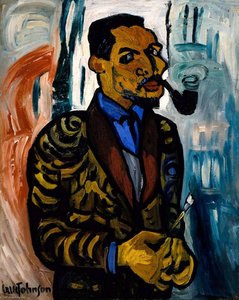
StatsSelf Portrait with Pipe
 Oil On Canvas
- WallArt
- Expressionism
 1937
1937- Modern
 89.0 x 71.0 cm
 Read More
Hand Made Oil Reproduction
Hand-painted oil on canvas in your size and frame, made to order by our artists. ( Switch to Print Switch to Digital Image)




































Pick from our preset sizes that match the artwork's original proportions.

You may enter your own dimensions to fit a specific frame or space. If your selected size does not match the original image's proportions, we will either crop the artwork or extend the painting with additional hand-painted elements. A digital mockup will be sent for your approval before production begins.
Please note that the on-screen preview does not reflect the actual cropping or extension. Only the mockup will accurately show the final composition.
While custom sizes are available, we recommend selecting a dimension from the predefined list to preserve the original proportions.
After order, OriginalUniqueArt.com team will email client for instructions and provide a mockup preview
Worldwide Delivery () in 3/4 weeks instead of standard 5 weeks. (12 September). No compromise on quality.

Free Worldwide Express Shipping

High-Quality Linen Canvas

Full Shipping Insurance

Customs Tax Refund Guarantee

True Color Matching Guarantee

100-Day Return Policy (Defects Only)

100% Money-Back Guarantee

Bulk Discount Offer
 Glass option is only available in size under 110 CM

Self Portrait with Pipe
Reproduction Medium
Reproduction Size
-


Total Price
$ 300
A Visionary Encounter: The Soul of William H. Johnson
In the profound depths of Self Portrait with Pipe, created in 1937, we encounter not merely a likeness, but a visceral manifestation of identity and creative spirit. This masterpiece by the legendary American artist William H. Johnson serves as a window into the psyche of a man navigating the complexities of the Harlem Renaissance. The portrait captures a Black man, rendered with a striking, stylized intensity that leans into the emotive power of early Expressionism. As he holds both a pipe and a paintbrush, the subject invites us into his private sanctuary of thought and creation, presenting himself as both the observer and the observed. It is a work that demands attention, pulling the viewer into a world where the boundaries between reality and abstraction begin to dissolve.
The technique employed in this piece is nothing short of hypnotic. Johnson utilizes an impasto approach, applying thick, rhythmic layers of oil paint that transform the canvas into a tactile landscape. Through the masterful use of both brush and palette knife, he creates a surface where light and shadow dance across raised ridges of pigment. The color palette is intentionally vibrant and almost jarring, utilizing bold, angular lines to define a face that is elongated and features that are beautifully exaggerated. This deliberate distortion does not seek to mimic photographic reality; instead, it seeks to communicate an internal truth. The flattened perspective and the swirling, rhythmic patterns within the clothing create a sense of dynamic movement, as if the very energy of the artist’s soul is vibrating through the paint itself.
Symbolism and the Weight of History
Beyond its striking visual surface, the painting is rich with symbolic resonance. The pipe serves as a classic emblem of contemplation and quiet introspection, suggesting a moment of pause amidst the turbulent creative process. Paired with the paintbrush, these tools signify the artist's vocation and his role as a chronicler of his culture. For Johnson, whose work was deeply informed by the spiritual and oral traditions of the African American experience, every stroke carries the weight of resilience. The bold, geometric shapes and the heavy, textured application of paint can be seen as a reflection of the strength required to forge an identity within the social landscape of 1930s America.
For the discerning collector or interior designer, this reproduction offers more than just aesthetic beauty; it provides a profound emotional anchor for any space. The artwork’s ability to evoke themes of creativity, introspection, and cultural pride makes it a compelling centerpiece for those seeking art that tells a story. Whether placed in a contemporary gallery setting or a sophisticated residential study, Self Portrait with Pipe radiates an aura of intellectual depth and historical significance. It is a piece that does not merely decorate a wall—it commands the room, offering a timeless connection to one of the most vital voices in American art history.
Artist Biography
A Tapestry of Resilience: The Soulful Vision of William H. Johnson
The story of William Henry Johnson is one of profound transformation, a journey that began in the humble landscapes of Florence, South Carolina, and ascended to the heights of the international modernist stage. Born in 1901 into a poor African American family during the era of Jim Crow, Johnson’s early life was shaped by the rhythms of the American South—the spiritual echoes of gospel music, the richness of oral storytelling, and the deep-seated traditions of his heritage. This foundational connection to Black culture would later serve as the heartbeat of his most enduring works, providing a wellspring of imagery that transcended mere representation to reach the realm of the universal.
His path toward artistic mastery was paved with immense personal determination. Moving to New York at the age of seventeen, Johnson worked tirelessly to fund his education at the prestigious National Academy of Design. In the halls of the academy, he mastered the rigorous, classical standards of European tradition, yet his spirit remained tethered to the vibrant textures of his roots. This tension between formal academic training and a yearning for cultural authenticity would become the defining characteristic of his evolving style.
From European Modernism to Folk Art Mastery
The late 1920s marked a pivotal departure in Johnson’s career as he traveled to Europe, immersing himself in the avant-garde movements of France. It was during this period of wandering and discovery that his brushwork began to shed its classical constraints, embracing the emotional intensity of Expressionism. His time in Scandinavia, particularly his marriage to the Danish artist Holcha Krake, introduced him to the aesthetics of primitivism and folk art. These influences acted as a catalyst, prompting him to simplify forms and utilize bold, unadorned colors to convey deeper psychological truths.
Upon returning to the United States in 1938, Johnson emerged as a vital voice of the Harlem Renaissance. He did not merely observe African American life; he celebrated it through a unique visual language that blended modernist abstraction with a soulful, folk-inspired aesthetic. His canvases became windows into the dignity of the Black experience, utilizing techniques such as impasto to create palpable textures that mirrored the grit and grace of his subjects. Whether depicting the rhythmic energy of dancers in works like Jitterbugs (III) or the serene stillness of a seated figure, Johnson’s work possessed an unmistakable emotional clarity.
A Legacy of Cultural Significance
The significance of William H. Johnson lies in his ability to weave together disparate worlds—the spiritual and the secular, the local and the global, the classical and the primitive. His oeuvre is a monumental archive of African American identity, featuring subjects that range from historical icons like Harriet Tubman to the everyday beauty of rural landscapes and social gatherings. Notable masterpieces such as The Black Christ demonstrate his profound use of Yoruba symbolism, bridging the gap between ancestral spirituality and contemporary struggle.
Though he faced periods of being overlooked by the mainstream art establishment during his lifetime, Johnson’s legacy has undergone a powerful reclamation. Today, he is recognized not just as a painter of his era, but as a visionary who transformed the language of modernism to honor the resilience of his people. His life remains a testament to the power of art to preserve history, celebrate identity, and find beauty within the most complex human experiences.

william h. johnson
1901 - 1970 , United States of America
Quick Facts
- Artistic Movement Or Style: Harlem Renaissance; Expressionism
- Artists Or Movements Influenced By This Artist: ['Expressionism']
- Artists Who Influenced This Artist: ['John Wollaston']
- Date Of Birth: 1901
- Full Name: William Henry Johnson
- Nationality: American
- Notable Artworks:
- Sir William Johnson Presenting Medals...
- William Johnson Fox
- Place Of Birth: Florence, United States of America
Related Articles
William H. Johnson: A Life Painted in Bold Strokes – Race, Identity & Modernism
Explore the powerful life & art of William H. Johnson – a pivotal American painter who captured African American experiences with bold expressionism and folk art style. Discover his legacy at OriginalUniqueArt.
William Henry Hunt: Luminosity & Detail in Early 19th-Century Watercolour Painting
Explore the captivating watercolour paintings of William Henry Hunt (1790-1864). Discover his mastery of naturalistic detail, luminous technique & influence on 19th-century art. Learn about collecting Hunt's work and its enduring value.

Dark Masterpieces: 10 Iconic Paintings Dominated by Black Tones |
Explore 10 iconic paintings dominated by black tones, from Rembrandt’s chiaroscuro to Goya's dark expressions. Discover the stories behind these masterpieces & find museum-quality art reproductions for your home at .
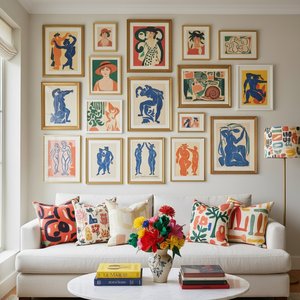
Henri Matisse's Masterpieces: Explore 25 Iconic Paintings & Art Decor Ideas
Journey through Henri Matisse's 25 most iconic paintings! Explore Fauvism, vibrant colors & the stories behind masterpieces like 'The Dance'. Find museum-quality art reproductions and curated decor ideas to elevate your space. Discover all masterpieces on OriginalUniqueArt.com.
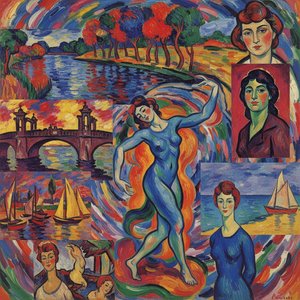
Fauvism's Boldest Visions: 10 Masterpieces That Revolutionized Modern Art | OriginalUniqueArt
Explore 10 Fauvist masterpieces by Matisse, Derain & Vlaminck that ignited Modern Art! Discover bold colors, expressionist landscapes & the history of this revolutionary movement. Find museum-quality prints at OriginalUniqueArt.com.