
 Preview
 Send
Send Share
Share
 Details

 Download
 Similars
 X-Ray
X-Ray Diaporama
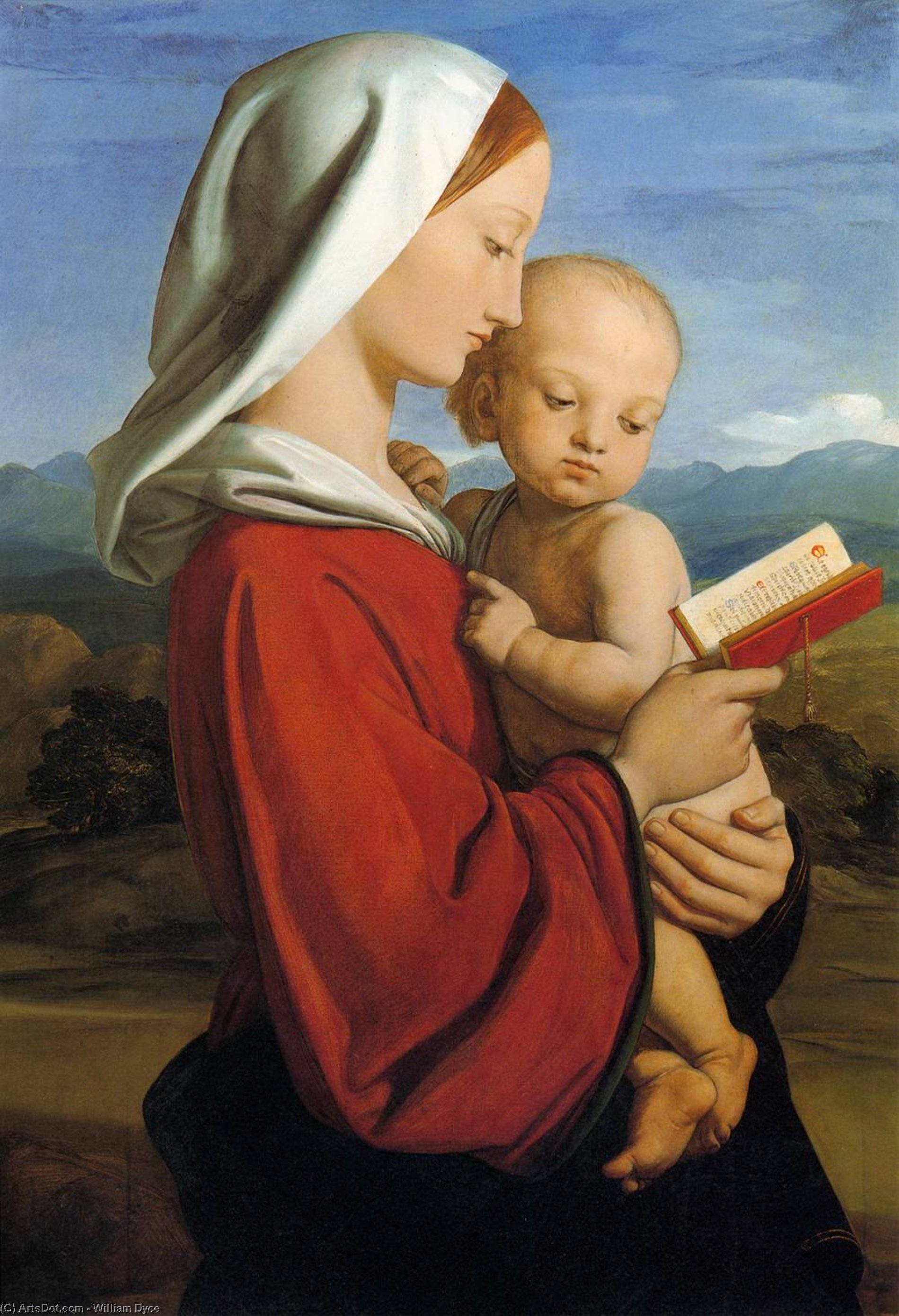
The Virgin and Child
 Oil On Canvas
- WallArt
- Romantic Revival
 1845
1845- 19th Century
 81.0 x 58.0 cm
 Royal Collection
 Read More
Purchase a high-resolution, enhanced digital image, far superior to the online preview.
Each file is meticulously prepared by our in-house specialists using advanced tools and expert manual retouching. We ensure every image has exceptional clarity, precise color accuracy, and fine detail.
The final file is delivered via email within 72 hours, optimized for immediate use in professional, editorial, and print environments. This is the same quality trusted by top-tier design studios, publishers, and galleries.
Digital Image
Download a high-resolution file for personal display, printing, and creative projects. ( Buy Print Buy Hand Made Painting)
Included in Every Digital Image Order
Expert Digital Delivery, Guaranteed
When you choose OriginalUniqueArt.com, you're not just getting an image - you're receiving a professionally enhanced digital artwork, crafted with precision and backed by a satisfaction guarantee. Here's everything that comes with your order, automatically:

Fast Email Delivery
Your high-resolution digital image file will be emailed to you within 72 hours of ordering - ready for immediate use.

AI-Enhanced Digital File
Your artwork is professionally optimized using advanced AI tools and manual editing, ensuring maximum detail, clarity, and color accuracy.

Free Lifetime Re-Delivery
Accidentally deleted or lost your file? No worries - we'll resend it to you anytime, free of charge.

No Import Fees - Ever
Enjoy your artwork instantly with zero customs, duties, or delivery fees - digital downloads are always tax-free.

Color Accuracy Guarantee
We ensure your digital image reflects the original colors as closely as possible using professional tools and color management.

60-Day Satisfaction Guarantee
If you're not satisfied with your digital image, we'll revise it or refund 100% within 60 days - no questions asked.

100% Money-Back Guarantee
Not satisfied? Get a full refund within 60 days of receiving your digital file - no questions asked.

Bulk Order Discounts
Buy 3 images, save 10% - Buy 5, save 15% - Buy 10+, save 20%. Great for creative projects, galleries, and agencies.
Collectible Description
A Tender Devotion Against a Grand Backdrop
This evocative painting, depicting The Virgin and Child, immediately draws the viewer into a moment of profound intimacy. At its heart lies the tender connection between mother and son; Mary cradles her young boy with palpable love and exquisite care. Her face, veiled in delicate fabric, speaks volumes of purity and modesty, lending an air of timeless grace to the sacred subject matter. The composition is masterfully balanced, guiding the eye across the gentle curve of their embrace while simultaneously expanding outward into the dramatic vista behind them.
The Majesty of Setting: Landscape and Symbolism
What elevates this piece beyond a simple portrait is the breathtaking inclusion of the mountainous landscape that frames the figures. These imposing peaks, visible on both sides, do more than merely decorate the background; they lend the scene an epic scope, suggesting a journey or perhaps a moment of quiet exile amidst grand natural forces. The mountains serve as a powerful counterpoint to the soft humanity in the foreground. Symbolically, this juxtaposition—the eternal, enduring nature of the landscape against the fleeting, perfect bond of motherhood—lends the artwork a deep resonance, inviting contemplation on themes of divine protection and human connection.
William Dyce's Brushwork and Artistic Hand
Painted in 1845 by William Dyce, an artist whose career spanned the vibrant artistic currents of the mid-Victorian era, this work showcases his skilled handling of both portraiture and atmospheric depth. Dyce, trained rigorously at esteemed academies, imbued his subjects with a polished realism characteristic of the period, yet infused it with a romantic sensibility. Observe how the light seems to catch the folds of Mary's veil and illuminate the smooth skin of the child—this careful attention to texture and luminosity speaks to a high degree of technical mastery. The technique allows the viewer to feel the weight of the fabric and the cool air emanating from the distant peaks.
Creating an Atmosphere for Your Space
For the discerning collector or designer, this reproduction offers more than just wall decor; it offers a focal point steeped in narrative emotion. Its dimensions of 81 x 58 cm allow it to anchor a significant space—perhaps a formal drawing-room, a chapel niche, or an elegant study. The blend of sacred subject matter with dramatic naturalism ensures that the piece feels both reverent and beautifully integrated into contemporary interior design schemes. It is a work that whispers stories of devotion while commanding attention through its sheer scale and emotional depth.
Artist Biography
Early Life and Artistic Training
William Dyce (1806–1864) was born in Aberdeen, Scotland, the son of Dr William Dyce FRSE, a physician and fellow of the Royal Society, and Margaret Chalmers, daughter of a wealthy banker. His family fostered an appreciation for learning and culture, equipping him with a strong foundation for his future artistic pursuits. He attended Marischal College, Aberdeen’s university, where he earned a Master's degree at just sixteen years old—a remarkable achievement for the time. Recognizing his talent for design, Dyce pursued formal training at the Royal Academy Schools in Edinburgh and London, immersing himself in the study of classical art and mastering techniques vital to his later career. His formative years were marked by exposure to influential artistic ideas circulating within Scotland and England, shaping his aesthetic sensibilities and establishing him as a student deeply committed to artistic excellence.Italian Influences and Artistic Development
Dyce’s first major journey abroad occurred in 1825 when he travelled to Rome—a pivotal moment that irrevocably altered the trajectory of his artistic life. Inspired by the grandeur of Renaissance art and captivated by the spirit of the Nazarene painters, Dyce spent nine months diligently studying the works of Titian and Poussin, absorbing their compositional principles and mastering their masterful use of colour. This immersion in Italian artistic tradition profoundly impacted his style, fostering a preference for detailed observation and conveying profound spiritual contemplation—characteristics that would become hallmarks of his oeuvre. He returned to Aberdeen in 1826, continuing to hone his skills as a painter and producing several notable works, including Bacchus Nursed by the Nymphs of Nysa, which garnered considerable acclaim.Edinburgh Years and Portraiture
Dyce established himself in Edinburgh as a portraitist during the mid-1830s, securing commissions from prominent figures of Scottish society. His meticulous attention to detail—particularly his ability to capture subtle expressions and psychological nuances—earned him considerable renown. He skillfully blended classical influences with Romantic sensibilities, producing portraits that were both aesthetically refined and emotionally resonant. Simultaneously, he championed the cause of art education, advocating for the establishment of a school of design in Edinburgh—a position he held until 1843, where he oversaw its expansion and modernization.London Engagement and Architectural Patronage
In 1837 Dyce moved to London, accepting the role of Master of the School of Design at Somerset House. This marked a significant turning point in his career, propelling him into the heart of Victorian artistic discourse and securing him access to influential patrons—most notably Prince Albert. He undertook extensive research into art education practices abroad, informing the creation of the “South Kensington System,” which would dominate English art instruction for decades to come. Dyce’s involvement extended beyond pedagogical endeavors; he served as a consultant on architectural projects, including the design of the new Houses of Parliament—a project that showcased his mastery of fresco painting and cemented his reputation as one of Britain's foremost artists.Major Achievements and Legacy
Dyce’s artistic legacy rests primarily upon two monumental undertakings: the decoration of Westminster Abbey and the creation of the Houses of Parliament. His frescoes in Westminster Abbey—particularly Neptune Resigning to Britannia—represent a triumph of Victorian ambition and artistic vision, embodying the grandeur of imperial Britain and demonstrating Dyce's unparalleled skill in fresco technique. However, his most celebrated work remains Pegwell Bay, Kent—a landscape painting that exemplifies Dyce’s meticulous observation of nature and his ability to convey profound emotional depth. Furthermore, Dyce’s contributions to art education—the establishment of the Royal College of Art and his advocacy for innovative pedagogical approaches—have endured as a testament to his unwavering belief in the transformative power of artistic training. William Dyce remains an artist whose work embodies the spirit of Victorian Britain—characterized by intellectual curiosity, moral earnestness, and a fervent devotion to elevating human culture.
William Dyce
1806 - 1864 , United Kingdom
Quick Facts
- Artistic Movement Or Style: Pre-Raphaelites
- Artists Or Movements Influenced By This Artist: ['Nazarenes']
- Artists Who Influenced This Artist:
- Friedrich Overbeck
- John Ruskin
- Date Of Birth: 1806-09-19
- Date Of Death: 1864-02-14
- Full Name: William Dyce
- Nationality: Scottish
- Notable Artworks:
- Pegwell Bay, Kent
- The Madonna and Child
- Dunstan separating Edwy and Elgiva
- Place Of Birth: Aberdeen, United Kingdom

