Preview
 Send
Send Share
Share
 Details
 Guide
Guide

 Download
 Similars
 X-Ray
X-Ray Diaporama
 Stats
StatsMay Day


 Read More
Hand Made Oil Reproduction
Hand-painted oil on canvas in your size and frame, made to order by our artists. ( Switch to Print Switch to Digital Image)




P118B $10

P118H $10

P118W $10

P438Z $10

P508JH $12

P508YH $12

P805H $10

P805Z $10

P919BZ $10

P919G $10

P919XJ $10

P959ZH $10

P968JZ $12

W106C $8

W218G $10

W218JH $8

W218Y $10

W307PJ $10

W316G $10

W316PJ $8

W316Y $10

W398PJ $8

W4111J $10

W500HY $15

W500JH $15

W692G $12

W849H $8

W940BG $15

W953PJ $8




Pick from our preset sizes that match the artwork's original proportions.

Type the width and the height you need, to fit your frame or your wall. This is hand-painted, so for a size with a different shape the artist can paint a bit more around the picture, or cut a bit — you choose. We send you a digital mockup to approve before the painting starts. The picture shown on this page does not show the real result — only the mockup does.
After order, OriginalUniqueArt.com team will email client for instructions and provide a mockup preview
Worldwide Delivery () in 3/4 weeks instead of standard 5 weeks. (24 October). No compromise on quality.

Free Worldwide Express Shipping

High-Quality Linen Canvas

Full Shipping Insurance

Customs Tax Refund Guarantee

True Color Matching Guarantee

100-Day Return Policy (Defects Only)

100% Money-Back Guarantee

Bulk Discount Offer
 Glass option is only available in size under 110 CM

May Day
Reproduction Medium
Reproduction Size
-


Total Price
$ 300
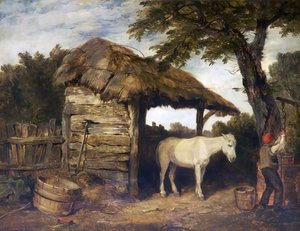
A Snapshot of Victorian Joy: William Collins’ “May Day”
William Collins' "May Day," painted in 1812, isn’t merely a depiction of a festive scene; it’s a vibrant distillation of the spirit of early 19th-century England. The painting captures a moment of unbridled joy and communal celebration on May Day, a traditional holiday marking the arrival of summer. Collins masterfully transports us to a sun-drenched meadow, teeming with figures engaged in a delightful array of activities – children playing games beneath a magnificent ancient tree, adults conversing and sharing laughter, and musicians adding to the lively atmosphere. The scene pulsates with an energy that feels both authentic and idealized, reflecting a yearning for simpler times and the pleasures of rural life.
The painting’s strength lies not just in its subject matter but also in Collins' skillful handling of light and color. He employs a rich palette of warm hues – ochres, greens, and blues – to create an immersive visual experience. Sunlight streams through the branches of the tree, bathing the figures in a golden glow, while subtle shadows add depth and dimension to the composition. The artist’s brushwork is loose and expressive, conveying a sense of movement and spontaneity that perfectly captures the essence of a lively gathering.
A Window into Victorian Society
“May Day” offers a fascinating glimpse into Victorian society. The painting was created during a period of significant social change in England, marked by industrialization, urbanization, and growing anxieties about class divisions. Collins’ choice to depict a scene of rural merriment can be interpreted as a nostalgic reaction against the rapid pace of modernization and a longing for the values associated with traditional village life. The inclusion of diverse figures – men, women, and children from various social backgrounds – suggests a desire for inclusivity and harmony within the community.
Furthermore, the painting’s setting—a grand old tree at the heart of the scene—holds symbolic weight. Trees have long been associated with life, growth, and connection to nature in art and folklore. In “May Day,” the tree serves as a focal point, representing not only the abundance of the natural world but also the enduring strength and vitality of the community itself.
The Painter’s Technique: Oil on Canvas
Collins executed "May Day" in oil on canvas, a medium that allowed him to achieve remarkable detail and luminosity. The texture of the paint is visible, adding a tactile quality to the image and enhancing its sense of realism. He skillfully employed layering techniques to create depth and perspective, drawing the viewer’s eye into the heart of the scene. Note the meticulous rendering of the clothing, the intricate details of the tree's bark, and the subtle variations in skin tone – all testament to Collins’ technical mastery.
The painting’s composition is carefully balanced, with a clear sense of foreground, middle ground, and background. The figures are arranged in a dynamic yet harmonious manner, creating a visual rhythm that draws the eye across the canvas. Collins' use of diagonals—particularly those formed by the tree trunk and the lines of sight—adds to the painting’s sense of movement and energy.
A Legacy of Sentiment: Yale Center for British Art
Currently housed at the Yale Center for British Art in New Haven, Connecticut, “May Day” remains a beloved masterpiece of the British Romantic period. It exemplifies Collins' signature style—a blend of realism, sentimentality, and social commentary. The painting’s enduring appeal lies in its ability to evoke feelings of warmth, joy, and nostalgia, reminding us of the simple pleasures of life and the importance of community.
Questions & Answers
Where can I find artworks similar to "May Day" by William Collins?
Works similar to "May Day" are listed on the artwork's Similars page.
How do the colors of "May Day" relate to each other?
The colors of "May Day" by William Collins show a strong color unity harmony. Harmony describes how the colors relate to each other.
What is the recommended print size for "May Day" by William Collins?
"May Day" is recommended at a medium print size. Other sizes are available with the same proportions.
Artist Biography
A Life Immersed in Sentiment: The World of William Collins
Born in London in 1788, William Collins emerged as a significant voice within the British Romantic tradition, though his path to artistic recognition was subtly interwoven with familial and societal currents. His father, also named William Collins, was a respected painter and writer, providing young William with an early immersion into the world of art. This foundational exposure shaped his aesthetic sensibilities, yet his journey wasn’t simply one of direct imitation. While initially intended for a career mirroring his father's, Collins ultimately carved out a distinctive niche for himself, focusing on scenes that resonated deeply with Victorian audiences – idyllic portrayals of rural life and tender depictions of childhood innocence. His early education included time spent in Italy and France, experiences which instilled within him not only linguistic skills but also an appreciation for the light and atmosphere that would later characterize his landscapes. A period as a clerk at Antrobus & Co., tea merchants, proved deeply unsatisfying, yet it perhaps sharpened his observational skills, providing glimpses into the lives of ordinary people that would inform his artistic vision.The Blossoming of a Romantic Vision
Collins’s formal training began at the Royal Academy Schools in 1807, where he honed his technical abilities and developed his unique style. He quickly gained recognition, winning awards and exhibiting regularly. However, it was his departure from grand historical narratives or portraiture towards genre painting – scenes of everyday life – that truly defined him. Influenced by the Romantic movement, Collins didn’t merely depict landscapes; he imbued them with emotion. His paintings weren't simply representations of places but rather evocations of feeling, capturing fleeting moments of beauty and tranquility. He possessed a remarkable ability to portray children and those on the margins of society with dignity and compassion. Muted tones and a careful attention to natural light became hallmarks of his work, creating an atmosphere of gentle nostalgia. His paintings like “Barmouth Sands” or "Figures By A Cottage In An Extensive Wooded Landscape" exemplify this approach, inviting viewers into a world of quiet contemplation. He rivaled the popularity of John Constable, demonstrating his significant impact on British art during his time.A Legacy Beyond the Canvas: Family and Remembrance
William Collins’s life extended beyond the realm of paint and canvas; he was also a devoted family man and a chronicler of artistic history. He is perhaps equally well-known as the father of Wilkie Collins, the celebrated novelist whose works like *The Woman in White* and *The Moonstone* captivated Victorian readers. William’s early exposure to both art and literature undoubtedly influenced his son's literary pursuits, fostering a creative environment within the family home. Furthermore, he authored “Memoirs of the Life of William Collins, Esq., R.A.” (1848), a poignant tribute to his father that offered valuable insights into the life and work of a previous generation of artistic talent. This act underscores not only his filial devotion but also his deep understanding of art history and its importance in shaping cultural narratives.Posthumous Recognition and Enduring Appeal
Although Collins enjoyed some success during his lifetime, his true recognition came posthumously, particularly in the latter half of the 19th century. A renewed appreciation for sentimental painting and a growing fascination with depictions of rural life led to a surge in demand for his work. His paintings resonated with an audience yearning for simpler times and nostalgic visions of the countryside. Today, William Collins is celebrated as a significant figure in British art history, whose works offer valuable glimpses into 19th-century society and values. He contributed significantly to the popularization of genre painting, demonstrating that beauty and meaning could be found not only in grand historical events or aristocratic portraits but also in the everyday lives of ordinary people. His legacy continues to inspire artists and captivate audiences with its enduring charm and emotional depth.
William Collins
1824 - 1889 , United Kingdom
Quick Facts
- Full Name: William Collins
- Nationality: British
- Date Of Birth: 1824
- Date Of Death: 1889
- Place Of Birth: London, United Kingdom
- Notable Artworks:
- Barmouth Sands
- The Stray Kitten
- Figures By A Cottage
- Borrowdale, Cumberland
- Three Children Under Tree
- Artistic Movement Or Style: Romanticism, Genre painting
- Artists Or Movements Influenced By This Artist: ['Constable']
Related Articles

R.A. Benjamin Williams: Victorian Genre Painting & Social Commentary
Explore the captivating world of Benjamin Williams Leader's Victorian genre paintings. Discover his mastery of naturalism, social commentary & lasting influence on British art. Expert insights at OriginalUniqueArt.

William Powell Frith: Narratives of Victorian Society & the Rise of Realist Painting
Explore the life & works of William Powell Frith, the 'greatest British painter of social scenes.' Discover his iconic Victorian genre paintings and learn about his lasting impact on realist art. Hand-painted reproductions available.

William Salter: A Life Immersed in Colour – Victorian Botanical Art & Social Vision
Explore the life & art of William Salter (1804-1875), a Victorian master renowned for his botanical illustrations and striking portraits. Discover his social vision & legacy at OriginalUniqueArt.
William Collins: A Study in Victorian Narrative Painting & Social Commentary
Explore the captivating world of William Collins (1788-1847), a celebrated Victorian painter known for his charming genre scenes and poignant social commentary. Discover his artistic journey, influences, and lasting legacy with OriginalUniqueArt.

William James Müller: Navigating Victorian Sentiment & Realism in British Landscape Painting
Explore the captivating landscapes of William James Müller, the leading artist of the Bristol School. Discover his Victorian masterpieces, Egyptian travels & Lycian sketches – a journey through 19th-century art and technique.