- Home

- Print on canvas
- william alexander burns
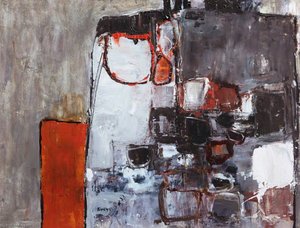
- Ebb Tide

 Preview
 Send
Send Share
Share
 Details

 Download
 Similars
 X-Ray
X-Ray Diaporama
Ebb Tide
 154.0 x 104.0 cm
 Read More
Giclée / Art Print
Museum-quality giclée or canvas print with fast production and flexible finish options. ( Switch to hand made Painting Switch to Image)




































Pick from our preset sizes that match the artwork's original proportions.

You may enter your own dimensions to fit a specific frame or space. If your selected size does not match the original image's proportions, we will either crop the artwork or extend the image with a mirrored or solid-fill edge. A digital mockup will be sent for your approval before production begins.
Please note that the on-screen preview does not reflect the actual cropping or extension. Only the mockup will accurately show the final composition.
While custom sizes are available, we recommend selecting a dimension from the predefined list to preserve the original proportions.
Worldwide Delivery () in 2 weeks instead of standard 4/5 weeks. (28 July)

Free Worldwide Express Shipping

High-Quality Linen Canvas

Full Shipping Insurance

Customs Tax Refund Guarantee

True Color Matching Guarantee

60-Day Return Policy (Defects Only)

100% Money-Back Guarantee

Bulk Discount Offer
 Glass option is only available in size under 110 CM

Ebb Tide
Giclée / Art Print
Reproduction Size
-


Total Price
$ 81
Artist Biography
William Alexander Burns: A Landscape of Memory and Decay
William Alexander Burns (1921 – 1972) emerged from the Scottish landscape, a painter whose canvases captured not merely visual beauty but also the poignant echoes of industrial decline and forgotten places. RSW (Royal Scottish Watercolour Society) membership underscored his commitment to portraying Scotland’s heritage with uncompromising honesty—a dedication that resulted in significant works residing within public collections across Britain. Burns' distinctive style – characterized by textured impasto, muted palettes dominated by blues and browns – transcends mere representation; it delves into the psychological realm, conveying a sense of melancholy contemplation and confronting themes of loss and resilience. Burns’ formative years were steeped in rural Ayrshire, where he absorbed the rhythms of agricultural life alongside his father, Robert Burnes, a gardener who instilled in him an appreciation for meticulous observation and detailed rendering. This early influence would prove crucial to his artistic vision, informing his later explorations of industrial landscapes and derelict structures—subjects that demanded both technical precision and emotional depth. While biographical details remain somewhat sparse, scholarly research suggests he pursued formal training at Glasgow School of Art, honing his skills in watercolour and oil painting techniques. His artistic journey gained momentum during the Second World War, serving as a pilot officer with RAF Coastal Command – an experience that undoubtedly shaped his perspective on vulnerability and confronting adversity. Following the war, Burns continued to develop his distinctive style, experimenting with abstraction while retaining a grounding in realism. He embraced the expressive potential of colour and texture, utilizing impasto—thickly applied paint—to create palpable surfaces that mirrored the weathered facades of abandoned factories and crumbling piers. This technique wasn’t simply decorative; it served as a conduit for conveying mood and atmosphere, mirroring the emotional resonance of his subjects. Burns' oeuvre is notable for its exploration of industrial decay – particularly scenes from Clydeside docks and Glasgow’s shipbuilding industry—but also for his serene depictions of coastal landscapes like Gourdon and Ferryden. These paintings aren’t celebratory panoramas; instead, they are imbued with a quiet sadness, reflecting the passage of time and hinting at vanished grandeur. Burns' compositions often feature solitary figures – sometimes human, sometimes abstracted – positioned against expansive vistas, emphasizing the insignificance of individual experience within the grand sweep of geological history. Despite his relatively short career, William Alexander Burns left an indelible mark on British landscape painting. His uncompromising aesthetic—rooted in observation and informed by a profound understanding of psychological nuance—established him as a pivotal voice within the RSW group and cemented his place among the most evocative artists of the mid-20th century. His work continues to resonate with viewers today, prompting contemplation about memory, loss, and the enduring beauty found amidst ruin – a testament to Burns’ ability to transform visual experience into emotionally resonant narratives.
william alexander burns
1921 -
Quick Facts
- Artistic Movement Or Style: Abstract Expressionism
- Date Of Birth: 1921
- Date Of Death: Living
- Full Name: William Alexander Burns
- Nationality: Scottish
- Notable Artworks:
- Boats, Gourdon
- Ferryden
- Guidelight
- Place Of Birth: Scotland