- Home

- Oil Painting Reproduction
- William-Adolphe Bouguereau
- Orestes Pursued by the Furies
 Buy print
 Send
Send Share
Share
 Details

 Download
 Similars
 X-Ray
X-Ray Diaporama
Orestes Pursued by the Furies
 Acrylic On Canvas
- WallArt
- Academic Realism
 231.0 x 278.0 cm
 Chrysler Museum of Art
 Read More
Hand Made Oil Reproduction
Hand-painted oil on canvas in your size and frame, made to order by our artists.




P118B $10

P118H $10

P118W $10

P438Z $10

P508JH $12

P508YH $12

P805H $10

P805Z $10

P919BZ $10

P919G $10

P919XJ $10

P959ZH $10

P968JZ $12

W106C $8

W218G $10

W218JH $8

W218Y $10

W307PJ $10

W316G $10

W316PJ $8

W316Y $10

W398PJ $8

W4111J $10

W500HY $15

W500JH $15

W692G $12

W849H $8

W940BG $15

W953PJ $8




Pick from our preset sizes that match the artwork's original proportions.

You may enter your own dimensions to fit a specific frame or space. If your selected size does not match the original image's proportions, we will either crop the artwork or extend the painting with additional hand-painted elements. A digital mockup will be sent for your approval before production begins.
Please note that the on-screen preview does not reflect the actual cropping or extension. Only the mockup will accurately show the final composition.
While custom sizes are available, we recommend selecting a dimension from the predefined list to preserve the original proportions.
After order, OriginalUniqueArt.com team will email client for instructions and provide a mockup preview
Worldwide Delivery () in 3/4 weeks instead of standard 5 weeks. (16 July). No compromise on quality.

Free Worldwide Express Shipping

High-Quality Linen Canvas

Full Shipping Insurance

Customs Tax Refund Guarantee

True Color Matching Guarantee

60-Day Return Policy (Defects Only)

100% Money-Back Guarantee

Bulk Discount Offer
 Glass option is only available in size under 110 CM

Orestes Pursued by the Furies
Reproduction Medium
Reproduction Size
-


Total Price
-
Artwork Description
A Symphony of Fury and Form: Exploring Bouguereau’s “Orestes Pursued by the Furies”
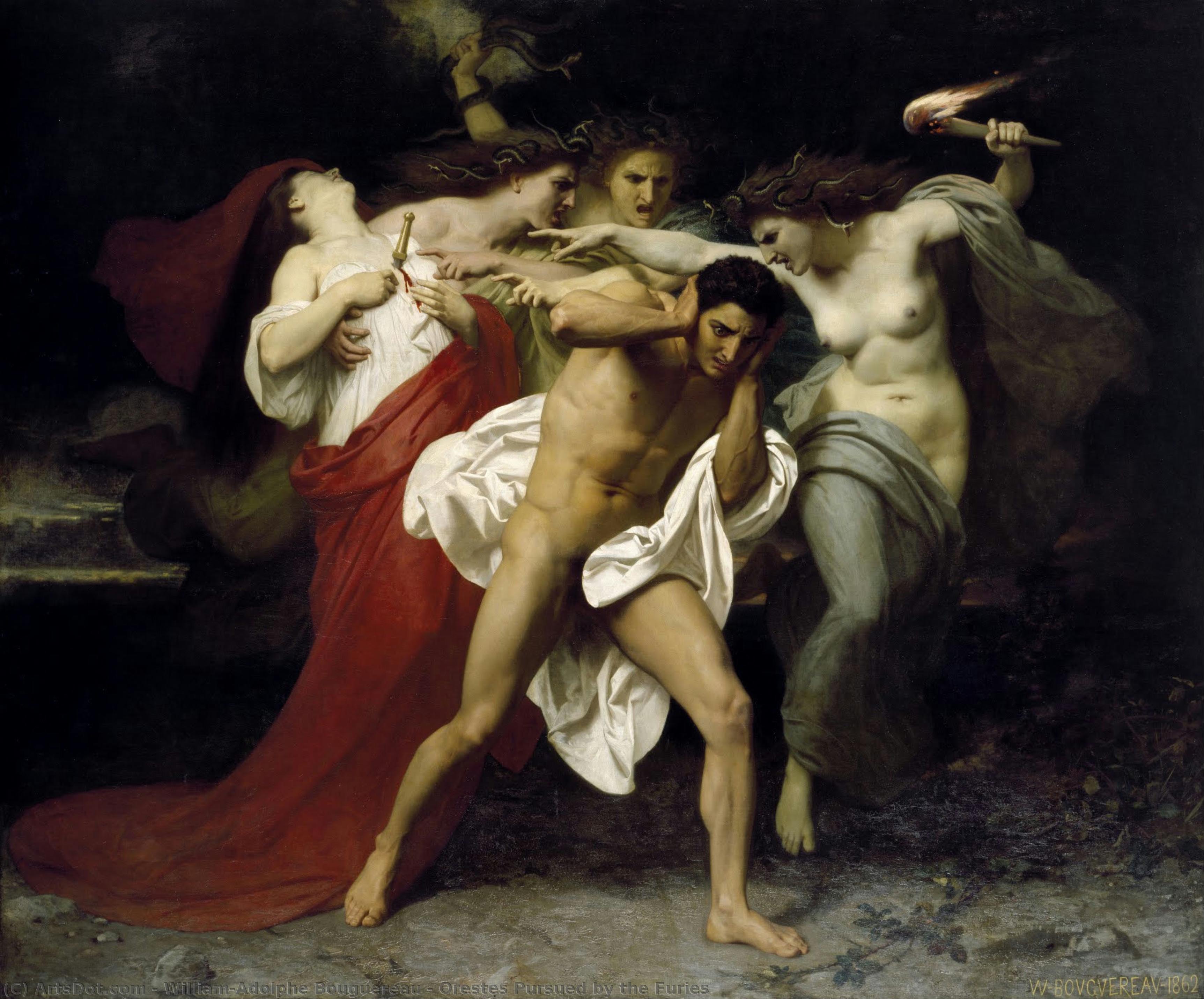
The canvas holds an arresting stillness—a deceptive calm that belies the tempestuous drama unfolding within William-Adolphe Bouguereau's monumental depiction of Orestes’ harrowing encounter with the Furies. Completed sometime before 1905, this painting transcends mere narrative illustration; it stands as a testament to Bouguereau’s mastery of academic art and his profound engagement with classical mythology. More than just recounting a tale from Homer’s Iliad—a story of vengeance, filial piety, and the inescapable consequences of transgression—the artwork delves into the psychological complexities inherent in confronting primal forces of retribution.- Subject Matter & Narrative Context: Bouguereau meticulously captures the pivotal moment following Orestes’ matricide – the instant before his mother’s corpse descends to earth, signaling the arrival of the Furies. These vengeful spirits, embodiments of divine wrath and justice, relentlessly pursue Orestes, attempting to overwhelm him with their terrifying presence. The painting isn't simply depicting an event; it embodies the very essence of Greek tragedy—a confrontation between human morality and inescapable fate.
- Style & Technique: Bouguereau’s signature style is characterized by a breathtaking realism tempered by idealized beauty. He employs meticulous anatomical precision, painstakingly rendering every muscle and vein with unwavering accuracy. Yet, he simultaneously elevates the scene through luminous color palettes—primarily muted reds and golds—that imbue the composition with an ethereal glow. Bouguereau's technique relies heavily on glazing – applying thin layers of translucent pigment over subsequent coats to achieve unparalleled depth and luminosity.
- Historical Significance: The painting emerged from a fervent revival of classical ideals within the French art establishment during the Belle Époque. Bouguereau’s success was undeniable, securing him both critical acclaim and considerable commercial revenue. He epitomized the École des Beaux-Arts' commitment to portraying heroic figures in dramatic settings—a tradition rooted in Renaissance humanism and championed by luminaries like Raphael and Michelangelo.
- Symbolism & Imagery: The central figure of Orestes, nude and vulnerable against the backdrop of a bed and chair, symbolizes innocence corrupted by violence. The Furies themselves are depicted as grotesque yet terrifying creatures—their faces contorted in fury, their hands outstretched to grasp at Orestes’ body. These figures represent not merely retribution but also the inescapable burden of moral responsibility – a theme central to Greek philosophical thought.
- Emotional Impact: Bouguereau's masterful composition compels viewers to confront uncomfortable truths about human nature and the destructive power of vengeance. The painting evokes feelings of terror, despair, and profound sorrow—yet simultaneously communicates an underlying sense of dignity and resilience. It serves as a poignant reminder that even in the face of overwhelming adversity, humanity retains its capacity for moral fortitude.
Artist Biography
A Life Immersed in Beauty: The World of William-Adolphe Bouguereau
Born in 1825, amidst the vineyards and olive groves of La Rochelle, France, William-Adolphe Bouguereau’s life was destined to be a celebration of classical ideals and breathtaking realism. From an early age, his artistic inclinations were nurtured, leading him to Paris and the prestigious École des Beaux-Arts. There, under the guidance of François-Edouard Picquenot, he honed his skills, absorbing the lessons of the Old Masters – Raphael and Titian foremost among them. These influences weren’t mere imitation; they became the bedrock upon which Bouguereau built a unique artistic vision, one characterized by meticulous detail, luminous color palettes, and an unwavering commitment to portraying beauty in its most idealized form. He wasn't simply painting what he *saw*, but rather what he believed to be inherently beautiful, striving for a perfection that resonated with the aesthetic sensibilities of his time.The Architect of Academic Perfection
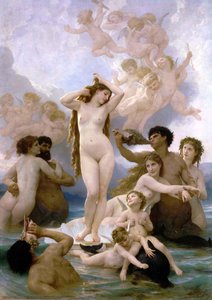
Bouguereau’s artistic style is often described as academic realism, and rightly so. He possessed an unparalleled mastery of anatomy, light, and composition. His canvases are populated by figures rendered with astonishing precision – the delicate curve of a shoulder, the subtle flush of skin, the expressive depth of an eye. But his work transcends mere technical skill; it’s infused with emotion and narrative power. He frequently depicted mythological scenes, transforming ancient tales into vibrant, emotionally resonant moments. *The Birth of Venus*, for example, isn't just a depiction of a goddess emerging from the sea; it’s a celebration of feminine grace and ethereal beauty. Similarly, works like *Zenobia Found by Shepherds on the Banks of the Araxes* capture vulnerability and pathos with remarkable sensitivity. Beyond mythology, Bouguereau found inspiration in everyday life – shepherdesses tending their flocks, young girls at play, mothers cradling their children. These genre scenes, while seemingly simple, are imbued with a sense of dignity and tenderness that elevates them to the realm of art. *Faneuse (1869)* exemplifies this approach, portraying a young woman in a tranquil landscape with an exquisite attention to detail and atmosphere. His dedication to capturing innocence is particularly evident in paintings like *Child at Bath*, where the delicate rendering of skin and light creates a truly captivating image.A Legacy Challenged and Rediscovered
During his lifetime, Bouguereau enjoyed immense popularity and critical acclaim. He was a favorite of the Salon, receiving numerous awards and commissions. His paintings were sought after by collectors and museums alike. However, with the advent of modernism in the early 20th century, his work fell out of favor. The abstract forms and radical experimentation of artists like Picasso and Matisse stood in stark contrast to Bouguereau’s traditional style, and he was often dismissed as a sentimental academician. For decades, his name languished in obscurity, overshadowed by the avant-garde movements that dominated the art world. Yet, the story doesn't end there. In recent years, there has been a significant revival of interest in Bouguereau’s work. Art historians and collectors have begun to recognize his technical brilliance and artistic integrity. His paintings are now celebrated for their beauty, skill, and emotional depth. This rediscovery is not merely a nostalgic yearning for the past; it's a recognition that Bouguereau was a master craftsman who deserves a place among the great artists of all time. His influence can be seen in contemporary figurative painting, where artists continue to draw inspiration from his mastery of form and light.Beyond the Canvas: Influence and Enduring Appeal
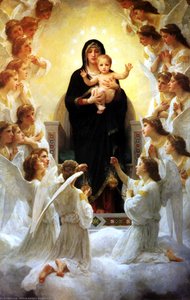
Bouguereau’s impact extended beyond his own paintings. He was a highly respected teacher, and his studio attracted students from around the world. He championed the cause of women artists, actively advocating for their admission to the Académie Julian at a time when opportunities for female painters were limited. Elizabeth Jane Gardner Bouguereau, his wife and fellow artist, stands as a testament to his support and belief in her talent. His dedication to traditional artistic values – meticulous draftsmanship, anatomical accuracy, and emotional expression – continues to inspire artists today. His works are now housed in prestigious museums worldwide, including the Musée d’Orsay in Paris, the Carnegie Museum, and The J. Paul Getty Museum, ensuring that his legacy will endure for generations to come. Song of the Angels (1881), with its ethereal beauty and serene composition, remains a particularly celebrated masterpiece, embodying the artist's ability to evoke a sense of wonder and spiritual transcendence. Bouguereau’s art is more than just beautiful images; it’s a testament to the power of skill, dedication, and an unwavering belief in the enduring appeal of classical ideals. He remains a pivotal figure in 19th-century French painting, representing the pinnacle of academic artistry and offering a timeless vision of beauty that continues to captivate audiences today.
William-Adolphe Bouguereau
1825 - 1905 , France
Quick Facts
- Artistic Movement Or Style: Academic Realism
- Artists Who Influenced This Artist:
- Raphael
- Titian
- Date Of Birth: 1825
- Date Of Death: 1905
- Full Name: William-Adolphe Bouguereau
- Nationality: French
- Notable Artworks:
- The Nymphaeum
- Bergère 1886
- Child at Bath
- Song of the Angels
- Birth of Venus
- Faneuse (1869)
- Place Of Birth: La Rochelle, France
Related Articles

Academic Art: Tradition, Technique & the Pursuit of Ideal Form in the 19th Century
Explore the world of Academic Art! Discover its history, key artists like Ingres & Bouguereau, defining techniques, and lasting influence on 19th-century painting. Learn about the Salon system and its legacy.
Echoes of Antiquity: Exploring Themes & Techniques in Classical Art Masterpieces
Explore the timeless beauty & profound themes of Classical art! Discover Greek & Roman masterpieces, Neoclassical revivals, and the enduring influence on artistic movements. Expert insights & high-quality reproductions at OriginalUniqueArt.

Bridging Centuries: Digital Visualization & Classical Oil Painting Techniques in Contemporary Art Commissioning
Discover the art of commissioning bespoke oil paintings blending classical techniques with modern digital precision. Expert artists, personalized service & museum-quality results. Invest in a timeless masterpiece today.
Guido Reni: A Study in Baroque Classicism & Artistic Perfection
Explore the life & work of Guido Reni, a master of Baroque classicism. Discover his iconic religious & mythological paintings, and understand his enduring influence on art history. Expert analysis for collectors.
Charles Le Brun: Master of French Baroque Classicism & His Enduring Legacy
Explore the life & art of Charles Le Brun, master of French Baroque Classicism. Discover his royal commissions, influence on Versailles, and enduring legacy through detailed analysis & stunning artworks.