- Home

- Oil Painting Reproduction
- Wang Jian
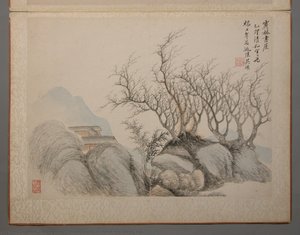
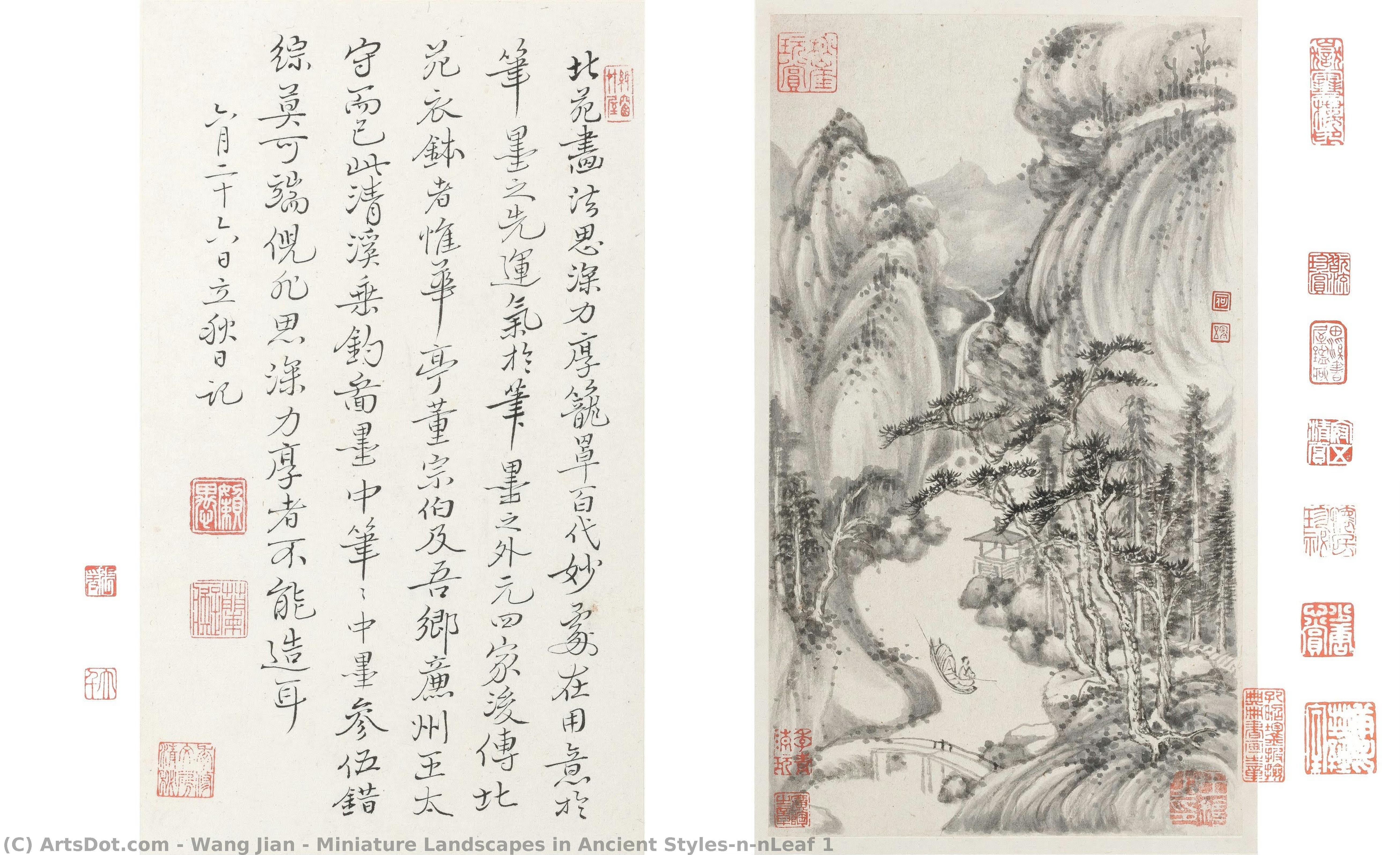
- Miniature Landscapes in Ancient Styles\n\nLeaf 1
 Buy print
 Send
Send Share
Share
 Details

 Download
 Similars
 X-Ray
X-Ray Diaporama
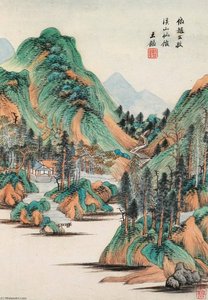
Miniature Landscapes in Ancient Styles\n\nLeaf 1
 Orthodox School of Painting
 1652
1652 20.0 x 11.0 cm
 Read More
Hand Made Oil Reproduction
Hand-painted oil on canvas in your size and frame, made to order by our artists.




P118B $10

P118H $10

P118W $10

P438Z $10

P508JH $12

P508YH $12

P805H $10

P805Z $10

P919BZ $10

P919G $10

P919XJ $10

P959ZH $10

P968JZ $12

W106C $8

W218G $10

W218JH $8

W218Y $10

W307PJ $10

W316G $10

W316PJ $8

W316Y $10

W398PJ $8

W4111J $10

W500HY $15

W500JH $15

W692G $12

W849H $8

W940BG $15

W953PJ $8




Pick from our preset sizes that match the artwork's original proportions.

You may enter your own dimensions to fit a specific frame or space. If your selected size does not match the original image's proportions, we will either crop the artwork or extend the painting with additional hand-painted elements. A digital mockup will be sent for your approval before production begins.
Please note that the on-screen preview does not reflect the actual cropping or extension. Only the mockup will accurately show the final composition.
While custom sizes are available, we recommend selecting a dimension from the predefined list to preserve the original proportions.
After order, OriginalUniqueArt.com team will email client for instructions and provide a mockup preview
Worldwide Delivery () in 3/4 weeks instead of standard 5 weeks. (16 July). No compromise on quality.

Free Worldwide Express Shipping

High-Quality Linen Canvas

Full Shipping Insurance

Customs Tax Refund Guarantee

True Color Matching Guarantee

60-Day Return Policy (Defects Only)

100% Money-Back Guarantee

Bulk Discount Offer
 Glass option is only available in size under 110 CM

Miniature Landscapes in Ancient Styles\n\nLeaf 1
Reproduction Medium
Reproduction Size
-


Total Price
-
Artwork Description
Artist Biography
Wang Jian (1598–1677): A Tranquil Voice of Qing Dynasty Landscape Painting
Wang Jian, born in Taicang, Jiangsu Province around 1598, stands as a pivotal figure within the artistic landscape of the Qing Dynasty (1644–1912). His enduring legacy rests primarily on his exceptional mastery of Shanshui painting – Chinese landscape art—characterized by its profound serenity and masterful execution. Often referred to as Xuanzhao (“玄照”), he adopted pseudonyms Xiangbi (“湘碧”) and Ranxiang anzhu (“染香庵主”), reflecting a contemplative spirit that permeated his artistic endeavors. Wang Jian’s stylistic lineage traces back to Dong Yuan (董源), a celebrated Song Dynasty painter whose approach to capturing the essence of nature—particularly misty mountains and flowing streams—influenced Wang Jian immensely. This connection is evident in Wang Jian's distinctive color palette, favoring muted hues that convey atmospheric depth and evoke a sense of timeless beauty. Unlike many contemporaries who embraced flamboyant ornamentation, Wang Jian championed simplicity and restraint, prioritizing expressive brushwork above all else. He was recognized as one of the “Four Wangs” and “Six Masters” of the early Qing period—a group distinguished by their unwavering commitment to traditional artistic principles. Wang Jian’s prolific output spanned several decades, producing numerous albums featuring meticulously rendered landscapes that exemplify the pinnacle of Shanshui aesthetics. These works are not merely depictions of scenery; they are imbued with symbolic meaning, reflecting Confucian ideals of harmony and contemplation. His technique involved layering ink washes—often employing subtle gradations of tone—to create a palpable illusion of depth and texture. The jagged lines characteristic of Fan Kuan’s style – particularly in pieces like “Mountain Scenery with Streams and Pavilions” (1667) – demonstrate Wang Jian's willingness to engage with influential artistic precedents while maintaining his own distinctive voice. Among his most celebrated achievements are "Landscapes Painted for Wang Kui" (D2Y8EL), a breathtaking Shanshui landscape featuring a solitary pine tree and dwelling, showcasing Dong Yuan’s influence beautifully. Also noteworthy is “Miniature Landscapes in Ancient Styles” (N-nLeaf 1) – an ambitious emulation of Song/Yuan artistic traditions—demonstrating Wang Jian's dedication to preserving and innovating upon classical techniques. These artworks continue to inspire admiration for their understated elegance and profound connection to the natural world. Wang Jian’s contribution to Qing Dynasty art solidified his place as a cornerstone of Chinese painting history. His unwavering adherence to Dong Yuan’s principles ensured that Shanshui painting retained its contemplative spirit during a period marked by significant artistic experimentation. Today, Wang Jian's landscapes stand as enduring symbols of tranquility and artistic excellence—a testament to the power of simplicity and masterful brushwork in conveying the sublime beauty of nature.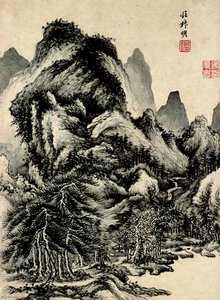
Wang Jian
1598 - 1677 , China
Quick Facts
- Artistic Movement Or Style: Dong Yuan Style
- Artists Or Movements Influenced By This Artist: ['Four Wangs']
- Artists Who Influenced This Artist: ['Dong Yuan']
- Date Of Birth: 1598
- Date Of Death: 1677
- Full Name: Wang Jian
- Nationality: Chinese
- Notable Artworks:
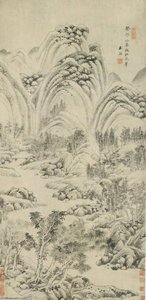
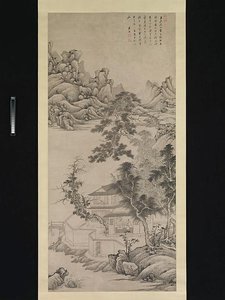
- Landscapes Painted for Wang Kui
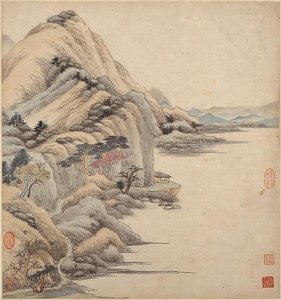
- Miniature Landscapes in Ancient Styles\n\nLeaf 1
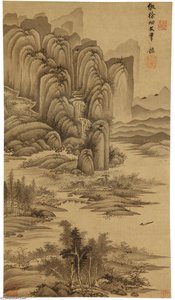
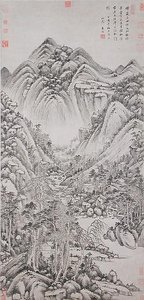
- Mountain Scenery with Streams and Pavilions in the Style of Fan Kuan
- Place Of Birth: Taicang, China
Related Articles

Ephemeral Expressions: Exploring the Nuances of Ink on Paper Through History & Contemporary Art
Explore the captivating world of ink wash painting – from its ancient origins to contemporary masters. Discover techniques, symbolism & conservation insights with OriginalUniqueArt.com.

Concrete Visions: Exploring the Urban Landscape in Painting – From Realism to Contemporary Art
Explore the evolution of cityscape painting from Realism to contemporary art with OriginalUniqueArt. Discover key artists & invest in timeless urban visions. Expert guidance, museum-quality reproductions.

Evocations of Place: A Historical Journey Through Landscape Art
Explore the rich history of landscape art with OriginalUniqueArt. Discover renowned artists, movements like Impressionism & tonalism, and expert guidance for collecting timeless pieces. Find your perfect serene escape today!

Alfred Freddy Krupa: A Modern Visionary of New Ink Art & Emotional Depth
Explore the captivating world of Alfred Freddy Krupa, a pioneering Croatian artist redefining New Ink Art. Discover his unique technique, powerful themes, and global impact. A must-read for art enthusiasts & collectors.
Xie Zhiliu: A Legacy of Ink Wash Painting & Modern Chinese Literati Tradition
Explore the legacy of Xie Zhiliu, a master of Chinese ink wash painting & prominent figure in modern art. Discover his techniques, influences, and contributions to literati tradition. A guide for discerning collectors.