1950
[Ship's Prow] (Walker Evans, 1950)
Walker Evans (1903–1975) made [Ship's Prow]. It dates from 1950. It measures 34 × 25 cm.
- 1950
- 34 × 25 cm

 Preview

 Hand Made Oil Painting
 Send
 Share
 Fact sheet


 Download
 Similars
 X-Ray
 Diaporama
 Q&A

 Stats
[Ship's Prow], in brief
- Title
- [Ship's Prow]
- Artist
- Walker Evans (1903–1975)
- Artist born in
- St. Louis, United States of America
- Date
- 1950
- Dimensions
- 34 × 25 cm
High-resolution images of [Ship's Prow]
Protected by copyright: the image is shown for reference only.
Other sizes, crops and citation →Walker Evans, [Ship's Prow] (1950).
Questions on [Ship's Prow], answered
What is the creation date of "[Ship's Prow]" by Walker Evans?
"[Ship's Prow]" dates from 1950. The date places the work within Walker Evans's career and its era.
How big is the original "[Ship's Prow]"?
"[Ship's Prow]" measures 34 x 25 cm in its original form. Original dimensions are a useful reference when choosing a reproduction size.
Is "[Ship's Prow]" free of copyright?
The copyright answer for "[Ship's Prow]" by Walker Evans: the work is still protected by copyright. This determines whether reproductions of the image may be freely made.
Which artist is "[Ship's Prow]" attributed to?
"[Ship's Prow]" was created by Walker Evans. The information on this page describes Walker Evans's original work.
At what age did Walker Evans make "[Ship's Prow]"?
Walker Evans made "[Ship's Prow]" at the age of 47. The artist was born in 1903 and the work is dated 1950.
What explains the copyright situation of "[Ship's Prow]" by Walker Evans?
"[Ship's Prow]" by Walker Evans is still protected by copyright. Copyright duration runs from the artist's death, which occurred in 1975.
About the artist, Walker Evans

1903–1975, United States of America
Walker Evans
A Witness to America: The Life and Legacy of Walker Evans Walker Evans, born in St. Louis in 1903, emerged as a pivotal figure in American photography, his name inextricably linked with the visual record of the Great Depression. Yet to define him solely by this period would be to diminish the breadth of his artistic vision and enduring influence. His journey was one of constant exploration, evolving from literary aspirations to a uniquely observant photographic style that captured not just *what* America was, but *how* it felt – its quiet dignity, its stark realities, and its often-overlooked beauty.
Also by Walker Evans
 Roadside Stand, vicinity Birmingham, Alabama1971
 Let Us Now Praise Famous Men1936
 Havana Citizen / Citizen in Downtown Havana1933
 Silverware1936
Essays around [Ship's Prow]
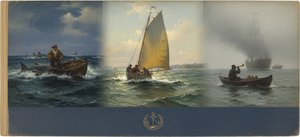 Winslow Homer's Masterpieces: 25 Iconic Paintings & Their Enduring Legacy | OriginalUniqueArtExplore 25 iconic Winslow Homer paintings – from dramatic seascapes to poignant genre scenes. Discover the stories behind American realism'…
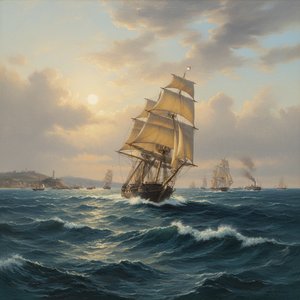 James E. Buttersworth: Navigating the Seas of Victorian Marine PaintingExplore the captivating world of James Edward Buttersworth, a foremost Victorian marine painter. Discover his meticulous ship portraits, Am…
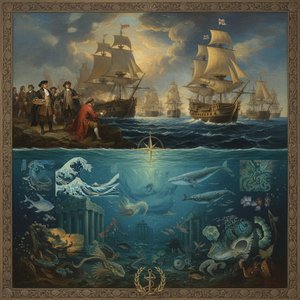 Navigating the Depths of Representation: A Historical Exploration of Marine PaintingExplore the rich history of marine painting with OriginalUniqueArt. Discover Dutch Masters, Romantic seascapes & renowned artists like Wyll…