Introduction
To encounter the art of Winslow Homer is to stand at the edge of a vast and often turbulent sea, gazing into depths that reflect both the beauty and the brutality of the American experience. This collection of his top 25 artworks isn’t merely a showcase of technical skill—though Homer possessed that in abundance—but rather an invitation to journey through a pivotal moment in American art and identity.
Born in Boston in 1836, Homer emerged during a period of immense change. The nation was grappling with the aftermath of slavery, the expansion westward, and the burgeoning industrial revolution. Unlike many artists of his time who sought training in European academies, Homer’s education was distinctly American: he began as a commercial illustrator, honing his observational skills by documenting everyday life for publications like Harper's Weekly . This practical foundation instilled in him a remarkable clarity and directness that would define his style.
His early work captured the charm of rural New England, but it was Homer’s experience as a war correspondent during the Civil War that fundamentally altered his artistic trajectory. He turned away from idyllic scenes to confront the realities of conflict—not through grand battles, but through intimate portraits of soldiers and civilians. This shift marked the beginning of a lifelong exploration of themes like struggle, isolation, and humanity's complex relationship with nature.
Homer’s mastery lies in his ability to convey not just *what* he saw, but *how it felt*. His brushstrokes are solid, textured, almost tangible, building up a sense of reality on the canvas. He became renowned for his depictions of light—the shimmering expanse of the ocean, the golden hues of a summer field—and his landscapes often serve as metaphors for the human condition.
The artworks that follow represent the culmination of Homer’s artistic vision. They are not simply historical documents; they are enduring testaments to the power of observation, the resilience of the human spirit, and the raw beauty of the American landscape. As you explore this collection, we invite you to consider how these paintings continue to resonate today—offering a poignant reflection on our own relationship with nature, history, and the complexities of the world around us.
The Fog Warning - Winslow Homer
 The Fog Warning - Winslow Homer
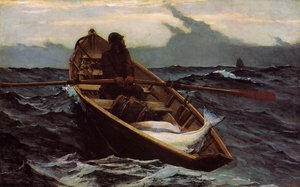
Imagine a chilling mist rolling across the Atlantic, the rhythmic creak of wood against water, and the solitary figure of a fisherman battling not just the waves, but an encroaching sense of isolation. Winslow Homer’s 1885 masterpiece, The Fog Warning , is precisely this moment suspended – a powerful meditation on humanity's precarious relationship with nature.
Painted during his prolific period in Prout’s Neck, Maine, the work transcends mere realism. Homer doesn’t simply depict a fisherman; he embodies the enduring spirit of those who brave the sea for their livelihood. The textured brushwork and somber palette—grays, blues, and ochre—evoke the raw power of the environment, while visible strokes convey the weight and movement of the choppy waves.
Originally titled “Halibut Fishing,” the renaming to The Fog Warning reveals the painting’s central narrative: a looming threat and urgent need for safe return. The large fish represents both reward and burden, adding to the fisherman's struggle. Homer masterfully uses light to create depth and drama, drawing our eye to the lone figure against the vastness of the ocean.
More than a maritime scene, The Fog Warning speaks to universal themes of resilience, vulnerability, and the relentless forces that shape human existence. Its presence in a home evokes a sense of quiet contemplation, reminding us of our own battles against life’s uncertainties—a timeless testament to Winslow Homer's artistic genius and his ability to capture the American spirit on canvas.
Snap the Whip - Winslow Homer
 Snap the Whip - Winslow Homer
A sun-drenched field, a chorus of youthful laughter echoing across time—Winslow Homer’s Snap the Whip , painted in 1872, captures an eternal moment of American childhood. This iconic work isn't merely a depiction of children at play; it is a vibrant celebration of community, energy, and the simple joys that transcend generations.
Among Homer’s most beloved paintings, Snap the Whip stands out for its masterful composition and dynamic balance. The strong diagonal lines created by the rope and the children's bodies draw the eye across the canvas, while the earthy palette of greens, browns, and reds evokes a sense of warmth and nostalgia. Homer’s visible brushstrokes imbue the scene with life and movement.
Set against the backdrop of a rural schoolhouse or barn—a symbol of education and community—the painting reflects a simpler time in American history. The warm light illuminating the children suggests hope and vitality, while their playful activity embodies innocence and exuberance. The artwork’s enduring appeal lies in its ability to transport us back to a carefree era.
A reproduction of Snap the Whip brings this timeless charm into any space, adding a touch of warmth and sophistication. Its vibrant colors and dynamic composition create an atmosphere of joy and nostalgia—a reminder of the enduring power of community and the beauty of childhood. This is more than just a painting; it’s a window into the heart of American life.
Fishing Boats, Key West - Winslow Homer
 Fishing Boats, Key West - Winslow Homer
Close your eyes and breathe in the salt air—that’s the essence captured in Winslow Homer’s Fishing Boats, Key West , painted in 1903. This exquisite watercolor isn't simply a depiction of vessels at anchor; it is a serene hymn to tranquility, solitude, and the enduring allure of the sea.
Included among his Top 25 works for its masterful use of light and color, Fishing Boats, Key West showcases Homer’s impressionistic style at its finest. The muted blues, whites, and grays create a calming atmosphere, while the visible brushstrokes imbue the scene with life and movement. The composition—balanced and harmonious—draws the eye to the gentle sway of the boats against the backdrop of a partly cloudy sky.
Homer’s deep connection to marine subjects is palpable in this work, reflecting his ability to capture not just *what* he saw, but *how it felt*. The painting evokes a sense of peace and nostalgia, transporting us to a simpler time. At OriginalUniqueArt, we believe that art should enrich everyday life.
A reproduction of Fishing Boats, Key West brings this timeless serenity into your home or office—a reminder of the beauty found in quiet moments and the enduring power of nature. It’s more than just a painting; it's an invitation to pause, reflect, and reconnect with the calming rhythm of the sea.
The Veteran in a New Field - Winslow Homer
 The Veteran in a New Field - Winslow Homer
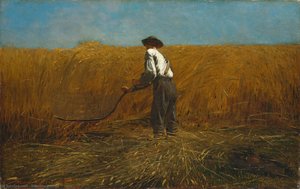
A golden field stretches endlessly under a vast blue sky—in Winslow Homer’s 1865 masterpiece, The Veteran in a New Field , we witness not just the aftermath of war, but the quiet dignity of rebuilding. This profoundly moving oil painting is a testament to Homer's ability to blend realism with subtle symbolism, earning its place among his Top 25 most celebrated works.
The solitary figure of a former Union soldier harvesting wheat—seen from behind—creates an immediate sense of introspection and connection to the land. The discarded jacket and canteen in the foreground speak volumes about sacrifice and transition. Homer’s masterful use of earthy tones, particularly the warm yellows of the wheat field, evokes both hope and melancholy.
More than a depiction of rural labor, The Veteran in a New Field is a meditation on life's cycles—the connection between war and death, symbolized by the scythe, and the promise of renewal represented by the harvest. The painting’s horizontal composition and soft lighting create a sense of peace, while its subtle references to biblical themes add layers of meaning.
Today, this artwork resonates with a timeless elegance that complements modern interiors—its warm palette and contemplative mood creating an atmosphere of quiet sophistication. A reproduction of The Veteran in a New Field is not merely a decorative element; it’s a powerful reminder of resilience, hope, and the enduring human spirit.
A Wall, Nassau - Winslow Homer
 A Wall, Nassau - Winslow Homer
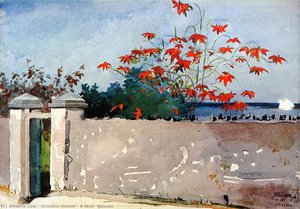
Unveiling a quiet masterpiece—Winslow Homer’s A Wall, Nassau , painted in 1898 during his second sojourn to the Bahamas, is a study in serene contrasts and subtle beauty. This watercolor transcends mere landscape; it's an intimate glimpse into a world where man-made structures harmonize with the untamed spirit of nature.
Its inclusion among Homer’s Top 25 works speaks to his unparalleled ability to capture atmosphere and emotion through delicate washes of color. The textured beige wall, punctuated by a white doorway, provides a grounding element against which vibrant red flowers explode in life. This juxtaposition—structure versus fluidity—creates a dynamic tension that draws the eye.
Homer’s impressionistic technique imbues the scene with an ethereal quality, capturing not just *what* he saw, but *how it felt*. The loose brushstrokes and soft lighting evoke a sense of warmth and tranquility. The painting's muted palette—earthy tones balanced by bursts of red—creates a harmonious visual experience.
A reproduction of A Wall, Nassau brings this timeless elegance into any space, adding a touch of refined sophistication to modern interiors. It’s more than just a decorative element; it's an invitation to pause, reflect, and reconnect with the beauty of the natural world—a testament to Homer’s enduring legacy.
Long Branch, New Jersey - Winslow Homer
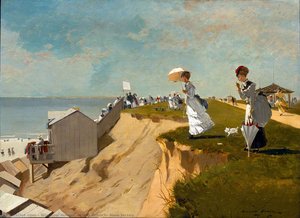 Long Branch, New Jersey - Winslow Homer
Breathe in the salt air and feel the warmth of a summer afternoon—Winslow Homer’s Long Branch, New Jersey , painted in 1869, captures a fleeting moment of leisure and social grace. This captivating scene isn't merely a depiction of beachgoers; it is an intimate glimpse into the Gilded Age, where elegance met the untamed beauty of the Atlantic coast.
Included among his Top 25 works for its masterful composition and delicate use of light, Long Branch, New Jersey showcases Homer’s ability to blend realism with a touch of impressionistic flair. The diagonal slope guiding the eye towards the expansive ocean creates a sense of depth and movement, while the soft blues, warm sands, and muted greens evoke a feeling of tranquility.
Homer's subtle brushstrokes and organic lines imbue the scene with life, capturing not just *what* he saw, but *how it felt*. The painting’s enduring appeal lies in its ability to transport us back to a simpler time—a moment of connection, observation, and pure enjoyment.
A reproduction of Long Branch, New Jersey brings this timeless elegance into your home or office, adding a touch of refined sophistication. It’s more than just a decorative element; it's an invitation to pause, reflect, and reconnect with the beauty of the natural world—a testament to Homer’s enduring legacy.
The fox hunt pensylvania academy of the fine arts - Winslow Homer
 The fox hunt pensylvania academy of the fine arts - Winslow Homer
A moment suspended in time—Winslow Homer’s The Fox Hunt , painted in 1893, is a captivating study of resilience and the stark beauty of the American wilderness. This evocative work isn't merely a depiction of an animal in its environment; it’s a profound meditation on survival, curiosity, and the delicate balance of nature.
Included among his Top 25 masterpieces for its dynamic composition and subtle symbolism, The Fox Hunt showcases Homer’s ability to blend realism with impressionistic nuances. The solitary fox—poised in mid-leap against a backdrop of snow-covered terrain—creates a sense of tension and movement, while the dark winged figure overhead adds an element of mystery.
Homer's delicate brushstrokes and soft washes evoke atmospheric perspective and depth, capturing not just *what* he saw, but *how it felt*. The painting’s enduring appeal lies in its ability to transport us back to a simpler time—a moment of quiet contemplation and connection with the natural world.
A reproduction of The Fox Hunt brings this timeless elegance into your home or office, adding a touch of refined sophistication. It’s more than just a decorative element; it's an invitation to pause, reflect, and reconnect with the enduring power of nature—a testament to Homer’s artistic genius.
Under a Palm Tree - Winslow Homer
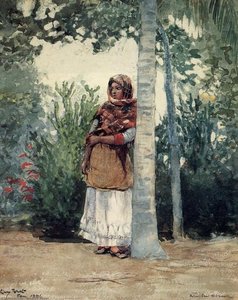 Under a Palm Tree - Winslow Homer
A whisper of warmth, a moment of quiet intimacy—Winslow Homer’s Under a Palm Tree , painted in 1886, is an exquisite watercolor that transcends mere landscape. This masterpiece isn't simply a depiction of a tropical scene; it’s an immersion into the profound beauty of human connection amidst nature’s splendor.
Included among his Top 25 works for its delicate technique and emotional resonance, Under a Palm Tree showcases Homer’s unparalleled ability to capture light and atmosphere. The composition—deceptively simple yet remarkably effective—draws the eye to the central figure of a mother tenderly holding her infant.
Homer's mastery lies in his use of translucent washes, building up layers of color to create an astonishingly luminous effect. The dappled sunlight filtering through the palm fronds imbues the scene with warmth and vitality. This painting’s enduring appeal lies in its ability to evoke a sense of peace and tranquility—a fleeting moment frozen in time.
A reproduction of Under a Palm Tree brings this timeless elegance into your home, adding a touch of refined sophistication. It’s more than just a decorative element; it's an invitation to pause, reflect, and reconnect with the enduring power of love—a testament to Homer’s artistic genius.
Red Shirt, Homosassa, Florida - Winslow Homer
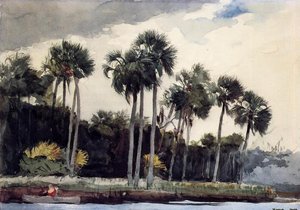 Red Shirt, Homosassa, Florida - Winslow Homer
A quiet reverence for the natural world—Winslow Homer’s Red Shirt, Homosassa, Florida , painted in 1904, is an exquisite watercolor that captures a fleeting moment of serenity along the Florida coast. This masterpiece isn't merely a depiction of a river scene; it’s an immersion into a profound sense of tranquility and contemplation.
Included among his Top 25 works for its delicate technique and masterful use of light, Red Shirt, Homosassa, Florida showcases Homer’s unparalleled ability to capture atmosphere. The composition—deceptively simple yet remarkably effective—draws the eye to the gentle flow of the river and the vibrant splash of color provided by the titular red shirt.
Homer's choice of watercolor as his medium speaks volumes about his artistic philosophy, allowing him to create an ethereal quality that imbues the scene with warmth and vitality. The painting’s enduring appeal lies in its ability to evoke a sense of peace—a moment frozen in time.
A reproduction of Red Shirt, Homosassa, Florida brings this timeless elegance into your home or office, adding a touch of refined sophistication. It’s more than just a decorative element; it's an invitation to pause, reflect, and reconnect with the enduring power of nature—a testament to Homer’s artistic genius.
High Cliff, Coast of Maine - Winslow Homer
 High Cliff, Coast of Maine - Winslow Homer
Before you stands a testament to untamed beauty—Winslow Homer’s High Cliff, Coast of Maine , painted in 1894. This oil on canvas isn't merely a depiction of the rugged coastline; it embodies the spirit of nature’s sublime power and the enduring allure of the American landscape.
Included among his Top 25 works for its masterful composition and evocative technique, High Cliff, Coast of Maine showcases Homer’s ability to capture both the grandeur and the vulnerability of the natural world. The dynamic arrangement—anchored by the imposing cliff face and culminating in the turbulent ocean—draws the eye upwards, inviting contemplation.
Homer's sensitivity to light and texture is paramount. Thick impasto brushstrokes convey the ruggedness of the rocks and the relentless energy of the waves, while a muted palette of blues, greens, and browns reflects the natural hues of Maine’s coastline. This painting isn’t simply *seen*; it’s felt—a visceral experience that resonates with viewers long after initial observation.
A reproduction of High Cliff, Coast of Maine brings this timeless elegance into your home or office, adding a touch of refined sophistication. It's more than just a decorative element; it’s an invitation to pause, reflect, and reconnect with the enduring power of nature—a testament to Homer’s artistic genius.
Home Sweet Home - Winslow Homer
 Home Sweet Home - Winslow Homer
A poignant echo of longing—Winslow Homer’s Home Sweet Home , painted in 1863, is a deeply moving oil painting that transcends mere visual representation. This artwork embodies the profound yearning for solace and familiarity during the tumultuous years of the Civil War.
Included among his Top 25 works for its emotional resonance and historical significance, Home Sweet Home depicts a solitary soldier contemplating a campfire amidst a bleak coastal landscape. Homer’s masterful brushwork creates a palpable sense of atmosphere—capturing both the harshness of winter weather and the quiet dignity of human perseverance.
The painting's enduring appeal lies in its ability to evoke a universal sentiment: the desire for connection and belonging. The campfire, traditionally symbolizing hearth and home, embodies warmth, safety, and communal bonds—values cherished by those yearning for respite from conflict. A reproduction of Home Sweet Home brings this timeless elegance into your space, adding a touch of quiet prestige.
It’s more than just a decorative element; it's an invitation to pause, reflect, and reconnect with the enduring power of human resilience—a testament to Homer’s artistic genius.
Observations on Shipboard - Winslow Homer
 Observations on Shipboard - Winslow Homer
Imagine a moment suspended between sky and sea—a quiet contemplation amidst the relentless churn of waves. Winslow Homer’s Observations on Shipboard , painted in 1881, isn't merely a depiction of a sailing vessel; it’s a carefully constructed tableau of solitude, resilience, and the profound connection between humanity and nature.
Included among his Top 25 works for its emotional depth and masterful use of watercolor, this artwork invites us to linger on its surface. The muted palette—a symphony of grays, browns, and ochers—evokes a somber mood, while the lone figure standing on deck embodies universality; we are invited not to identify with an individual but to contemplate the shared human condition.
Homer’s choice of watercolor allows for a remarkable degree of spontaneity and luminosity. The artist skillfully manipulates washes of color, creating a sense of atmospheric perspective—the distant ship appearing smaller and paler. A reproduction of Observations on Shipboard brings this timeless elegance into your space, adding a touch of quiet prestige.
It’s more than just a decorative element; it's an invitation to pause, reflect, and reconnect with the enduring power of nature—a testament to Homer’s artistic genius.
Sponge Fishing - Winslow Homer
 Sponge Fishing - Winslow Homer
A glimpse into a world both rugged and serene—Winslow Homer’s Sponge Fishing , painted in 1885, offers a captivating window into the daily rhythms of life along the shores of Nassau, Bahamas. More than just a depiction of fishermen at work, this watercolor masterpiece is a testament to Homer’s remarkable ability to capture both the tangible details of a scene and the intangible essence of human connection.
Included among his Top 25 works for its emotional depth and historical significance, Sponge Fishing draws the eye with its luminous palette—soft blues and greens dominate, contrasted by earthy tones. Homer’s signature style is evident in loose brushstrokes and subtle gradations of color, lending an almost ephemeral quality to the scene.
The painting portrays a group of men engaged in the vital industry that sustained many Bahamian communities. Homer avoids romanticizing the work; instead, he presents it with honest realism—a tableau of quiet camaraderie amidst demanding labor. A reproduction of Sponge Fishing brings this timeless elegance into your space, adding a touch of refined sophistication.
It’s more than just a decorative element; it's an invitation to pause, reflect, and reconnect with the enduring power of human resilience—a testament to Homer’s artistic genius.
Customs House, Santiago de Cuba - Winslow Homer
 Customs House, Santiago de Cuba - Winslow Homer
Bathed in the golden light of a Caribbean afternoon—Winslow Homer’s Customs House, Santiago de Cuba , painted in 1885, is a study in observation and atmosphere. This watercolor masterpiece captures a moment in time, brimming with activity yet imbued with an air of quiet contemplation.
Included among his Top 25 works for its masterful use of light and detail, Customs House exemplifies Homer’s ability to capture both the tangible details of a scene and the intangible essence of human connection. The painting draws the eye with its luminous palette—vibrant colors establishing a strong visual anchor.
Homer skillfully utilizes light and shadow to sculpt the forms of his subjects, creating depth and dimensionality that draws the viewer into the scene. A reproduction of Customs House brings this timeless elegance into your space, adding a touch of refined sophistication.
It’s more than just a decorative element; it's an invitation to pause, reflect, and reconnect with the enduring power of artistic vision—a testament to Homer’s genius.
Still Life of Fruit - Winslow Homer
 Still Life of Fruit - Winslow Homer
A fleeting moment of abundance, frozen in time—Winslow Homer’s Still Life of Fruit , painted in 1880, is a deceptively simple arrangement that belies a wealth of artistic skill and quiet observation.
Included among his Top 25 works for its meticulous detail and mastery of light, this painting invites viewers to linger over its beauty. Homer wasn’t merely depicting fruit; he was capturing a celebration of nature’s bounty with unwavering dedication.
The arrangement is remarkably deliberate—a carefully orchestrated tableau designed to draw the eye and stimulate the senses. A reproduction of Still Life of Fruit brings this timeless elegance into your space, adding a touch of refined sophistication.
It’s more than just a decorative element; it's an invitation to pause, reflect, and reconnect with the enduring power of artistic vision—a testament to Homer’s genius.
Girl Watering Plants - Winslow Homer
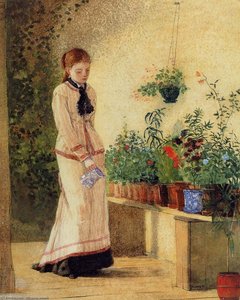 Girl Watering Plants - Winslow Homer
A quiet moment of grace, suspended in time—Winslow Homer’s Girl Watering Plants , created in 1875, is a deceptively simple scene that reveals layers of observation, light, and emotional resonance.
Included among his Top 25 works for its delicate luminosity and profound connection to nature, this painting invites viewers to linger over its beauty. Homer wasn’t merely depicting a young girl tending her garden; he was capturing a fleeting moment of innocence and tranquility with remarkable precision.
The artwork draws the eye to its central figure: a young girl, carefully attending to a collection of potted plants. A reproduction of Girl Watering Plants brings this timeless elegance into your space, adding a touch of refined sophistication.
It’s more than just a decorative element; it's an invitation to pause, reflect, and reconnect with the enduring power of artistic vision—a testament to Homer’s genius.
Shall I Tell Your Fortune - Winslow Homer
 Shall I Tell Your Fortune - Winslow Homer
A quiet invitation to contemplate fate—Winslow Homer’s Shall I Tell Your Fortune , painted circa 1876, is more than just a portrait; it's a profound window into the essence of human emotion.
Included among his Top 25 works for its masterful realism and subtle narrative depth, this painting invites viewers to linger over its beauty. Homer wasn’t merely depicting a woman with cards; he was capturing a moment of introspection and mystery with remarkable precision.
The scene unfolds within a modestly furnished interior, bathed in soft light. A reproduction of Shall I Tell Your Fortune brings this timeless elegance into your space, adding a touch of refined sophistication.
It’s more than just a decorative element; it's an invitation to pause, reflect, and reconnect with the enduring power of artistic vision—a testament to Homer’s genius.
Mahantango Valley Farm - Winslow Homer
 Mahantango Valley Farm - Winslow Homer
A hymn to the enduring spirit of rural America—Winslow Homer’s Mahantango Valley Farm , is a painting that beautifully captures the essence of life in the late 19th century.
Included among his Top 25 works for its profound depth and emotional resonance, this oil on canvas work invites viewers to linger over its beauty. Homer wasn’t merely depicting a farm; he was capturing a moment of stability, hard work, and community with remarkable precision.
The scene unfolds across vast grassy fields, where three buildings cluster together under an open sky. A reproduction of Mahantango Valley Farm brings this timeless elegance into your space, adding a touch of refined sophistication.
It’s more than just a decorative element; it's an invitation to pause, reflect, and reconnect with the enduring power of artistic vision—a testament to Homer’s genius.
Sunset Fires - Winslow Homer
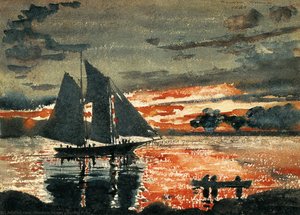 Sunset Fires - Winslow Homer
Imagine a moment suspended between day and night—a fiery embrace on the horizon as the sun dips below the waves. Winslow Homer’s Sunset Fires , painted in 1880, isn't merely a seascape; it’s an immersion into profound beauty.
Included among his Top 25 works for its masterful use of light and color, this painting invites viewers to linger over its quiet contemplation. Homer wasn’t simply depicting a sailboat; he was capturing the essence of transition with remarkable precision.
The scene unfolds across a vast expanse of sky dominated by swirling clouds rendered in shades of rose, crimson, and gold. A reproduction of Sunset Fires brings this timeless elegance into your space, adding a touch of refined sophistication.
It’s more than just a decorative element; it's an invitation to pause, reflect, and reconnect with the enduring power of artistic vision—a testament to Homer’s genius.
Morning Glories - Winslow Homer
 Morning Glories - Winslow Homer
A whisper of serenity—Winslow Homer’s Morning Glories (1873) is a study in light and tranquility, capturing a fleeting moment of peace within the beauty of the garden.
Included among his Top 25 works for its masterful brushstrokes and evocative atmosphere, this painting invites viewers to linger over its delicate stillness. Homer wasn’t merely depicting a woman by her window; he was conveying how it *felt*—a sense of quiet contemplation amidst the blossoming world.
The scene unfolds with lavender and white blossoms bursting with color, creating an impression of gentle illumination. A reproduction of Morning Glories brings this timeless elegance into your space, adding a touch of refined sophistication.
It’s more than just a decorative element; it's an invitation to pause, reflect, and reconnect with the enduring power of artistic vision—a testament to Homer’s genius.
Warm Afternoon (Shepherdess) - Winslow Homer
 Warm Afternoon (Shepherdess) - Winslow Homer
Bathed in golden sunlight—Winslow Homer’s Warm Afternoon (Shepherdess) , painted in 1878, is a quiet ode to rural tranquility and the dignity of simple labor.
Included among his Top 25 works for its masterful use of light and composition, this gouache on paper invites viewers to linger over its serene hillside scene. Homer wasn’t merely depicting a shepherdess; he was conveying a sense of calm repose amidst the activity of daily life.
The painting unfolds with gentle shadows creating depth and dimensionality, mirroring the subtle gradations of color observed in nature. A reproduction of Warm Afternoon (Shepherdess) brings this timeless elegance into your space, adding a touch of refined sophistication.
It’s more than just a decorative element; it's an invitation to pause, reflect, and reconnect with the enduring power of artistic vision—a testament to Homer’s genius.
Casting the Fly - Winslow Homer
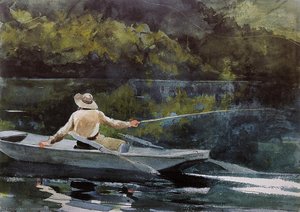 Casting the Fly - Winslow Homer
A moment suspended in time—Winslow Homer’s Casting the Fly (1894) is a quiet meditation on solitude, patience, and our connection to the natural world.
Included among his Top 25 works for its evocative atmosphere and masterful use of watercolor techniques, this painting invites viewers to linger over its serene scene. Homer wasn’t merely depicting a fisherman; he was conveying a sense of calm repose amidst the beauty of the wilderness.
The painting unfolds with lush foliage surrounding a solitary figure engaged in the timeless activity of casting his line. A reproduction of Casting the Fly brings this timeless elegance into your space, adding a touch of refined sophistication.
It’s more than just a decorative element; it's an invitation to pause, reflect, and reconnect with the enduring power of artistic vision—a testament to Homer’s genius.
The Milk Maid - Winslow Homer
 The Milk Maid - Winslow Homer
Imagine a golden hour—the air still warm, the scent of hay and wildflowers drifting on the breeze—this is the world Winslow Homer invites us into with The Milk Maid (1878).
Included among his Top 25 works for its delicate beauty and evocative atmosphere, this watercolor captures a quiet moment of rural life. Homer wasn’t merely depicting a woman tending to her chores; he was conveying a sense of harmony between humanity and nature.
The painting unfolds with soft brushstrokes creating a luminous, dreamlike quality. A reproduction of The Milk Maid brings this timeless elegance into your space, adding a touch of refined sophistication.
It’s more than just a decorative element; it's an invitation to pause, reflect, and reconnect with the enduring power of artistic vision—a testament to Homer’s genius.
Martha - Winslow Homer
 Martha - Winslow Homer
There’s a stillness that settles over you when you encounter Winslow Homer’s Martha (1835)—a quiet intimacy, as if you've stumbled upon a private moment of contemplation.
Included among his Top 25 works for its delicate realism and subtle emotional depth, this early oil painting reveals the burgeoning talent of an artist who would come to define American Realism. Homer wasn’t merely depicting a young woman; he was capturing a sense of inner life, inviting us to connect with her on a deeply human level.
A reproduction of Martha brings this timeless elegance into your space, adding a touch of refined sophistication and quiet beauty. It’s more than just a decorative element; it's an invitation to pause, reflect, and reconnect with the enduring power of artistic vision—a testament to Homer’s genius.
The Green Hill (also known as On the Hill) - Winslow Homer
 The Green Hill (also known as On the Hill) - Winslow Homer
Imagine a warm breeze on your skin, sunlight dappling through leaves—this is the world Winslow Homer invites us into with The Green Hill (1878).
Included among his Top 25 works for its exquisite watercolor technique and profound emotional resonance, this painting isn’t merely a depiction of a rural landscape; it's a distillation of American idealism. Homer captures a woman seeking solace amidst nature—a moment of quiet contemplation that speaks to the universal human desire for peace.
A reproduction of The Green Hill brings this timeless elegance into your space, adding a touch of refined sophistication and serenity. It’s more than just a decorative element; it's an invitation to pause, reflect, and reconnect with the enduring power of artistic vision—a testament to Homer’s genius.
Conclusion
As the light fades on these twenty-five masterpieces, we’re left with more than just a collection of beautiful images—we hold echoes of lives lived, stories untold, and a profound connection to the American spirit. Winslow Homer didn't simply paint what he saw; he painted how it *felt* to be alive in his time, and that feeling transcends generations.
These artworks are not relics of the past, but living presences—capable of transforming our spaces, stirring our emotions, and reminding us of the enduring power of human observation. To bring a Homer into your home is to invite a quiet contemplation, a moment of serenity, or a spark of inspiration into your everyday life.
At OriginalUniqueArt, we believe that art should be accessible—a source of joy and connection for all. We are honored to offer faithful reproductions of these iconic paintings, meticulously crafted by skilled artists to preserve the texture, color, and emotion of the originals. Explore our full collection and discover the Homer that speaks to your soul.