

 Preview
 Send
Send Share
Share
 Details
 Guide
Guide

 Download
 Similars
 X-Ray
X-Ray Diaporama
 Q&A
Q&A Stats
StatsInterior (detail)


 Read More
Giclée / Art Print
Museum-quality giclée or canvas print with fast production and flexible finish options. ( Buy Hand Made Painting Switch to Digital Image)




P118B $10

P118H $10

P118W $10

P438Z $10

P508JH $12

P508YH $12

P805H $10

P805Z $10

P919BZ $10

P919G $10

P919XJ $10

P959ZH $10

P968JZ $12

W106C $8

W218G $10

W218JH $8

W218Y $10

W307PJ $10

W316G $10

W316PJ $8

W316Y $10

W398PJ $8

W4111J $10

W500HY $15

W500JH $15

W692G $12

W849H $8

W940BG $15

W953PJ $8




Pick from our preset sizes that match the artwork's original proportions.

Type the width and the height you need, to fit your frame or your wall. A print can only be cut, never made bigger than the picture, so a size with a different shape loses a part of the image. We send you a digital mockup to approve before we print anything. The picture shown on this page does not show the real cut — only the mockup does.
Worldwide Delivery () in 2 weeks instead of standard 4/5 weeks. (29 October)

Free Worldwide Express Shipping

High-Quality Linen Canvas

Full Shipping Insurance

Customs Tax Refund Guarantee

True Color Matching Guarantee

100-Day Return Policy (Defects Only)

100% Money-Back Guarantee

Bulk Discount Offer
 Glass option is only available in size under 110 CM

Interior (detail)
Giclée / Art Print
Reproduction Size
-


Total Price
$ 81
A Quiet Revolution: Catharina van Hemessen and the Legacy of Female Artistic Vision
Catharina van Hemessen stands apart from her contemporaries—a beacon of creativity within the confines of a Renaissance era that largely excluded women from artistic pursuits. While Rembrandt and Rubens commanded fame and fortune, Catharina quietly yet decisively shaped Flemish art through her intimate portraits and devotional paintings, demonstrating an unparalleled sensitivity to human emotion and a masterful grasp of Renaissance ideals. Her work isn’t defined by monumental scale but rather by meticulous detail and profound psychological insight—a testament to the enduring power of artistic talent regardless of gender. Born around 1528 in Antwerp, Catharina benefited from the tutelage of her father, Jan Sanders van Hemessen, a respected Mannerist painter who recognized and nurtured her burgeoning aptitude for art. This formative relationship instilled within her a foundational understanding of artistic principles—a crucial advantage considering the societal barriers faced by women seeking formal training during this period. Unlike many aspiring artists of her time, Catharina wasn’t simply absorbing techniques; she was actively shaping them, pushing boundaries and establishing herself as a pioneer in Northern Renaissance art.The Style of Elegance: Mannerism Meets Venetian Influence
Catharina's artistic style embodies the confluence of Mannerist and Venetian influences—a stylistic blend that reflects the broader artistic currents circulating throughout Europe during her lifetime. Mannerism prioritized stylized forms, elongated figures, and dramatic poses, rejecting the naturalistic conventions championed by earlier Renaissance artists like Leonardo da Vinci. However, Catharina’s work also absorbed elements from Venice, particularly in its use of rich color palettes and luminous glazing—techniques perfected by Venetian painters such as Titian and Tintoretto. This fusion resulted in paintings characterized by gracefulness, sophistication, and a subtle emotional resonance that distinguishes them from more overtly expressive works.Technical Mastery: Detail and Illusionism
What truly sets Catharina’s oeuvre apart is her exceptional technical skill—a hallmark of her era's finest artists. She employed meticulous observation and painstaking execution to achieve remarkable levels of realism within the stylized framework of Mannerism. Her canvases are replete with intricate details—from delicately rendered fabrics to subtly shaded skin tones—demonstrating a profound understanding of anatomy and optics. Furthermore, Catharina skillfully utilized illusionistic techniques, particularly sfumato (smoky shading), to create atmospheric depth and enhance the visual impact of her paintings. This mastery of technique underscores her dedication to artistic excellence and elevates her creations beyond mere decorative embellishment.Symbolism Within Sacred Spaces: Reflecting Renaissance Ideals
Catharina’s subjects—primarily religious portraits and devotional scenes—were imbued with symbolic meaning, reflecting the dominant intellectual and spiritual values of the Renaissance. Like many artists of her time, Catharina sought to convey moral lessons and inspire contemplation through her art. Her depictions of saints and biblical figures often incorporated classical motifs—such as drapery folds and architectural elements—drawing upon the humanist tradition’s fascination with Greco-Roman antiquity. These symbols served not only to communicate theological concepts but also to elevate the viewer's consciousness and affirm faith—a testament to Catharina’s artistic vision and its alignment with the broader cultural landscape of her era.A Lasting Impression: Beyond Reproduction
Though Catharina van Hemessen’s original paintings remain relatively rare, their enduring beauty continues to captivate audiences today. Reproductions crafted by OriginalUniqueArt offer a remarkable opportunity to experience this exceptional artwork firsthand—to appreciate its nuanced detail and profound emotional depth. Consider commissioning a bespoke print of ‘Interior,’ or exploring our curated collection of Catharina van Hemessen reproductions – allowing you to bring the spirit of Renaissance artistry into your home or workspace.Questions & Answers
How do the colors of "Interior (detail)" by Vincenzo Scamozzi relate to its emotion?
"Interior (detail)" by Vincenzo Scamozzi combines an earthy palette with a calm tone.
Toward which tone does "Interior (detail)" lean?
"Interior (detail)" leans toward a golden yellow range tone.
What was Vincenzo Scamozzi's age when "Interior (detail)" was created?
Vincenzo Scamozzi was 40 years old when creating "Interior (detail)" in 1588. The age is computed from the artist's birth year, 1548.
Artist Biography
The Architect of Ideal Proportions
Vincenzo Scamozzi was not primarily a visual artist in the traditional sense, but rather a profound Italian architect and theorist whose influence shaped the very fabric of the Renaissance and the dawn of Neoclassicism. Born in Vicenza, Italy, he emerged from a lineage of builders, being the son of Gian Domenico Scamozzi, a surveyor and contractor who served as his first teacher. This early immersion in the practicalities of construction, combined with the architectural principles of Sebastiano Serlio, provided the foundation for a career that would bridge the gap between the late Renaissance and the emerging classical ideals of later centuries.
His professional journey was inextricably linked to the legacy of the legendary Andrea Palladio. Following Palladio's death in 1580, Scamozzi found himself entrusted with several unfinished projects, most notably the prestigious Teatro Olimpico at Vicenza. By bringing these monumental designs to completion, he did more than just finish buildings; he preserved and refined a specific architectural language that would resonate through the ages. His ability to navigate the transition from Palladio's late works to his own distinct vision established him as a pivotal figure in the Republic of Venice area.
A Legacy Written in Stone and Theory
Scamozzi’s contribution to the world of architecture extended far beyond the physical structures he erected. He was a scholar of immense intellect, a man who sought to codify the laws of beauty and symmetry through written word. His monumental two-volume treatise, L'idea dell'architettura universale, published in Venice in 1615, stands as one of the final great works of the Renaissance. In this text, he utilized woodcut illustrations, plans, and elevations to communicate a vision of universal architectural harmony, drawing upon the commentaries of Daniele Barbaro on Vitruvius.
His theoretical reach was complemented by his active practice across the Italian landscape. From the completion of the stables at Villa Capra "La Rotonda" near Vicenza to his ambitious work on the Procuratie Nuove in Piazza San Marco, Venice, Scamozzi’s hand is visible in some of the most significant urban developments of his era. His design for the Procuratie Nuove, which featured alternating triangular and arched pediments and elegant colonnettes, demonstrated a masterful ability to adapt existing architectural traditions into a unified, grander whole.
The Intellectual Father of Neoclassicism
The historical significance of Vincenzo Scamozzi lies in his role as an intellectual bridge. While he operated within the late Renaissance tradition, his rigorous adherence to classical principles and his theoretical depth earned him recognition as one of the intellectual fathers of neoclassicism. His influence was not confined to Italy; through the lineage of architectural thought, his ideas traveled to the German Empire and France, and eventually found a powerful echo in the works of Inigo Jones, who introduced neo-Palladian architecture to England.
Even in his more personal explorations, such as the detailed sketchbook records of his impressions of French architecture, Scamozzi displayed a keen eye for the structural essence of design. Whether he was designing the Teatro Sabbioneta or working on the Church of San Gaetano Thiene in Padua, his work remained a testament to the pursuit of ideal human proportion and the enduring power of classical antiquity. He remains a figure of immense importance, a man whose life's work ensured that the architectural brilliance of the Renaissance would be preserved, understood, and reborn in the centuries to follow.

Vincenzo Scamozzi
1548 - 1616 , Italy
Quick Facts
- Artists Who Influenced This Artist: ['Palladio']
- Full Name: Vincenzo Scamozzi
- Nationality: Italian
- Notable Artworks: ["L'Idea della Architettura"]
- Place Of Birth: Vicenza, Italy
- Date Of Birth: 1548
- Date Of Death: 1616
Related Articles

Baroque Classicism: Reconciling Drama & Order in 17th-Century Art
Explore the captivating world of Baroque Classicism! Discover its history, key artists like Caravaggio & Rubens, and defining characteristics. Expert insights & high-quality reproductions at OriginalUniqueArt.

Bronze Sculptures That Defined Art History | OriginalUniqueArt
Journey through art history with our Top 10 bronze sculptures! Explore masterpieces by Rodin, Michelangelo & more. Discover stories behind iconic statues and find museum-quality reproductions for your home decor at OriginalUniqueArt.com.

Bronze Age to Modern Masters: 10 Sculptures That Redefined Art | OriginalUniqueArt
Journey through art history with 10 legendary bronze sculptures – from Michelangelo's David to Rodin’s Thinker. Explore the stories, techniques & timeless beauty of these masterpieces. Find museum-quality reproductions & elevate your home decor on OriginalUniqueArt.com.
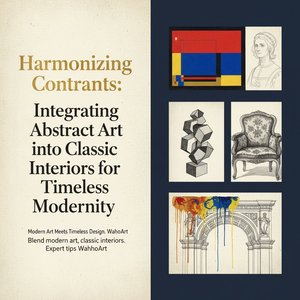
Harmonizing Contrasts: Integrating Abstract Art into Classic Interiors for Timeless Modernity
Elevate your classic home with abstract art! Discover expert tips for seamlessly blending modern pieces into timeless interiors. Find the perfect artwork & design advice at OriginalUniqueArt.

Baroque Drama: Bringing Opulence & Emotion into Contemporary Interiors
Explore the opulent world of Baroque interior design! Discover key elements, modern applications & how to bring dramatic elegance into your home with OriginalUniqueArt.com's authentic reproductions.


