
 Preview
 Send
Send Share
Share
 Details
 Guide
Guide

 Download
 Similars
 X-Ray
X-Ray Diaporama
 Stats
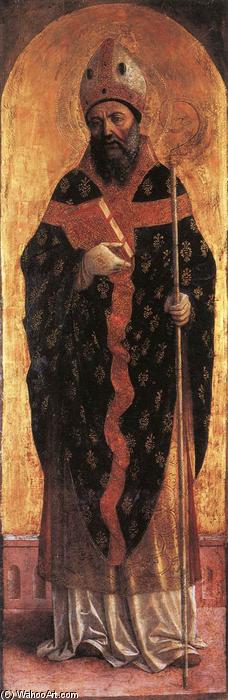
StatsSt Augustine


 Read More
Purchase a high-resolution, enhanced digital image, far superior to the online preview.
Each file is meticulously prepared by our in-house specialists using advanced tools and expert manual retouching. We ensure every image has exceptional clarity, precise color accuracy, and fine detail.
The final file is delivered via email within 72 hours, optimized for immediate use in professional, editorial, and print environments. This is the same quality trusted by top-tier design studios, publishers, and galleries.
Digital Image
Download a high-resolution file for personal display, printing, and creative projects. ( Switch to Print Buy Hand Made Painting)
Included in Every Digital Image Order
Expert Digital Delivery, Guaranteed
When you choose OriginalUniqueArt.com, you're not just getting an image - you're receiving a professionally enhanced digital artwork, crafted with precision and backed by a satisfaction guarantee. Here's everything that comes with your order, automatically:

Fast Email Delivery
Your high-resolution digital image file will be emailed to you within 72 hours of ordering - ready for immediate use.

AI-Enhanced Digital File
Your artwork is professionally optimized using advanced AI tools and manual editing, ensuring maximum detail, clarity, and color accuracy.

Free Lifetime Re-Delivery
Accidentally deleted or lost your file? No worries - we'll resend it to you anytime, free of charge.

No Import Fees - Ever
Enjoy your artwork instantly with zero customs, duties, or delivery fees - digital downloads are always tax-free.

Color Accuracy Guarantee
We ensure your digital image reflects the original colors as closely as possible using professional tools and color management.

100-Day Satisfaction Guarantee
If you're not satisfied with your digital image, we'll revise it or refund 100% within 100 days - no questions asked.

100% Money-Back Guarantee
Not satisfied? Get a full refund within 100 days of receiving your digital file - no questions asked.

Bulk Order Discounts
Buy 3 images, save 10% - Buy 5, save 15% - Buy 10+, save 20%. Great for creative projects, galleries, and agencies.
Artist Biography
A Lombard Visionary: The Life and Art of Vincenzo Foppa
Vincenzo Foppa, a name perhaps less instantly recognizable than those of his Renaissance contemporaries, nevertheless stands as a pivotal figure in Italian art history. Born around 1427 in Bagnolo Mella, near Brescia, Foppa emerged as the leading light of the early Lombard school of painting, forging a distinctive style that blended Gothic traditions with burgeoning humanist ideals. His career unfolded primarily under the patronage of the powerful Sforza family, Dukes of Milan, and his influence resonated throughout Lombardy and Liguria before he returned to his native Brescia for his final years, passing away in 1515. While the surviving body of work is relatively small—a lamentable consequence of time and circumstance—the impact of Foppa’s artistic vision remains profoundly evident in the subsequent development of painting across Northern Italy.Formative Years and Artistic Pilgrimage
The art scene in Brescia during Foppa's youth was not particularly vibrant, necessitating a search for training elsewhere. The precise details of his apprenticeship remain shrouded in some mystery, but it’s clear he embarked on an artistic pilgrimage to absorb the prevailing styles and techniques of the era. Early influences are readily apparent in his work: the delicate lyricism of Gentile da Fabriano's frescoes in Brescia’s Broletto Chapel, and the refined elegance of Jacopo Bellini’s woven *Annunciation*. The latter artist appears to have exerted a particularly strong pull, with some scholars suggesting Foppa may even have been directly apprenticed to him. Other potential mentors include Bonifacio Bembo, while speculation also points towards early training in Padua under Francesco Squarcione. However, his earliest works reveal stylistic affinities with Pisanello and Gentile da Fabriano, leading many to believe that formal instruction likely took place in Verona—a city then flourishing as a center of artistic innovation. This period of absorption and experimentation laid the foundation for Foppa’s unique synthesis of diverse influences.The Sforza Patronage and Lombard Innovations
Foppa's fortunes dramatically shifted when he came to the attention of Duke Francesco Sforza in Pavia around 1458. His skills quickly secured commissions, including a prestigious project in Genoa—frescoes for the Chapel of St. John the Baptist in the cathedral, sadly lost during 16th-century renovations. A glowing letter of recommendation from Sforza opened doors to further opportunities, and in 1463, Foppa was summoned to Milan itself. Here, he undertook significant projects such as frescoes for the portico of the new Ospedale Maggiore and a series of elaborate decorations within the Medici Bank of Milan. These latter works are particularly noteworthy, depicting eight Roman emperors—including a detailed sketch of Trajan—alongside a striking portrait of Francesco Sforza and his family. It is during this period that Foppa truly established the hallmarks of the Lombard school. His paintings began to exhibit a distinctive grayish tonality in skin tones, a characteristic that would become widely imitated by subsequent generations of artists. He masterfully blended Gothic elegance with emerging Renaissance principles of perspective and naturalism, creating compositions that were both visually captivating and intellectually engaging. The Young Cicero Reading, the sole surviving secular fragment from the Medici Bank frescoes—now housed in the Wallace Collection in London—exemplifies this synthesis, showcasing Foppa’s ability to convey psychological depth and narrative complexity.Legacy and Historical Significance
Despite the loss of many of his works, Vincenzo Foppa's influence on Lombard painting was profound. He established a regional style that served as a bridge between the late Gothic period and the High Renaissance. His emphasis on realistic depiction, coupled with a refined sense of color and composition, paved the way for artists such as Vincenzo Civerchio and Girolamo Romanino. Giorgio Vasari, the celebrated art historian, recognized Foppa as one of the greatest painters of his era—a testament to his skill and reputation during his lifetime. Foppa’s artistic legacy extends beyond mere stylistic imitation. He demonstrated a remarkable ability to adapt and synthesize diverse influences, creating a uniquely Lombard aesthetic that reflected the cultural and political landscape of his time. His work embodies a spirit of innovation and experimentation, making him not only a master craftsman but also a visionary artist who helped shape the course of Italian Renaissance painting. Vincenzo Foppa, though perhaps less celebrated than some of his more famous contemporaries, remains an essential figure for understanding the rich tapestry of 15th-century art in Northern Italy.
Vincenzo Foppa
1427 - 1515 , Italy
Quick Facts
- Artistic Movement Or Style: Early Renaissance
- Artists Or Movements Influenced By This Artist:
- Vincenzo Civerchio
- Girolamo Romanino
- Artists Who Influenced This Artist:
- Jacopo Bellini
- Gentile da Fabriano
- Date Of Birth: 1427
- Date Of Death: 1515
- Full Name: Vincenzo Foppa
- Nationality: Italian
- Notable Artworks:
- Madonna and Child
- Crucifixion (1456)
- The Young Cicero Reading
- Place Of Birth: Bagnolo Mella, Italy