Preview
 Send
Send Share
Share
 Details
 Guide
Guide

 Download
 Similars
 X-Ray
X-Ray Diaporama
 Stats
StatsSaint Theodore
 Acrylic On Canvas
- WallArt
- Early Lombard School
 119.0 x 46.0 cm
 Sforza Castle
 Read More
Hand Made Oil Reproduction
Hand-painted oil on canvas in your size and frame, made to order by our artists. ( Switch to Print Switch to Digital Image)




P118B $10

P118H $10

P118W $10

P438Z $10

P508JH $12

P508YH $12

P805H $10

P805Z $10

P919BZ $10

P919G $10

P919XJ $10

P959ZH $10

P968JZ $12

W106C $8

W218G $10

W218JH $8

W218Y $10

W307PJ $10

W316G $10

W316PJ $8

W316Y $10

W398PJ $8

W4111J $10

W500HY $15

W500JH $15

W692G $12

W849H $8

W940BG $15

W953PJ $8




Pick from our preset sizes that match the artwork's original proportions.

Type the width and the height you need, to fit your frame or your wall. This is hand-painted, so for a size with a different shape the artist can paint a bit more around the picture, or cut a bit — you choose. We send you a digital mockup to approve before the painting starts. The picture shown on this page does not show the real result — only the mockup does.
After order, OriginalUniqueArt.com team will email client for instructions and provide a mockup preview
Worldwide Delivery () in 3/4 weeks instead of standard 5 weeks. (21 October). No compromise on quality.

Free Worldwide Express Shipping

High-Quality Linen Canvas

Full Shipping Insurance

Customs Tax Refund Guarantee

True Color Matching Guarantee

100-Day Return Policy (Defects Only)

100% Money-Back Guarantee

Bulk Discount Offer
 Glass option is only available in size under 110 CM

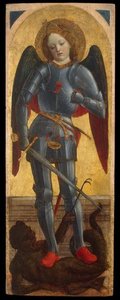
Saint Theodore
Reproduction Medium
Reproduction Size
-


Total Price
$ 300
The Figure Emerges from Shadow
Vincenzo Foppa’s “Saint Theodore” is not merely a depiction of a biblical figure; it's an immersion into a world of luminous grace, a testament to the Lombard painter’s mastery of light and his profound understanding of spiritual resonance. The panel, measuring just over 120 by 46 centimeters, feels remarkably intimate despite its modest scale – a carefully contained universe radiating with serenity and quiet contemplation. At first glance, one is drawn to the saint's posture: he stands not in triumphant grandeur, but in thoughtful repose, his gaze directed towards an unseen horizon. This isn’t a warrior or a prophet delivering fiery pronouncements; it’s a man of faith, absorbed in prayer, radiating an inner peace that transcends the limitations of the painted surface.
The Lombard School’s Embrace of Light
Foppa, a pivotal figure in the early Lombard school of painting, inherited and brilliantly adapted the traditions of his predecessors while forging a distinctly personal style. His work is deeply rooted in Byzantine iconography, particularly the use of gold leaf and layered drapery, yet he infused it with a remarkable naturalism – a subtle shift towards depicting human form with greater accuracy and emotional depth. “Saint Theodore” exemplifies this synthesis perfectly. The background isn’t a flat, symbolic field; it's a richly textured expanse of golden light, almost tactile in its warmth. This luminosity doesn’t simply illuminate the figure; it seems to emanate from within him, suggesting an inherent holiness.
The technique employed is masterful: tempera and oil on wood, creating a surface that retains both delicate detail and a remarkable sense of depth. Notice how Foppa uses subtle gradations of color – the warm ochres and siennas of the tunic contrasting with the cooler tones of the face – to sculpt form and create an illusion of volume. The folds of the garment aren’t rendered in sharp, precise lines; instead, they flow organically, conveying a sense of movement and drapery that is both realistic and ethereal.
A Figure Rooted in Faith and History
The identity of Saint Theodore depicted here remains somewhat enigmatic. While the panel's origins are uncertain – believed to have once formed part of a larger polyptych – its connection to Pavia, a significant center of early Christian devotion, is undeniable. The saint’s halo, subtly integrated into his headwear, reinforces this association. Historical research suggests that Theodore was particularly venerated in Pavia during Foppa's time, lending credence to the theory that the panel originated from this region.
The figure holding a book is a common attribute of Saint Theodore, symbolizing his role as a scholar and teacher of the Gospels. However, it’s the overall mood of the painting – one of quiet contemplation and spiritual grace – that truly elevates “Saint Theodore” beyond a simple portrait. It invites viewers to pause, reflect, and connect with the timeless themes of faith, humility, and inner peace.
Symbolism and Emotional Resonance
Beyond its historical context, “Saint Theodore” is rich in symbolic meaning. The golden background represents divine illumination, while the figure’s posture suggests a state of prayerful receptivity. The book symbolizes knowledge and wisdom, but it's the saint’s serene expression that truly captures the essence of his faith – a quiet confidence born not from earthly power, but from an intimate connection with the divine. The painting evokes a sense of tranquility and hope, reminding us of the enduring power of faith to transcend suffering and offer solace in times of uncertainty.
Questions & Answers
What mood would "Saint Theodore" bring to a space?
"Saint Theodore" by Vincenzo Foppa has a calm atmosphere and is recommended for a living room. The mood is what the work brings to the space around it.
Where do the visitors of "Saint Theodore" by Vincenzo Foppa come from?
A Stats page exists for "Saint Theodore". It charts the monthly visits of the artwork and of the artist's other works, with country and language breakdowns.
In which movement and which era is "Saint Theodore" by Vincenzo Foppa placed?
"Saint Theodore" by Vincenzo Foppa is placed in the Early Lombard School movement, within the Renaissance era of its creator.
Artist Biography
A Lombard Visionary: The Life and Art of Vincenzo Foppa
Vincenzo Foppa, a name perhaps less instantly recognizable than those of his Renaissance contemporaries, nevertheless stands as a pivotal figure in Italian art history. Born around 1427 in Bagnolo Mella, near Brescia, Foppa emerged as the leading light of the early Lombard school of painting, forging a distinctive style that blended Gothic traditions with burgeoning humanist ideals. His career unfolded primarily under the patronage of the powerful Sforza family, Dukes of Milan, and his influence resonated throughout Lombardy and Liguria before he returned to his native Brescia for his final years, passing away in 1515. While the surviving body of work is relatively small—a lamentable consequence of time and circumstance—the impact of Foppa’s artistic vision remains profoundly evident in the subsequent development of painting across Northern Italy.Formative Years and Artistic Pilgrimage
The art scene in Brescia during Foppa's youth was not particularly vibrant, necessitating a search for training elsewhere. The precise details of his apprenticeship remain shrouded in some mystery, but it’s clear he embarked on an artistic pilgrimage to absorb the prevailing styles and techniques of the era. Early influences are readily apparent in his work: the delicate lyricism of Gentile da Fabriano's frescoes in Brescia’s Broletto Chapel, and the refined elegance of Jacopo Bellini’s woven *Annunciation*. The latter artist appears to have exerted a particularly strong pull, with some scholars suggesting Foppa may even have been directly apprenticed to him. Other potential mentors include Bonifacio Bembo, while speculation also points towards early training in Padua under Francesco Squarcione. However, his earliest works reveal stylistic affinities with Pisanello and Gentile da Fabriano, leading many to believe that formal instruction likely took place in Verona—a city then flourishing as a center of artistic innovation. This period of absorption and experimentation laid the foundation for Foppa’s unique synthesis of diverse influences.The Sforza Patronage and Lombard Innovations
Foppa's fortunes dramatically shifted when he came to the attention of Duke Francesco Sforza in Pavia around 1458. His skills quickly secured commissions, including a prestigious project in Genoa—frescoes for the Chapel of St. John the Baptist in the cathedral, sadly lost during 16th-century renovations. A glowing letter of recommendation from Sforza opened doors to further opportunities, and in 1463, Foppa was summoned to Milan itself. Here, he undertook significant projects such as frescoes for the portico of the new Ospedale Maggiore and a series of elaborate decorations within the Medici Bank of Milan. These latter works are particularly noteworthy, depicting eight Roman emperors—including a detailed sketch of Trajan—alongside a striking portrait of Francesco Sforza and his family. It is during this period that Foppa truly established the hallmarks of the Lombard school. His paintings began to exhibit a distinctive grayish tonality in skin tones, a characteristic that would become widely imitated by subsequent generations of artists. He masterfully blended Gothic elegance with emerging Renaissance principles of perspective and naturalism, creating compositions that were both visually captivating and intellectually engaging. The Young Cicero Reading, the sole surviving secular fragment from the Medici Bank frescoes—now housed in the Wallace Collection in London—exemplifies this synthesis, showcasing Foppa’s ability to convey psychological depth and narrative complexity.Legacy and Historical Significance
Despite the loss of many of his works, Vincenzo Foppa's influence on Lombard painting was profound. He established a regional style that served as a bridge between the late Gothic period and the High Renaissance. His emphasis on realistic depiction, coupled with a refined sense of color and composition, paved the way for artists such as Vincenzo Civerchio and Girolamo Romanino. Giorgio Vasari, the celebrated art historian, recognized Foppa as one of the greatest painters of his era—a testament to his skill and reputation during his lifetime. Foppa’s artistic legacy extends beyond mere stylistic imitation. He demonstrated a remarkable ability to adapt and synthesize diverse influences, creating a uniquely Lombard aesthetic that reflected the cultural and political landscape of his time. His work embodies a spirit of innovation and experimentation, making him not only a master craftsman but also a visionary artist who helped shape the course of Italian Renaissance painting. Vincenzo Foppa, though perhaps less celebrated than some of his more famous contemporaries, remains an essential figure for understanding the rich tapestry of 15th-century art in Northern Italy.
Vincenzo Foppa
1427 - 1515 , Italy
Quick Facts
- Artistic Movement Or Style: Early Renaissance
- Artists Or Movements Influenced By This Artist:
- Vincenzo Civerchio
- Girolamo Romanino
- Artists Who Influenced This Artist:
- Jacopo Bellini
- Gentile da Fabriano
- Date Of Birth: 1427
- Date Of Death: 1515
- Full Name: Vincenzo Foppa
- Nationality: Italian
- Notable Artworks:
- Madonna and Child
- Crucifixion (1456)
- The Young Cicero Reading
- Place Of Birth: Bagnolo Mella, Italy
Related Articles
Illuminating History: A Comprehensive Exploration of Tempera Painting Techniques & Artistic Legacy
Explore the rich history & techniques of tempera painting! Discover Renaissance masters like Botticelli & Fra Angelico, conservation insights, and the enduring legacy of this captivating art form.

The Alchemy of Egg Yolk: Mastering the Timeless Art of Tempera Painting
Explore the profound alchemy of egg tempera painting. Discover how medieval masters used egg yolk and pure pigments to create luminous, enduring masterpieces that define art history. A deep dive into the disciplined techniques of the Old Masters for the true art enthusiast.

Tempera Art Guide: The Bold, Fast-Drying Secret to High-Impact Color
Unlock the secret to high-impact color with our expert guide to tempera art. Discover how this fast-drying, luminous medium delivers unmatched vibrancy and depth for bold, modern interiors. Master the alchemy of pigments and elevate your collection with professional insights.
Illuminating Surfaces: A Comprehensive Exploration of Tempera on Panel Painting Techniques & Historical Significance
Explore the rich history & techniques of tempera painting! Discover Renaissance masters like Botticelli & Fra Angelico, conservation insights, and the enduring legacy of this captivating art form. Learn more now!

The Hague School: Realism, Atmosphere & the Dawn of Dutch Impressionism
Explore the Hague School's pivotal role in Dutch art history. Discover realism, atmospheric landscapes & its influence on Impressionism. Learn about key artists like Mauve & Maris with OriginalUniqueArt.