Preview
 Send
Send Share
Share
 Details
 Guide
Guide

 Download
 Similars
 X-Ray
X-Ray Diaporama
 Stats
StatsAltarpiece


 Read More
Giclée / Art Print
Museum-quality giclée or canvas print with fast production and flexible finish options. ( Buy Hand Made Painting Switch to Digital Image)




P118B $10

P118H $10

P118W $10

P438Z $10

P508JH $12

P508YH $12

P805H $10

P805Z $10

P919BZ $10

P919G $10

P919XJ $10

P959ZH $10

P968JZ $12

W106C $8

W218G $10

W218JH $8

W218Y $10

W307PJ $10

W316G $10

W316PJ $8

W316Y $10

W398PJ $8

W4111J $10

W500HY $15

W500JH $15

W692G $12

W849H $8

W940BG $15

W953PJ $8




Pick from our preset sizes that match the artwork's original proportions.

Type the width and the height you need, to fit your frame or your wall. A print can only be cut, never made bigger than the picture, so a size with a different shape loses a part of the image. We send you a digital mockup to approve before we print anything. The picture shown on this page does not show the real cut — only the mockup does.
Worldwide Delivery () in 2 weeks instead of standard 4/5 weeks. (23 October)

Free Worldwide Express Shipping

High-Quality Linen Canvas

Full Shipping Insurance

Customs Tax Refund Guarantee

True Color Matching Guarantee

100-Day Return Policy (Defects Only)

100% Money-Back Guarantee

Bulk Discount Offer
 Glass option is only available in size under 110 CM

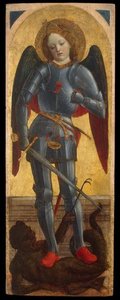
Altarpiece
Giclée / Art Print
Reproduction Size
-


Total Price
$ 81
The Legacy of Vincenzo Foppa: Exploring the Altarpiece
Vincenzo Foppa (1427 – 1515), a luminary of the Lombard Renaissance, stands as an artist whose singular vision continues to captivate scholars and inspire connoisseurs alike. Though his oeuvre remains comparatively modest—primarily concentrated in Brescia and Milan—the Altarpiece commissioned by Bottigella exemplifies Foppa’s mastery of technique and embodies the spirit of his era, securing a place among the most significant achievements of Northern Italian art.
A Synthesis of Gothic Elegance and Humanist Ideals
Foppa's artistic journey began amidst the waning influence of Gothic formalism, yet he swiftly embraced the burgeoning humanist currents sweeping across Europe. This fusion is strikingly apparent in the Altarpiece’s stylistic choices. While retaining elements characteristic of late Gothic art—particularly the meticulous attention to detail and the use of tempera on wood panels—Foppa skillfully incorporated classical motifs and compositional principles, reflecting a broader intellectual shift toward rational observation and idealized beauty.
Composition and Technique: Orchestrating Sacred Narrative
The Altarpiece’s central panel presents a masterful demonstration of Foppa's compositional prowess. Symmetry dominates the arrangement, guiding the viewer’s gaze towards a monumental depiction of Christ Pantocrator—the Lord Almighty—seated upon a throne adorned with gilded drapery and flanked by angels bearing liturgical symbols. This central figure commands attention, radiating divine authority while simultaneously anchoring the surrounding panels which portray saints venerated for their piety and devotion.
- Color Palette: Predominantly earthy hues – ochre, umber, crimson – punctuated by shimmering gold leaf accents that illuminate the halos of Christ and the saints.
- Texture: The tempera medium lends itself to remarkable textural richness, capturing subtle nuances in drapery folds and facial expressions with astonishing realism.
- Detailing: Foppa’s meticulous rendering of anatomical features—particularly in the depiction of Christ’s face—demonstrates an unprecedented level of artistic sophistication for his time.
Symbolism and Spiritual Resonance
Beyond its aesthetic qualities, the Altarpiece is laden with symbolic significance. The throne symbolizes divine majesty, while the angels represent God's guardianship over humanity. Each saint embodies a particular virtue—faith, hope, charity—serving as models of Christian piety. These figures are not merely representations; they convey profound spiritual truths intended to inspire contemplation and devotion.
A Testament to Artistic Genius: Bottigella’s Patronage
Commissioned by Giovanni Battista Bottigella, a wealthy Brescia banker and devout Catholic, the Altarpiece reflects the cultural values of its time—a fervent belief in religious faith and an appreciation for artistic excellence. Its enduring appeal lies not only in its technical brilliance but also in its ability to evoke a sense of awe and reverence, transporting viewers back to the heart of Renaissance spirituality.
To delve deeper into Vincenzo Foppa’s artistic legacy and explore exquisite reproductions of this masterpiece, visit OriginalUniqueArt.com. For additional insights into Bottigella’s patronage and the broader context of Lombard Renaissance art, consult Wikipedia: Wikipedia.
Questions & Answers
Can I see "Altarpiece" by Vincenzo Foppa on my own wall before buying?
The AR Preview page of "Altarpiece" by Vincenzo Foppa uses augmented reality to show the artwork in your own space, on a compatible device.
What color palette is used in "Altarpiece" by Vincenzo Foppa?
The colors of "Altarpiece" form an earthy palette. This classification describes the dominant color families.
What mood and emotion does "Altarpiece" by Vincenzo Foppa express?
The recorded mood of "Altarpiece" by Vincenzo Foppa is elegant, and its emotional tone is calm.
Artist Biography
A Lombard Visionary: The Life and Art of Vincenzo Foppa
Vincenzo Foppa, a name perhaps less instantly recognizable than those of his Renaissance contemporaries, nevertheless stands as a pivotal figure in Italian art history. Born around 1427 in Bagnolo Mella, near Brescia, Foppa emerged as the leading light of the early Lombard school of painting, forging a distinctive style that blended Gothic traditions with burgeoning humanist ideals. His career unfolded primarily under the patronage of the powerful Sforza family, Dukes of Milan, and his influence resonated throughout Lombardy and Liguria before he returned to his native Brescia for his final years, passing away in 1515. While the surviving body of work is relatively small—a lamentable consequence of time and circumstance—the impact of Foppa’s artistic vision remains profoundly evident in the subsequent development of painting across Northern Italy.Formative Years and Artistic Pilgrimage
The art scene in Brescia during Foppa's youth was not particularly vibrant, necessitating a search for training elsewhere. The precise details of his apprenticeship remain shrouded in some mystery, but it’s clear he embarked on an artistic pilgrimage to absorb the prevailing styles and techniques of the era. Early influences are readily apparent in his work: the delicate lyricism of Gentile da Fabriano's frescoes in Brescia’s Broletto Chapel, and the refined elegance of Jacopo Bellini’s woven *Annunciation*. The latter artist appears to have exerted a particularly strong pull, with some scholars suggesting Foppa may even have been directly apprenticed to him. Other potential mentors include Bonifacio Bembo, while speculation also points towards early training in Padua under Francesco Squarcione. However, his earliest works reveal stylistic affinities with Pisanello and Gentile da Fabriano, leading many to believe that formal instruction likely took place in Verona—a city then flourishing as a center of artistic innovation. This period of absorption and experimentation laid the foundation for Foppa’s unique synthesis of diverse influences.The Sforza Patronage and Lombard Innovations
Foppa's fortunes dramatically shifted when he came to the attention of Duke Francesco Sforza in Pavia around 1458. His skills quickly secured commissions, including a prestigious project in Genoa—frescoes for the Chapel of St. John the Baptist in the cathedral, sadly lost during 16th-century renovations. A glowing letter of recommendation from Sforza opened doors to further opportunities, and in 1463, Foppa was summoned to Milan itself. Here, he undertook significant projects such as frescoes for the portico of the new Ospedale Maggiore and a series of elaborate decorations within the Medici Bank of Milan. These latter works are particularly noteworthy, depicting eight Roman emperors—including a detailed sketch of Trajan—alongside a striking portrait of Francesco Sforza and his family. It is during this period that Foppa truly established the hallmarks of the Lombard school. His paintings began to exhibit a distinctive grayish tonality in skin tones, a characteristic that would become widely imitated by subsequent generations of artists. He masterfully blended Gothic elegance with emerging Renaissance principles of perspective and naturalism, creating compositions that were both visually captivating and intellectually engaging. The Young Cicero Reading, the sole surviving secular fragment from the Medici Bank frescoes—now housed in the Wallace Collection in London—exemplifies this synthesis, showcasing Foppa’s ability to convey psychological depth and narrative complexity.Legacy and Historical Significance
Despite the loss of many of his works, Vincenzo Foppa's influence on Lombard painting was profound. He established a regional style that served as a bridge between the late Gothic period and the High Renaissance. His emphasis on realistic depiction, coupled with a refined sense of color and composition, paved the way for artists such as Vincenzo Civerchio and Girolamo Romanino. Giorgio Vasari, the celebrated art historian, recognized Foppa as one of the greatest painters of his era—a testament to his skill and reputation during his lifetime. Foppa’s artistic legacy extends beyond mere stylistic imitation. He demonstrated a remarkable ability to adapt and synthesize diverse influences, creating a uniquely Lombard aesthetic that reflected the cultural and political landscape of his time. His work embodies a spirit of innovation and experimentation, making him not only a master craftsman but also a visionary artist who helped shape the course of Italian Renaissance painting. Vincenzo Foppa, though perhaps less celebrated than some of his more famous contemporaries, remains an essential figure for understanding the rich tapestry of 15th-century art in Northern Italy.
Vincenzo Foppa
1427 - 1515 , Italy
Quick Facts
- Artistic Movement Or Style: Early Renaissance
- Artists Or Movements Influenced By This Artist:
- Vincenzo Civerchio
- Girolamo Romanino
- Artists Who Influenced This Artist:
- Jacopo Bellini
- Gentile da Fabriano
- Date Of Birth: 1427
- Date Of Death: 1515
- Full Name: Vincenzo Foppa
- Nationality: Italian
- Notable Artworks:
- Madonna and Child
- Crucifixion (1456)
- The Young Cicero Reading
- Place Of Birth: Bagnolo Mella, Italy
Related Articles

Gothic Vibes: From Dark Shadows to Bold Modern Edge | The Ultimate Trend Forecast
Explore the evolution of Gothic vibes, from historical shadows to bold modern edge. Discover how dark aesthetics, noir interiors, and contemporary subcultures are redefining modern design through a high-impact, trend-focused lens.

10 Legendary Tempera Masterpieces That Changed Art History Forever
Journey through history with 10 legendary tempera masterpieces. From Renaissance icons to breathtaking textures, explore the stories behind these timeless works. Find museum-quality art reproductions and decor inspiration at OriginalUniqueArt.com. Discover all masterpieces online.

10 Legendary Tempera Masterpieces That Changed Art History Forever
Journey through history with 10 legendary tempera masterpieces. From Renaissance icons to breathtaking egg tempera techniques, explore the stories behind these timeless works. Find museum-quality art reproductions and decor inspiration. Discover all masterpieces on OriginalUniqueArt.com.

10 Legendary Tempera Masterpieces That Changed Art History Forever
Journey through history with 10 legendary egg tempera masterpieces. From Renaissance icons to timeless techniques, explore the stories behind these breathtaking works. Find museum-quality art reproductions and curated decor inspiration. Discover all masterpieces on OriginalUniqueArt.com.

10 Legendary Tempera Masterpieces That Redefined Art History
Journey through history with 10 iconic tempera masterpieces. From Renaissance legends to breathtaking textures, explore the stories behind these timeless works. Find museum-quality art reproductions and curated decor inspiration at OriginalUniqueArt.com. Explore the full collection online.