Switch to Print
 Read More







































 For artworks or reproductions larger than 105 cm (approximately 41 inches) on any side, the frame will be shipped as a kit, disassembled. This method ensures safe delivery and prevents damage during transport.


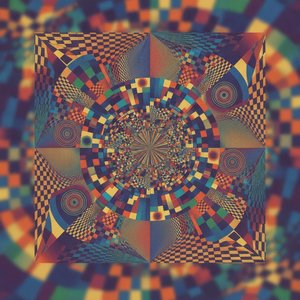
Opale: A Symphony of Geometric Illusion
Victor Vasarely’s “Opale” isn't merely a painting; it’s an invitation to perceive reality differently. Created sometime in the mid-century, this artwork embodies the core principles of Op Art – Optical Art – a movement that emerged in the 1960s and captivated audiences with its mesmerizing ability to generate visual illusions.
- Subject Matter: The composition centers around a series of circles—dozens of them—arranged in an intricate pattern. These aren’t haphazard splashes of color; each circle is meticulously crafted, contributing to the overall dynamic interplay of shapes and hues.
- Style & Technique: Vasarely's signature style is characterized by geometric abstraction, prioritizing mathematical precision over representational accuracy. He employed a technique known as “hydrographics,” which involved applying lacquer onto a canvas surface before printing it with silkscreen—a method that ensured exceptional color fidelity and textural consistency across multiple reproductions.
- Historical Context: Op Art flourished during the Cold War era, reflecting anxieties about sensory overload and challenging viewers to question their perceptions of space and time. Artists like Vasarely sought to explore the subconscious mind through visual stimuli, pushing boundaries of artistic expression.
The Geometry of Perception
Vasarely’s approach wasn't simply aesthetic; it was rooted in scientific inquiry. He believed that the human eye could be tricked into perceiving movement and depth where none actually existed—a concept championed by Gestalt psychologists who were investigating how our brains organize visual information. “Opale” exemplifies this principle perfectly, demonstrating how seemingly simple geometric forms can generate complex optical effects.
Symbolism: While Vasarely himself resisted assigning specific symbolic meanings to his artworks, the circles themselves represent unity and wholeness—fundamental concepts in mathematics and philosophy. Their repetition reinforces this idea, creating a visual rhythm that draws the eye inward and encourages contemplation.A Legacy of Bold Color & Innovative Printing
“Opale” stands as a testament to Vasarely’s mastery of color theory and his pioneering use of silkscreen printing. The vibrant palette—ranging from fiery reds and brilliant blues to luminous yellows, oranges, pinks, and purples—is carefully calibrated to maximize visual impact. Furthermore, the hydrographic process guarantees that reproductions capture the original artwork's brilliance with remarkable accuracy.
- Interior Design Inspiration: Consider incorporating elements of Vasarely’s geometric aesthetic into contemporary interior spaces. Bold color combinations and textured surfaces can evoke a similar sense of dynamism and visual intrigue.
- Collecting Considerations: High-quality reproductions of “Opale” offer an accessible way to experience the transformative power of Op Art—a movement that continues to inspire artists and designers today.
Further Exploration
To delve deeper into Victor Vasarely’s artistic vision, explore resources like Victor Vasarely’s Artist Database, where you can discover biographical details and learn about his influential contributions to modern art. Also, visit Biblioteca Museu Víctor Balaguer in Vila Nova i la Geltrú to admire Vasarely’s works alongside other Catalan masterpieces.
Questions & Answers
Where should a reproduction of "Opale" by Victor Vasarely be hung?
With its square shape, a reproduction of "Opale" is suggested for a living room.
Is "Opale" typical of what Victor Vasarely usually created?
Among Victor Vasarely's recorded themes - bauhaus geometry, visual stimulation, illusionary forms, geometric exploration, modern art legacy - "Opale" brings its own focus on circles, color field painting, geometric pattern, optical illusion, visual perception, kinetic art, bauhaus influence.
What size should I print "Opale" for my room?
For a living room, the recommended print size of "Opale" by Victor Vasarely is large.
More about this painting
 Preview
 Send
Send Share
Share
 Details
 Guide
Guide

 Download
 Similars
 X-Ray
X-Ray Diaporama
 Q&A
Q&A Stats
Stats