Switch to Print
 Read More







































 For artworks or reproductions larger than 105 cm (approximately 41 inches) on any side, the frame will be shipped as a kit, disassembled. This method ensures safe delivery and prevents damage during transport.


Exploring Victor Vasarely’s NBC 32: A Pioneer of Optical Art
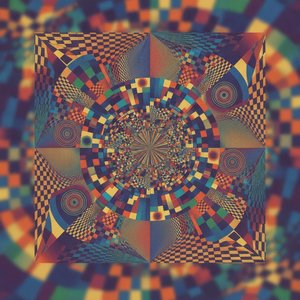
Victor Vasarely’s “NBC 32,” a striking sculpture crafted from polystyrene and weighted with lead, stands as a testament to the revolutionary spirit of Op art—Optical Art—a movement that fundamentally challenged perceptions of reality in the mid-20th century. Created in 1970, this piece embodies Vasarely’s unwavering dedication to exploring visual illusions and harnessing geometric forms to evoke profound emotional responses.
- Artist Background: Győző Vásárhelyi (born April 9, 1906 – March 15, 1997), Hungarian-French artist, was a pivotal figure in shaping the aesthetic landscape of his time. Initially pursuing medical studies, Vasarely swiftly transitioned to painting, influenced by the Bauhaus movement’s emphasis on functional design and geometric abstraction. His formative years at Műhely solidified his commitment to manipulating visual perception through precise arrangements of shapes and colors.
- The Artwork's Composition: The sculpture’s core is a vertical column dominated by interlocking squares and circles—a characteristic element of Vasarely’s signature style. These shapes, uniformly sized and positioned in a grid-like structure, generate rhythmic movement and contribute to the artwork’s overall visual harmony. A smaller counterpart resides on the right edge, mirroring the central piece's geometric principles.
- Color Palette & Technique: Vasarely employed a bold color palette featuring primary hues alongside secondary shades—a deliberate choice designed to maximize impact against the stark black backdrop. The meticulous application of polystyrene ensures a smooth surface and subtle sheen, reflecting the artist’s mastery of material manipulation.
Op Art's Influence & Conceptual Depth
“NBC 32” firmly establishes Vasarely within the canon of Op art, a movement that sought to disrupt conventional visual experience by exploiting optical illusions. Inspired by research into retinal physiology and championed by artists like Bridget Riley and Josef Albers, Op art aimed to stimulate the viewer’s senses and provoke contemplation on how perception itself operates. The repetitive patterns—a hallmark of Vasarely's oeuvre—were conceived not merely as decorative elements but as vehicles for conveying ideas about order, rhythm, and the subconscious.
Symbolism & Emotional Resonance
The selection of “Iboya,” referencing a Breton violet flower, adds a layer of symbolic significance to the sculpture. Vasarely’s intention was to capture not just visual beauty but also an intangible feeling—the quiet contemplation fostered by encountering natural forms in unexpected contexts. The sculpture's geometric precision speaks to a desire for clarity and control, juxtaposed with the dynamism created by the interwoven shapes.
A Legacy of Geometric Abstraction
"NBC 32" exemplifies Vasarely’s enduring contribution to modern art. Its influence extends beyond its aesthetic qualities, prompting ongoing discussions about the relationship between art and perception. This sculpture remains a captivating reminder that visual art can transcend representational imagery to engage viewers on an emotional level—a testament to Victor Vasarely's visionary approach to artistic expression.
Questions & Answers
What mood and emotion does "NBC 32" by Victor Vasarely express?
"NBC 32" by Victor Vasarely conveys an energetic feeling within an overall bold mood.
What size should I print "NBC 32" for my room?
In a living room, "NBC 32" is suggested at a large print size.
Which color stands out most in "NBC 32"?
The dominant color of "NBC 32" by Victor Vasarely is black (#030302).
More about this painting
 Send
Send Share
Share
 Details
 Guide
Guide

 Download
 Similars
 Diaporama
 Q&A
Q&A Stats
Stats