Switch to Print
 Read More







































 For artworks or reproductions larger than 105 cm (approximately 41 inches) on any side, the frame will be shipped as a kit, disassembled. This method ensures safe delivery and prevents damage during transport.


A Meditation on Impermanence: Exploring Tsukioka Yoshitoshi’s “The Moon Through A Crumbling Window”
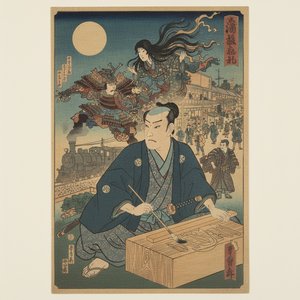
Tsukioka Yoshitoshi's "The Moon Through A Crumbling Window," painted circa 1890, transcends mere visual representation; it embodies the profound philosophical currents of its time – a Japan grappling with rapid modernization while clinging fiercely to ancient traditions. More than just a beautiful landscape print, this artwork serves as a poignant commentary on the cyclical nature of existence and the inevitability of decay, themes central to Zen Buddhism and powerfully conveyed through Yoshitoshi’s masterful execution.The Artist's Vision: Kuniyoshi's Legacy and Yoshitoshi's Bold Innovation
Yoshitoshi emerged from the shadow of Utagawa Kuniyoshi, arguably Japan’s most celebrated ukiyo-e artist before him. Kuniyoshi had pioneered a style characterized by dramatic lighting, expressive brushwork, and an uncanny ability to capture fleeting emotions – techniques Yoshitoshi skillfully adopted and expanded upon. However, unlike his predecessor, Yoshitoshi wasn't simply replicating established conventions; he injected them with a distinctly melancholic sensibility, reflecting the anxieties of a nation facing unprecedented change. His distinctive approach distinguished him from many contemporaries, establishing him as a singular voice within the ukiyo-e canon.Technique and Composition: Light, Shadow, and Symbolic Resonance
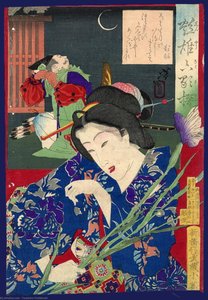
Yoshitoshi’s technique is remarkable for its subtlety yet profound impact. He employed delicate washes of ink combined with subtle gradations of color – primarily muted blues and greens – to create an atmosphere of serene contemplation. The composition itself is meticulously crafted. A solitary man sits beneath two ancient trees, gazing upwards at the moon, which dominates the upper portion of the canvas. Beneath him lies a crumbling stone wall, symbolizing the fragility of earthly existence and mirroring the transient beauty of nature. Yoshitoshi’s masterful use of light and shadow enhances this symbolism, emphasizing the contrast between permanence (the moon) and impermanence (the decaying wall).Symbolism: Echoes of Zen Philosophy
The imagery within "The Moon Through A Crumbling Window" resonates deeply with Zen Buddhist principles. The moon represents enlightenment – a state of unwavering awareness and acceptance of reality as it is, unburdened by illusion. Simultaneously, the crumbling wall symbolizes the impermanence inherent in all things; nothing lasts forever, and clinging to cherished ideals can only lead to sorrow. Yoshitoshi’s deliberate juxtaposition of these elements compels viewers to confront existential questions about life's journey and the importance of embracing change with grace.Emotional Impact: A Portrait of Quiet Reflection
Ultimately, “The Moon Through A Crumbling Window” evokes a powerful emotional response – one of quiet contemplation and melancholic beauty. It invites us to pause amidst the hustle and bustle of daily life and consider the profound wisdom embedded in accepting the inevitable passage of time. The painting’s understated elegance speaks volumes about Yoshitoshi's artistic vision, securing its place as an enduring masterpiece of Japanese art and a testament to the transformative power of observation and introspection.- Available reproductions on OriginalUniqueArt.com offer exceptional quality.
Questions & Answers
How does "The Moon Through A Crumbling Window" by Tsukioka Yoshitoshi connect Japanese Art Movement to the artist's home country?
The Japanese Art Movement work "The Moon Through A Crumbling Window" was made by an artist born in Japan.
Does "The Moon Through A Crumbling Window" by Tsukioka Yoshitoshi use strong contrasts or soft harmonies?
In "The Moon Through A Crumbling Window", a gentle contrast is paired with a discordant palette harmony.
What medium is "The Moon Through A Crumbling Window" by Tsukioka Yoshitoshi executed in?
Tsukioka Yoshitoshi used the acrylic on canvas technique for "The Moon Through A Crumbling Window". The technique defines the material nature of the original work.
More about this painting
 Preview
 Send
Send Share
Share
 Details
 Guide
Guide

 Download
 Similars
 X-Ray
X-Ray Diaporama
 Q&A
Q&A Stats
Stats