Menu
Text size

() ·

A painting made for you, by hand

Hand Made Oil Reproduction

Hand-painted oil on canvas in your size and frame, made to order by our artists. ( Switch to Print Switch to Digital Image)

Collectible Description

Witness the dramatic beauty of Tsukioka Yoshitoshi's "Moon Lovers" – a masterpiece of ukiyo-e woodblock prints capturing samurai combat and poignant emotion. Explore Japanese art history!

Artist Biography

Tsukioka Yoshitoshi (1839-1892): Last master of Ukiyo-e woodblock printing, famed for dramatic scenes & innovative artistry reflecting Japan's turbulent transition. Explore his warrior prints and legacy.

from ·

Chapter 1

How large should it be?

Slide to change the size; the wall on the left shows it at its real scale. The proportions of the original are kept.

Standard
custom
CM
INCH

Pick from our preset sizes that match the artwork's original proportions.

width
height

Type the width and the height you need, to fit your frame or your wall. This is hand-painted, so for a size with a different shape the artist can paint a bit more around the picture, or cut a bit — you choose. We send you a digital mockup to approve before the painting starts. The picture shown on this page does not show the real result — only the mockup does.

Chapter 2

How should it arrive?

Choose the edges of the stretched canvas

Choose your frame

Corner sample of the WhiteWrap canvas edge finish, stretched on solid wood bars
White $1
Corner sample of the BlurSideWrap canvas edge finish, stretched on solid wood bars
Blurside $1
Corner sample of the ExtendedWrap canvas edge finish, stretched on solid wood bars
Extended $1
Corner sample of the P118B picture frame: moulded polystyrene, 5 cm wide and 3 cm thick
P118B $10
Corner sample of the P118H picture frame: moulded polystyrene, 5 cm wide and 3 cm thick
P118H $10
Corner sample of the P118W picture frame: moulded polystyrene, 5 cm wide and 3 cm thick
P118W $10
Corner sample of the P438Z picture frame: moulded polystyrene, 5.5 cm wide and 3.5 cm thick
P438Z $10
Corner sample of the P508JH picture frame: moulded polystyrene, 7 cm wide and 3.5 cm thick
P508JH $12
Corner sample of the P508YH picture frame: moulded polystyrene, 7 cm wide and 3.5 cm thick
P508YH $12
Corner sample of the P805H picture frame: moulded polystyrene, 5 cm wide and 3.5 cm thick
P805H $10
Corner sample of the P805Z picture frame: moulded polystyrene, 5 cm wide and 3.5 cm thick
P805Z $10
Corner sample of the P919BZ picture frame: moulded polystyrene, 7 cm wide and 3.5 cm thick
P919BZ $10
Corner sample of the P919G picture frame: moulded polystyrene, 7 cm wide and 3.5 cm thick
P919G $10
Corner sample of the P919XJ picture frame: moulded polystyrene, 7 cm wide and 3.5 cm thick
P919XJ $10
Corner sample of the P959ZH picture frame: moulded polystyrene, 5 cm wide and 3 cm thick
P959ZH $10
Corner sample of the P968JZ picture frame: moulded polystyrene, 6 cm wide and 4 cm thick
P968JZ $12
Corner sample of the W106C picture frame: solid wood, 5 cm wide and 3 cm thick
W106C $8
Corner sample of the W218G picture frame: solid wood, 5 cm wide and 3 cm thick
W218G $10
Corner sample of the W218JH picture frame: solid wood, 5 cm wide and 3 cm thick
W218JH $8
Corner sample of the W218Y picture frame: solid wood, 5 cm wide and 3 cm thick
W218Y $10
Corner sample of the W307PJ picture frame: solid wood, 6 cm wide and 3 cm thick
W307PJ $10
Corner sample of the W316G picture frame: solid wood, 6 cm wide and 3 cm thick
W316G $10
Corner sample of the W316PJ picture frame: solid wood, 6 cm wide and 3 cm thick
W316PJ $8
Corner sample of the W316Y picture frame: solid wood, 6 cm wide and 3 cm thick
W316Y $10
Corner sample of the W398PJ picture frame: solid wood, 5 cm wide and 3 cm thick
W398PJ $8
Corner sample of the W4111J picture frame: solid wood, 6.5 cm wide and 3.5 cm thick
W4111J $10
Corner sample of the W500HY picture frame: solid wood, 7 cm wide and 5 cm thick
W500HY $15
Corner sample of the W500JH picture frame: solid wood, 7 cm wide and 5 cm thick
W500JH $15
Corner sample of the W692G picture frame: solid wood, 8 cm wide and 4 cm thick
W692G $12
Corner sample of the W849H picture frame: solid wood, 5 cm wide and 3 cm thick
W849H $8
Corner sample of the W940BG picture frame: solid wood, 7.5 cm wide and 4.5 cm thick
W940BG $15
Corner sample of the W953PJ picture frame: solid wood, 6 cm wide and 3.5 cm thick
W953PJ $8
Corner sample of the H24-GOLD picture frame: carved wood with gesso, 10 cm wide and 6 cm thick
H24-GOLD $30
Corner sample of the H24-SILVER picture frame: carved wood with gesso, 10 cm wide and 6 cm thick
H24-SILVER $30
Corner sample of the H36-GOLD picture frame: carved wood with gesso, 15 cm wide and 6.5 cm thick
H36-GOLD $45
Corner sample of the H36-SILVER picture frame: carved wood with gesso, 15 cm wide and 6.5 cm thick
H36-SILVER $45
Frame preview
Framed

Moulding: . Overall size with the frame: .

Chapter 3

Who paints it, and should anything change?

Examples of what can be changed: Replace face with customer photo; Add pet (e.g., replace cat with dog); Include hidden message in background; Change background landscape or elements.
After order, OriginalUniqueArt.com team will email client for instructions and provide a mockup preview

Worldwide Delivery () in 3/4 weeks instead of standard 5 weeks. (29 October). No compromise on quality.

Chapter 4

The finishing touches

A nameplate, as in a museum?

Engraved Bronze Plaque Details

This elegant plaque features the artist's name and the title of the artwork, finely engraved for a timeless presentation.

It is made from bronze with a refined, elegant finish. The text is precisely laser-engraved for a sharp and permanent result. Measuring 9x2 cm, the plaque is compact yet easy to read. It's built to be durable and scratch-resistant, offering a professional, museum-quality look. Mounting is simple thanks to the included adhesive backing.

Transparent Acrylic Plaque Details

The plaque includes essential engraved details such as the artist's name, the title of the artwork, the date it was created, the type of media used-like oil on canvas or watercolor-a brief description of the piece, and a QR code that links to the complete artwork information.

It is crafted from clear acrylic, offering a sleek, modern appearance. The text is UV-engraved in black to ensure strong visual contrast. With a size of 10x15 cm, it ensures optimal readability. It comes equipped with two metal hooks for secure wall mounting. The plaque is designed to be weather-resistant, making it suitable for various environments, and it includes interactive features that work seamlessly with smartphone scanning.

Black Acrylic Plaque Details

This elegant plaque includes engraved information such as the artist's name, the title of the artwork, the date it was created, the type of media used (like oil on canvas or watercolor), a short description of the artwork, and a QR code for quick access to more information.

The plaque itself is made from refined black acrylic with a premium finish. The text is laser-engraved in white for high contrast and readability. Its size is 10x15 cm, designed to be easy to read. It comes with two metal hooks for professional mounting. The design is sleek and fits any interior style. It is also weather-resistant and durable, with built-in digital integration for mobile compatibility.

A protective varnish?

When do you need it?

Chapter 5

Your painting, as you ordered it

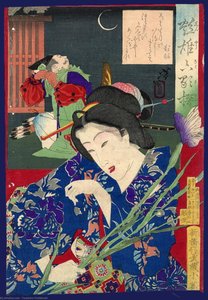
Moon Viewed Through The Heart

Reproduction Medium

Reproduction Size

-

Elite Senior Artist

More detail, finesse, and extra production time

-

Reproduction Frame

-

-

For artworks or reproductions larger than 105 cm (approximately 41 inches) on any side, the frame will be shipped as a kit, disassembled. This method ensures safe delivery and prevents damage during transport.

Professional assembly required - this is not a DIY product.
The kit must be assembled and the canvas stretched by an experienced professional framer, using wood glue (not supplied), a canvas stretching plier and clamps to hold the bars square while the glue dries. Incorrect assembly or uneven canvas tension can permanently damage the artwork and is not covered by our warranty.

  • All solid wood bars are included, precisely cut to size.

  • Assembled with the screws provided, plus wood glue for the corner joints, which is not supplied and must be sourced by your framer.

  • Professional tools are required and not included: a canvas stretching plier (tensioner) and clamps to hold the bars square while the glue dries.

Important:
The corner joints require wood glue, the bars must be held with clamps until the glue is fully dry, and tightening the canvas on the assembled frame requires a canvas stretching plier. None of these are included in the kit. Please arrange an experienced professional framer before ordering this size.

Nameplate

-

-

Protective Varnish

Glossy Varnish (enhances colors, protects against light/moisture)

-

Customize My Artwork

Examples of what can be changed: Replace face with customer photo; Add pet (e.g., replace cat with dog); Include hidden message in background; Change background landscape or elements.

-

Urgent

Worldwide Delivery () in 3/4 weeks instead of standard 5 weeks. (29 October). No compromise on quality.

-

Express Shipping

Worldwide Delivery () in 5 weeks. (5 November).

Included

Total Price

$ 325

Total Price $ 325

Glass option is only available in size under 110 CM

Included with every order

  • Free Worldwide Express Shipping
  • High-Quality Linen Canvas
  • Full Shipping Insurance
  • Customs Tax Refund Guarantee
  • True Color Matching Guarantee
  • 100-Day Return Policy (Defects Only)
  • 100% Money-Back Guarantee
  • Bulk Discount Offer

Tsukioka Yoshitoshi’s “Moon Viewed Through The Heart” – A Chronicle of Conflict and Reflection

Tsukioka Yoshitoshi's "Moon Viewed Through The Heart," a dramatic woodblock print depicting two samurai locked in mortal combat, transcends the simple depiction of battle. It is a poignant meditation on honor, loss, and the turbulent spirit of late Edo Japan – a period defined by profound societal shifts and an artist grappling with their role within them. This isn't merely a scene of violence; it’s a carefully constructed narrative brimming with symbolism, reflecting Yoshitoshi’s deep engagement with the anxieties and aspirations of his era. The print’s enduring power lies in its ability to evoke not just the spectacle of war, but also the quiet contemplation of human fallibility and the fleeting nature of existence.

  • Subject Matter: Two warriors engaged in a ferocious duel, their movements frozen mid-action. One lunges forward with a raised sword, embodying aggression and attack, while the other defends himself with a drawn bow, representing resilience and readiness. The inclusion of fallen weapons underscores the brutal cost of conflict.
  • Style: Executed flawlessly within the ukiyo-e tradition, "Moon Viewed Through The Heart" showcases Yoshitoshi’s mastery of dynamic composition and bold line work. The flattened perspective, characteristic of the genre, directs the viewer's eye directly to the central action, amplifying the sense of immediacy and drama.
  • Color Palette: Dominated by a restrained palette of blues, grays, and browns, punctuated by vibrant reds and yellows – colors traditionally associated with blood, fire, and spiritual intensity. This deliberate use of color heightens the emotional impact of the scene, drawing attention to key elements and reinforcing the themes of violence and sacrifice.

The Artist’s Vision: A Reflection of a Changing Japan

Yoshitoshi's work emerged during a critical juncture in Japanese history – the waning years of the Tokugawa shogunate and the dawn of the Meiji Restoration. The traditional social order was crumbling, replaced by rapid Westernization and modernization. This upheaval profoundly affected Yoshitoshi’s artistic vision, leading him to explore themes of loss, decay, and the struggle to preserve cultural identity. “Moon Viewed Through The Heart” can be interpreted as a visual lament for a vanishing world – a world of samurai codes, feudal loyalties, and deeply rooted traditions.

Historical Context: The print’s creation coincided with intense political instability and social unrest in Japan. The Meiji Restoration was underway, bringing about radical changes that threatened the established order. Yoshitoshi's depictions of violence often reflected this underlying tension, serving as a visual commentary on the chaos and uncertainty of the times.

Technique and Craftsmanship: A Masterful Woodblock Print

The creation of “Moon Viewed Through The Heart” exemplifies the meticulous craftsmanship involved in traditional Japanese woodblock printing. Each warrior is rendered with incredible detail, showcasing Yoshitoshi’s exceptional skill in capturing human anatomy and movement. The bold lines define their muscular forms and dynamic poses, while subtle shading creates a sense of depth and texture. The print was created through a complex multi-step process:

  • Carving: A skilled artisan meticulously carved the image into a wooden block using specialized tools.
  • Inking: Ink was carefully applied to the raised areas of the block, creating a dense and vibrant print.
  • Printing: Paper was pressed firmly onto the inked block, transferring the image with remarkable clarity and precision. Multiple blocks were used for different colors, adding layers of complexity and richness to the final artwork.

Symbolism and Emotional Resonance

"Moon Viewed Through The Heart" is rich in symbolic meaning. The raised sword represents aggression and attack, while the drawn bow symbolizes defense and readiness. The presence of birds in the sky may represent freedom or transcendence – a yearning for escape from the horrors of war. Beyond its literal depiction of combat, the print evokes a profound sense of melancholy and contemplation. It’s a reminder of the human cost of conflict and the fragility of life. The title itself, “Moon Viewed Through The Heart,” suggests an introspective gaze—a moment of reflection amidst chaos.

Questions & Answers

Is "Moon Viewed Through The Heart" by Tsukioka Yoshitoshi a portrait, landscape or square composition?

The format of "Moon Viewed Through The Heart" is portrait. This is useful when planning where a reproduction will be placed.

Is there a slideshow for "Moon Viewed Through The Heart" by Tsukioka Yoshitoshi?

"Moon Viewed Through The Heart" by Tsukioka Yoshitoshi can be viewed as a slideshow on the artwork's Diaporama page.

What other names is Tsukioka Yoshitoshi known by?

Tsukioka Yoshitoshi is also known as Owariya Yonejiro, Taiso Yoshitoshi.

In numbers

  • 29frames to choose from
  • standard sizes, in its own proportions
  • 5weeks to paint and deliver it
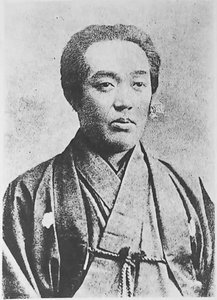
Tsukioka Yoshitoshi

Tsukioka Yoshitoshi

1839 - 1892, Japan

Quick Facts

  • Full Name: Tsukioka Yoshitoshi
  • Nationality: Japanese
  • Date Of Birth: 1839
  • Date Of Death: 1892
  • Place Of Birth: Tokyo, Japan
  • Notable Artworks:
    • Tokugawa Iemitsu receiving lords
    • Warrior (Yamanaka Shikanasake)
    • Musha-e Series
    • Sukune - Yoshitoshi Musha Burui
    • The Moon And The Abandoned Old Woman
    • Sumidagawa- Koji Of Umewaka
  • Artistic Movement Or Style: Ukiyo-e
  • Artists Who Influenced This Artist: ['Utagawa Kuniyoshi']
  • Artists Or Movements Influenced By This Artist: ['Future Japanese artists']

Artist Biography

A Life Etched in Ink and Wood: The World of Tsukioka Yoshitoshi

Tsukioka Yoshitoshi, born Owariya Yonejiro in 1839 amidst the bustling streets of Edo (modern Tokyo), stands as a monumental figure in the history of Japanese art. He is widely celebrated as the last great master of *ukiyo-e*, the “pictures of the floating world,” yet to define him solely by this title feels insufficient. Yoshitoshi wasn’t merely a preserver of tradition; he was an innovator, a visual storyteller who fearlessly captured the tumultuous spirit of a Japan undergoing radical transformation. His life unfolded against a backdrop of societal upheaval – the waning years of the Tokugawa shogunate, the Meiji Restoration, and the rapid influx of Western ideas – all profoundly shaping his artistic vision. From humble beginnings as the son of a merchant elevated to samurai status, Yoshitoshi’s path led him into an apprenticeship with Utagawa Kuniyoshi, a master whose influence would be indelible. This formative period instilled in him not only technical skill but also a deep appreciation for narrative and dynamic composition.

From Apprenticeship to Artistic Independence

Yoshitoshi's early years were steeped in the rigorous discipline of *ukiyo-e* training under Kuniyoshi. He absorbed his master’s techniques, honing his draftsmanship and learning to translate stories into compelling visual form. However, Yoshitoshi quickly began to forge his own path. While initially working within established conventions, he soon demonstrated a willingness to push boundaries, particularly in his depictions of violence and death. These weren't gratuitous displays but rather reflections of the era’s unrest and personal tragedies – the loss of both his father and Kuniyoshi deeply impacted his artistic direction. The mid-1860s saw Yoshitoshi gaining recognition for what became known as his “bloody prints,” a series characterized by graphic imagery and dramatic intensity. Series like *Eimei nijûhasshûku* (Twenty-Eight Famous Murders with Verse) shocked and captivated audiences, showcasing scenes of brutal killings rendered with startling realism. This willingness to confront dark themes set him apart from many of his contemporaries. He experimented with different series and subjects, including the popular *Tsūzoku saiyūki* (“A Modern Journey to the West”) and *Wakan hyaku monogatari* (“One Hundred Stories of China and Japan”), demonstrating a versatility that further cemented his reputation.

Innovation in a Changing World

Yoshitoshi’s genius lay not only in his subject matter but also in his artistic technique. He masterfully blended traditional Japanese aesthetics with Western influences, incorporating elements of perspective and composition gleaned from imported prints and engravings. This fusion created a unique visual language that was both distinctly Japanese and strikingly modern. As Japan embraced modernization, new technologies like photography and lithography threatened the very existence of *ukiyo-e*. Yoshitoshi recognized this challenge and responded by elevating his craft to unprecedented levels of artistry. He experimented with color palettes, refined his carving techniques, and pushed the boundaries of narrative storytelling within the woodblock medium. His series *Musha Burui* (Warrior Prints) exemplifies this dedication – each print a dynamic explosion of action and emotion, showcasing his skill in portraying heroic figures and dramatic battles. He understood that to survive, *ukiyo-e* had to evolve, and he dedicated himself to ensuring its continued relevance.

Legacy and Enduring Influence

Despite facing immense challenges – financial hardship, personal struggles, and the decline of traditional art forms – Yoshitoshi remained steadfast in his commitment to *ukiyo-e*. He worked tirelessly until his death in 1892, leaving behind a vast body of work that continues to inspire awe and admiration. While his direct influence on subsequent generations of Japanese artists is debated, there’s no denying his historical significance. Yoshitoshi stands as the last great master of *ukiyo-e*, a pivotal figure who preserved and elevated an art form during a period of profound change. His courage, vision, and unwavering dedication ensured that the spirit of the “floating world” would endure for generations to come. Today, his prints are celebrated in museums and collections around the globe, testaments to his enduring artistic legacy.

A Final Flourish: Yoshitoshi’s Lasting Impact

  • Preservation of Tradition: In a rapidly modernizing Japan, Yoshitoshi championed traditional woodblock printing techniques.
  • Artistic Innovation: He seamlessly blended Japanese aesthetics with Western influences, creating a unique and dynamic style.
  • Narrative Power: His prints are renowned for their compelling storytelling and dramatic intensity.
  • Historical Documentation: Yoshitoshi’s work provides valuable insights into the social, political, and cultural landscape of 19th-century Japan.
  • A testament to his enduring legacy is the continued appreciation for his artistry by collectors and art enthusiasts worldwide.
Yoshitoshi’s life was a struggle against time, a valiant effort to safeguard a cherished artistic tradition in the face of overwhelming change. He succeeded not only in preserving *ukiyo-e* but also in transforming it, leaving behind a body of work that continues to captivate and inspire. His prints are more than just beautiful objects; they are windows into a bygone era, powerful expressions of human emotion, and enduring symbols of artistic excellence.

Quick Facts

  • Title: Moon Viewed Through The Heart
  • Artistic style: Japanese, Traditional
  • Medium: Woodblock Print (Ukiyo-e)
  • Influences:
    • Kuniyoshi
    • Western Art
  • Movement: Ukiyo-e

Art Quiz

There is only one correct answer for each question.

Question 1:
What is the primary artistic style exemplified by this woodblock print?
Question 2:
The title ‘Moon Viewed Through The Heart By Yoshitoshi Taiso, Two Samurai Warriors Fighting’ suggests which of the following themes?
Question 3:
Which of the following best describes the technique used to create this artwork?
Question 4:
Tsukioka Yoshitoshi is most notable for:
Question 5:
The use of muted colors in this print primarily contributes to which effect?

More about this painting

Preview AR preview Switch to Print Switch to Digital Image Send
Details Guide Add to favorites Download Similars X-Ray Diaporama Q&A Stats