Preview
 Send
Send Share
Share
 Details
 Guide
Guide

 Download
 Similars
 X-Ray
X-Ray Diaporama
 Stats
StatsIn the Northland


 Read More
Hand Made Oil Reproduction
Hand-painted oil on canvas in your size and frame, made to order by our artists. ( Switch to Print Switch to Digital Image)




P118B $10

P118H $10

P118W $10

P438Z $10

P508JH $12

P508YH $12

P805H $10

P805Z $10

P919BZ $10

P919G $10

P919XJ $10

P959ZH $10

P968JZ $12

W106C $8

W218G $10

W218JH $8

W218Y $10

W307PJ $10

W316G $10

W316PJ $8

W316Y $10

W398PJ $8

W4111J $10

W500HY $15

W500JH $15

W692G $12

W849H $8

W940BG $15

W953PJ $8




Pick from our preset sizes that match the artwork's original proportions.

Type the width and the height you need, to fit your frame or your wall. This is hand-painted, so for a size with a different shape the artist can paint a bit more around the picture, or cut a bit — you choose. We send you a digital mockup to approve before the painting starts. The picture shown on this page does not show the real result — only the mockup does.
After order, OriginalUniqueArt.com team will email client for instructions and provide a mockup preview
Worldwide Delivery () in 3/4 weeks instead of standard 5 weeks. (26 October). No compromise on quality.

Free Worldwide Express Shipping

High-Quality Linen Canvas

Full Shipping Insurance

Customs Tax Refund Guarantee

True Color Matching Guarantee

100-Day Return Policy (Defects Only)

100% Money-Back Guarantee

Bulk Discount Offer
 Glass option is only available in size under 110 CM

In the Northland
Reproduction Medium
Reproduction Size
-


Total Price
$ 300
A Symphony of Autumnal Splendor
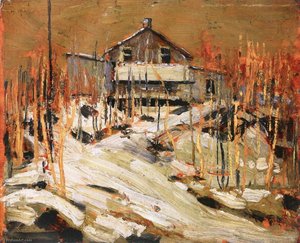
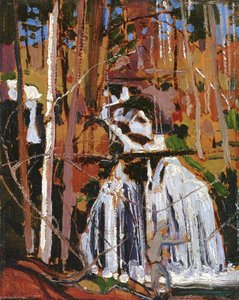
To gaze upon this depiction, "In the Northland," is to be enveloped by the very breath of autumn itself. It is more than just a painting; it is a captured moment of profound natural transition. The scene unfolds across a tranquil body of water, its surface mirroring the vibrant drama playing out in the surrounding foliage. Here, the artist has masterfully orchestrated a palette that speaks directly to the soul—a riotous celebration where greens yield to golds, scarlets deepen into russets, and the air itself seems saturated with the rich perfume of decay and renewal. Scattered figures dot the landscape, not merely as subjects, but as witnesses to nature's grand performance, suggesting moments of quiet contemplation or shared communion amidst the seasonal shift.
The Spirit of Tom Thomson’s Brushwork
This work channels the unmistakable energy of Tom Thomson, an artist whose brief but brilliant career left an indelible mark on Canadian art. His technique is characterized by a bold immediacy; one senses the swift, confident stroke of the brush that captured the fleeting quality of light and atmosphere. The application of paint suggests an almost visceral connection to the subject matter—the water seems restless yet calm, the trees possess a palpable texture, and the overall composition pulses with untamed vitality. For those drawn to the raw power of the Canadian wilderness, Thomson’s handling elevates mere landscape painting into something mythic, suggesting that the land itself is alive, breathing, and constantly changing.
Symbolism of the Northland Passage
The inclusion of the boat upon the water adds a crucial narrative layer. It speaks to journey, passage, and the human relationship with nature’s immensity. The fall season itself is rich with symbolism—it represents maturity, beautiful culmination, and the necessary surrender before the quietude of winter. The vibrant colors are not just decorative; they are an emotional outpouring, capturing that bittersweet beauty we feel when something perfect must inevitably change. It invites the viewer to pause their own hurried lives and reflect on cycles, memory, and the enduring beauty found in transition.
Bringing Wilderness Home: Decorating with Art
For the collector or designer seeking a piece that anchors a room with depth and narrative weight, "In the Northland" offers unparalleled emotional resonance. Its dramatic color story allows it to complement both rustic cabin aesthetics and more refined, nature-inspired interiors. Reproducing this work allows one to bring the untamed spirit of the Canadian Shield into a domestic setting. Imagine the soft glow of natural light catching the painted reflections on the water, transforming any space into a sanctuary reminiscent of an autumn afternoon by the lake.
A Legacy in Color and Light
To own a reproduction of this piece is to connect with a pivotal moment in art history—the emergence of a distinctly Canadian voice. It speaks of resilience, of finding profound beauty in the wild expanse, and of capturing light at its most dramatic peak. The overall effect is one of sublime harmony; a perfect marriage between human activity and overwhelming natural grandeur. It remains a timeless vision, urging us to look outward, toward the vibrant pulse of the changing world.
Questions & Answers
Can I see "In the Northland" by Tom Thomson under different lights?
"In the Northland" can be examined layer by layer on the artwork's X-Ray page, a viewer inspired by a conservator's light bench with eleven optical readings of the image.
Are the colors of "In the Northland" by Tom Thomson vivid or muted?
The colors of "In the Northland" by Tom Thomson show a subtle color saturation with a balanced intensity.
How strong is the contrast in "In the Northland" by Tom Thomson?
The contrast level of "In the Northland" by Tom Thomson is bold.
Artist Biography
A Pioneer of the Canadian Wilderness
Thomas John Thomson, known simply as Tom Thomson to generations of Canadians, remains a pivotal and somewhat enigmatic figure in the nation’s artistic heritage. Though his active career spanned only a handful of years – tragically cut short at the age of thirty-nine – he indelibly shaped the course of Canadian art, acting as a crucial precursor to the renowned Group of Seven and leaving behind a legacy of evocative landscapes that continue to resonate deeply with audiences today. His story is one of late blossoming, of a restless spirit finding its voice in the untamed beauty of Ontario’s wilderness, and of an enduring mystery surrounding his untimely death.From Rural Beginnings to Artistic Awakening
Born August 5, 1877, in Claremont, Ontario, Thomson's early life was steeped in the rhythms of rural existence. He grew up as one of ten children in a farming family, an upbringing that instilled within him a profound connection to the natural world – though not initially expressed through artistic pursuits. His formal education was intermittent, punctuated by periods of illness and practical necessity. Before dedicating himself to art, Thomson explored various trades: he worked at an iron foundry, briefly attended business college, and even ventured west to Seattle where he honed his skills as a commercial artist. This period proved formative; it wasn’t merely about acquiring technical proficiency in penmanship and design at firms like Maring & Ladd, but also about encountering individuals who would later become central figures in the burgeoning Canadian art scene – J.E.H. MacDonald and Lawren Harris among them. These connections provided a crucial intellectual and artistic environment that nurtured his latent talent. However, it was the discovery of Algonquin Park in 1912 that truly ignited Thomson’s artistic passion. Guided by MacDonald's encouragement, he began to sketch the park’s breathtaking vistas, embarking on a journey of self-discovery through landscape painting.The Evolution of a Distinctive Style
Thomson’s early paintings reveal a promising but unrefined talent. While demonstrating an understanding of composition and color, they lacked the distinctive voice that would come to define his mature work. Over time, however, his style underwent a dramatic transformation. He moved away from conventional techniques, embracing a bolder, more expressive approach characterized by vivid colors, thickly applied paint – *impasto* – and dynamic brushstrokes. These weren’t merely representations of the landscape; they were visceral interpretations, conveying the energy, atmosphere, and emotional intensity of the Canadian wilderness. His subject matter remained almost exclusively landscapes: towering trees, expansive skies, shimmering lakes, winding rivers, and the subtle nuances of light and shadow across the terrain. He captured not just what he *saw*, but how it *felt* to be immersed in that environment. This ability to infuse his paintings with a sense of immediacy and emotional resonance set him apart from his contemporaries.Legacy and Lasting Influence
Paintings like The Jack Pine, The West Wind, Moonlight Sail, and Birch Grove, Autumn have become iconic representations of Canadian identity and the nation’s natural beauty. Though he died before the formal establishment of the Group of Seven in 1920, Thomson is widely considered an unofficial member – a foundational influence whose artistic vision paved the way for their groundbreaking work. His embrace of bold colors, expressive brushwork, and uniquely Canadian subject matter profoundly shaped the group’s direction. The circumstances surrounding his death in July 1917, by drowning in Canoe Lake, remain shrouded in mystery, adding to the mystique that surrounds his life and art. Was it a tragic accident, or something more? This ambiguity has fueled speculation for decades, further cementing Thomson's place as a legendary figure in Canadian culture. Today, his works are primarily held in major Canadian institutions such as the Art Gallery of Ontario, the National Gallery of Canada, the McMichael Canadian Art Collection, and the Tom Thomson Art Gallery, ensuring that his vision continues to inspire and captivate generations to come. He stands as a testament to the power of artistic expression to capture the essence of a nation’s soul.A Lasting Symbol
Thomson is rightfully recognized as a pioneer of Canadian modern art, breaking away from European traditions and forging a uniquely Canadian aesthetic. His paintings are more than just landscapes; they are powerful symbols of Canada's wilderness and national identity. The enduring popularity of his work speaks to its timeless quality and universal appeal. He didn’t simply paint what he saw; he painted how it *felt* to be Canadian, to be connected to the vastness and beauty of the northern landscape. His legacy continues to grow, solidifying his position as one of Canada's most beloved and important artists – a true icon of the nation’s artistic heritage.
Tom Thomson
1877 - 1917 , Canada
Quick Facts
- Full Name: Thomas John Thomson
- Nationality: Canadian
- Date Of Birth: 1877
- Date Of Death: 1917
- Place Of Birth: Claremont, Canada
- Notable Artworks:
- The Jack Pine
- The West Wind
- Moonlight Sail
- Birch Grove, Autumn
- Artistic Movement Or Style: Canadian Modernism
- Artists Who Influenced This Artist:
- J.E.H. MacDonald
- Lawren Harris
- Artists Or Movements Influenced By This Artist: ['Group of Seven']
Related Articles

George Agnew Reid: A Canadian Impressionist's Pursuit of Light, Colour, and National Identity
Explore the life & work of George Agnew Reid, a pivotal figure in Canadian Impressionism. Discover his genre paintings, mural commissions, and lasting influence on art education & national identity. A comprehensive guide for collectors & enthusiasts.

Evocations of Place: A Historical Journey Through Landscape Art
Explore the rich history of landscape art with OriginalUniqueArt. Discover renowned artists, movements like Impressionism & tonalism, and expert guidance for collecting timeless pieces. Find your perfect serene escape today!

Arthur Lismer: A Pioneer of Canadian Modernism & the Group of Seven's Visionary Spirit
Explore the life & art of Arthur Lismer, a pivotal figure in Canadian Modernism and founding member of the Group of Seven. Discover his landscapes, teaching legacy & lasting influence on Canadian art history.
Thomas Thomson: Pioneering Canadian Landscape & the Pursuit of National Identity
Explore the evocative landscapes of Tom Thomson, a pivotal figure in Canadian art & precursor to the Group of Seven. Discover his bold style, lasting legacy, and profound impact on shaping a national artistic identity.

Evocations of Place: A Historical Journey Through Landscape Art
Explore the rich history of landscape art with OriginalUniqueArt. Discover renowned artists, movements like Impressionism & Romanticism, and expert guidance for collecting timeless pieces. Find your perfect serene escape today!