
 Preview
 Send
Send Share
Share
 Details

 Download
 Similars
 X-Ray
X-Ray Diaporama
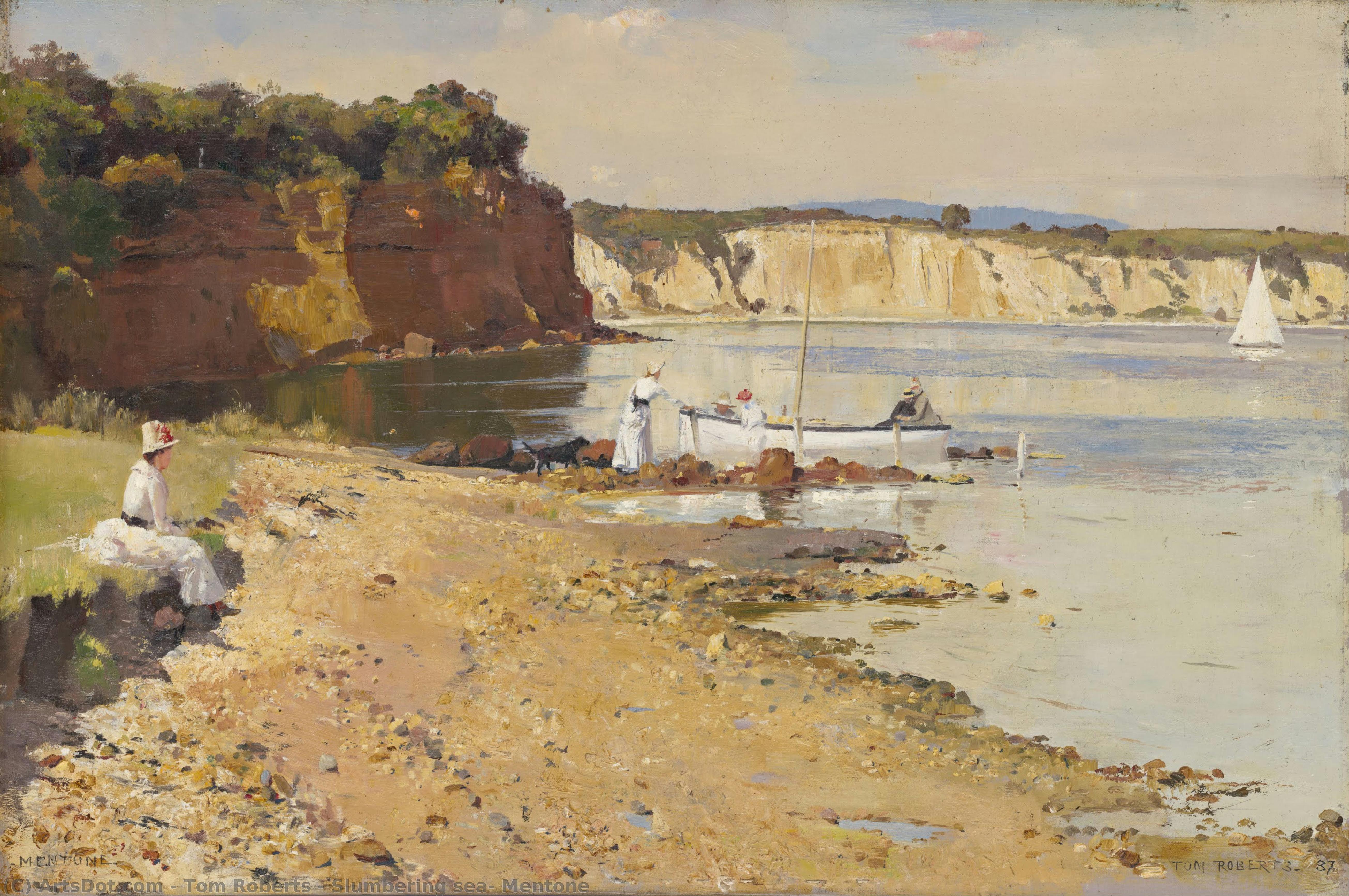
Slumbering sea, Mentone


 Read More
Giclée / Art Print
Museum-quality giclée or canvas print with fast production and flexible finish options. ( Buy Hand Made Painting Buy Image)




P118B $10

P118H $10

P118W $10

P438Z $10

P508JH $12

P508YH $12

P805H $10

P805Z $10

P919BZ $10

P919G $10

P919XJ $10

P959ZH $10

P968JZ $12

W106C $8

W218G $10

W218JH $8

W218Y $10

W307PJ $10

W316G $10

W316PJ $8

W316Y $10

W398PJ $8

W4111J $10

W500HY $15

W500JH $15

W692G $12

W849H $8

W940BG $15

W953PJ $8




Pick from our preset sizes that match the artwork's original proportions.

You may enter your own dimensions to fit a specific frame or space. If your selected size does not match the original image's proportions, we will either crop the artwork or extend the image with a mirrored or solid-fill edge. A digital mockup will be sent for your approval before production begins.
Please note that the on-screen preview does not reflect the actual cropping or extension. Only the mockup will accurately show the final composition.
While custom sizes are available, we recommend selecting a dimension from the predefined list to preserve the original proportions.
Worldwide Delivery () in 2 weeks instead of standard 4/5 weeks. (14 August)

Free Worldwide Express Shipping

High-Quality Linen Canvas

Full Shipping Insurance

Customs Tax Refund Guarantee

True Color Matching Guarantee

60-Day Return Policy (Defects Only)

100% Money-Back Guarantee

Bulk Discount Offer
 Glass option is only available in size under 110 CM

Slumbering sea, Mentone
Giclée / Art Print
Reproduction Size
-


Total Price
$ 81
Collectible Description
Tom Roberts’ “Slumbering Sea, Mentone” – A Moment of Australian Harmony
“Slumbering Sea, Mentone,” painted in 1887 by Tom Roberts, is more than just a depiction of a coastal scene; it's a carefully constructed meditation on light, color, and the burgeoning sense of national identity within Australia. This work, housed at the National Gallery of Victoria, offers a captivating glimpse into the heart of the Heidelberg School’s artistic philosophy – a movement that sought to capture the unique spirit of the Australian landscape and its people.
Roberts, born in England but deeply rooted in the burgeoning Australian art scene, was a pivotal figure in establishing a distinctly ‘Australian’ visual language. He moved to Melbourne in 1869 and quickly immersed himself in the local artistic community, influenced by Louis Buvelot's traditional landscape training while simultaneously absorbing the vibrant Impressionistic techniques he encountered during his European travels. “Slumbering Sea, Mentone” exemplifies this synthesis – a masterful blend of observation, technique, and a profound understanding of light’s transformative power.
A Composition Woven with Triangles
The painting immediately draws the eye to its intricate composition. Roberts doesn't simply present a seascape; he orchestrates it through a sophisticated interplay of geometric forms. The foreground is dominated by interlocking triangles, subtly layered and overlapping, creating a sense of depth and spatial complexity. These triangular motifs aren’t merely decorative; they act as visual anchors, guiding the viewer’s eye across the canvas and contributing to the painting's overall harmony.
The central figure – a woman and boy with their loyal dog – seated on the shore serves as a crucial compositional device. Roberts strategically positions them within this triangular framework, drawing attention towards the distant boat and its journey into the bay. This placement creates a narrative flow, inviting the viewer to participate in the scene’s unfolding drama.
The Language of Color and Light
Roberts' masterful use of color is central to the painting’s evocative power. He eschews the bright, saturated hues often associated with Impressionism, instead favoring a more restrained palette dominated by earthy tones – umbers, ochres, and chalky whites – that perfectly capture the muted light and atmosphere of Mentone. These grounded colors are then brilliantly contrasted with delicate blues in the sky and sea, and the vibrant whites of the figures’ clothing, the boat, and the distant sail.
The painting is a testament to Roberts' ability to render the effects of light on color. He skillfully captures the hazy quality of the air, the shimmering reflections on the water, and the subtle gradations of tone that define the Australian landscape. The sparing use of black – in the sashes of the women’s dresses, the dog, and the boat’s rim – adds depth and definition without overwhelming the overall luminosity.
Symbolism and a Moment of Tranquility
Beyond its technical brilliance, “Slumbering Sea, Mentone” is rich in symbolic meaning. The scene evokes a sense of tranquility and connection to nature—a key theme within Australian art at the time. The boat represents progress and exploration, while the figures embody domesticity and the values of family life. The painting can be interpreted as a celebration of the Australian way of life – a harmonious blend of rural simplicity and burgeoning modernity.
Roberts’ choice to paint *en plein air*—outdoors directly from nature—underscores this connection. He sought not just to replicate what he saw, but to capture the very essence of the scene, imbuing it with his own emotional response. “Slumbering Sea, Mentone” is a beautiful and enduring testament to Roberts’ skill as a colorist and a painter who truly understood the soul of Australia.
Artist Biography
A Pioneer of the Australian Light: The Life and Art of Tom Roberts
Born in Dorchester, England, on March 8th, 1856, Thomas William Roberts would become a pivotal figure in the development of a distinctly Australian artistic identity. His early life was marked by a family migration to Melbourne in 1869, a journey that irrevocably shaped his artistic vision. The vast landscapes and unique light of Australia ignited within him a passion for capturing the essence of his adopted homeland. Initially working as a photographer’s assistant, Roberts honed his observational skills and developed an eye for composition—qualities that would become hallmarks of his celebrated paintings. He simultaneously pursued formal art training, studying under Louis Buvelot, whose influence instilled in him a love for landscape painting and a foundation in traditional techniques. However, it was a sojourn to Europe in 1881 that truly broadened Roberts’ artistic horizons.Forging an Australian Impressionism
Roberts' time in Europe, particularly his studies at the Royal Academy in London, exposed him to the latest artistic currents, including the burgeoning Impressionist movement. He absorbed the techniques of plein air painting—working outdoors directly from nature—and a focus on capturing fleeting moments of light and atmosphere. Upon returning to Australia in 1885, he brought with him not merely technical skills but a fervent desire to create an art that was authentically Australian. This ambition led him to collaborate with fellow artists Frederick McCubbin, Arthur Streeton, and Charles Conder, forming the core of what would become known as the Heidelberg School, or Australian Impressionism. The group established artist camps at Box Hill and Eaglemont, embracing a lifestyle dedicated to observing and painting the Australian bush. These weren’t simply artistic endeavors; they were statements of cultural independence, rejecting European conventions in favor of celebrating the unique character of their nation. The 1889 “9 by 5 Impression Exhibition,” showcasing small paintings on cedar cigar box lids, was a bold declaration of this new artistic vision—a defiant challenge to established norms and a pivotal moment in Australian art history.National Narratives and Enduring Legacy
While deeply committed to the principles of Impressionism, Roberts wasn’t content with merely replicating landscapes. He sought to create “national narratives”—paintings that depicted scenes of everyday Australian life and celebrated its people. Shearing the Rams (1890), arguably his most famous work, exemplifies this ambition. The painting is a powerful depiction of rural labor, capturing the energy and camaraderie of shearers at work. It’s not simply a record of an activity; it's a celebration of Australian masculinity and the importance of the pastoral industry. A Break Away! (1891), with its dynamic composition and sun-drenched atmosphere, similarly captures a quintessential moment of Australian life—a group of stockmen driving cattle across the plains. Bailed Up (1895), though less celebratory, offers a compelling glimpse into the realities of frontier life, depicting a stagecoach held up by bushrangers. These works weren’t just aesthetically pleasing; they were attempts to define what it meant to be Australian through art. Beyond these iconic paintings, Roberts also made significant contributions as a portraitist and, in 1903, completed The Big Picture, a monumental work commissioned to commemorate the opening of the first Australian Parliament—a visual record of a nation’s birth.A Champion for Australian Art
Tom Roberts' influence extended far beyond his own paintings. He was a tireless advocate for the development of an Australian art scene, actively promoting the work of his fellow artists and championing the establishment of national institutions to support and showcase Australian talent. He passionately believed in the importance of creating a distinctly Australian artistic identity—one that reflected the unique landscapes, people, and experiences of the nation. He was the first to publicly advocate for an Australian National Portrait Gallery, recognizing the power of portraiture to capture the spirit of a nation. His dedication to fostering a vibrant art culture cemented his position not only as a leading artist but also as a visionary leader who helped shape the course of Australian art history. His legacy continues to inspire generations of artists and remains a testament to the enduring power of art to define and celebrate national identity.Collections & Further Exploration
- Explore Tom Roberts’ artworks on OriginalUniqueArt.com.
- Discover more about his life and work through the Wikipedia entry on Tom Roberts.
- View the National Gallery of Victoria’s Australian art collection, including works by Roberts, at the Ian Potter Centre in Federation Square, Melbourne.
- Delve deeper into his biography and artistic development through resources like the Australian Dictionary of Biography.

Tom Roberts
1856 - 1931 , United Kingdom
Quick Facts
- Artistic Movement Or Style: Impressionism
- Artists Or Movements Influenced By This Artist:
- Heidelberg School
- Australian art
- Artists Who Influenced This Artist:
- Louis Buvelot
- Whistler
- Velazquez
- Date Of Birth: March 8, 1856
- Date Of Death: September 14, 1931
- Full Name: Thomas William Roberts
- Nationality: Australian
- Notable Artworks:
- Shearing the Rams
- A Break Away!
- Bailed Up
- Coming South
- Big Picture
- Place Of Birth: Dorchester, UK
Related Articles

Impressionism's Masterpieces: 10 Paintings That Defined a Movement | OriginalUniqueArt
Journey through Impressionism's heart with 10 iconic paintings by Monet, Renoir & Degas. Explore light, color & the stories behind these masterpieces. Find museum-quality art reproductions and elevate your home decor on OriginalUniqueArt.com.

Fleeting Moments & Radiant Light: Exploring the Enduring Legacy of Impressionism
Explore the captivating world of Impressionism! Discover its history, key artists like Monet & Renoir, defining techniques, and lasting impact on modern art. Expert insights for collectors.
Robert Julian Onderdonk: Pioneering Texas Impressionism & Capturing Regional Light
Explore the life & art of Robert Julian Onderdonk, 'the Father of Texas Painting.' Discover his vibrant Impressionist landscapes, iconic bluebonnets, and lasting legacy. Learn about collecting Onderdonk's work today.
Robert Bevan: Pioneering British Post-Impressionism & the Camden Town Group's Intimate Vision
Explore the life & work of Robert Bevan, a pioneer of British Post-Impressionism and founding member of the Camden Town Group. Discover his vibrant landscapes and lasting impact on early 20th-century art.

Hubert Robert: Picturing Ruins, Preserving Memory – A Study of Romantic Antiquarianism & Artistic Innovation
Explore the captivating world of Hubert Robert, master of Romantic landscape painting & 'capriccio' ruins. Discover his historical context, artistic innovations, and collecting insights with OriginalUniqueArt.



