 Preview
 Send
Send Share
Share
 Details
 Guide
Guide

 Download
 Similars
 X-Ray
X-Ray Diaporama
 Stats
StatsSt Dominic


 Read More
Hand Made Oil Reproduction
Hand-painted oil on canvas in your size and frame, made to order by our artists. ( Switch to Print Switch to Digital Image)




P118B $10

P118H $10

P118W $10

P438Z $10

P508JH $12

P508YH $12

P805H $10

P805Z $10

P919BZ $10

P919G $10

P919XJ $10

P959ZH $10

P968JZ $12

W106C $8

W218G $10

W218JH $8

W218Y $10

W307PJ $10

W316G $10

W316PJ $8

W316Y $10

W398PJ $8

W4111J $10

W500HY $15

W500JH $15

W692G $12

W849H $8

W940BG $15

W953PJ $8




Pick from our preset sizes that match the artwork's original proportions.

You may enter your own dimensions to fit a specific frame or space. If your selected size does not match the original image's proportions, we will either crop the artwork or extend the painting with additional hand-painted elements. A digital mockup will be sent for your approval before production begins.
Please note that the on-screen preview does not reflect the actual cropping or extension. Only the mockup will accurately show the final composition.
While custom sizes are available, we recommend selecting a dimension from the predefined list to preserve the original proportions.
After order, OriginalUniqueArt.com team will email client for instructions and provide a mockup preview
Worldwide Delivery () in 3/4 weeks instead of standard 5 weeks. (25 September). No compromise on quality.

Free Worldwide Express Shipping

High-Quality Linen Canvas

Full Shipping Insurance

Customs Tax Refund Guarantee

True Color Matching Guarantee

100-Day Return Policy (Defects Only)

100% Money-Back Guarantee

Bulk Discount Offer
 Glass option is only available in size under 110 CM

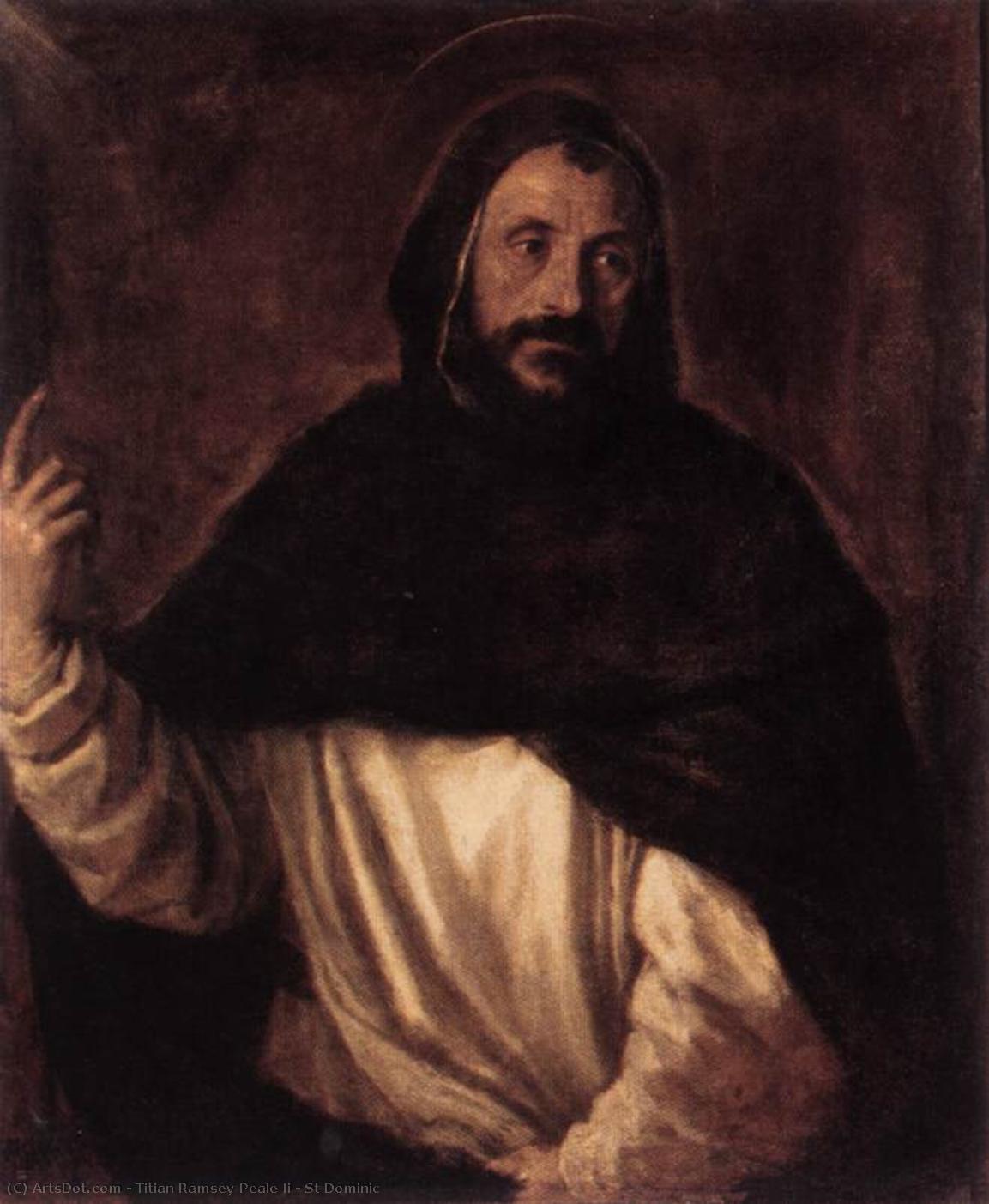
St Dominic
Reproduction Medium
Reproduction Size
-


Total Price
$ 300
A Venetian Soul in American Canvas: Exploring Titian Ramsay Peale II’s ‘St Dominic’
Titian Ramsay Peale II stands as a singular figure within the burgeoning artistic landscape of 19th-century America—a testament to the enduring power of classical influences amidst a nation striving for self-definition. Born into a lineage steeped in portraiture excellence, specifically through his father, Charles Willson Peale, he inherited not merely talent but also an unwavering devotion to Renaissance aesthetics, particularly those originating from Venice. This fascination wasn’t simply about stylistic imitation; it was about channeling the very essence of Venetian artistic tradition—a meticulous attention to detail and a masterful command of color that distinguished him noticeably from many of his contemporaries. His life unfolded during a period of significant cultural transformation, yet Peale's artistic vision remained resolutely focused on reviving the grandeur and intellectual rigor of bygone eras.The Painting’s Subject Matter: Faith Illuminated
‘St Dominic,’ executed in 1565, depicts Saint Dominic Guzmán, the founder of the Dominican Order—a pivotal figure in Catholic piety and scholastic theology. The painting captures a moment of contemplative prayer, portraying St. Dominic with dignified repose as he gestures towards an unseen source of divine inspiration. His posture exudes serenity and conviction, reflecting the core tenets of Dominican spirituality: devotion to God’s Word and unwavering commitment to combating heresy. The artist's deliberate choice of subject matter speaks volumes about the artistic sensibilities prevalent during his time—a desire to elevate spiritual contemplation through visual representation.Style and Technique: Venetian Realism Revisited
Peale II skillfully employs Venetian realism, a technique championed by artists like Titian and Raphael, to imbue ‘St Dominic’ with an unparalleled sense of luminosity and textural richness. The artist meticulously renders the drapery folds with subtle gradations of color, creating an illusion of depth and volume that draws the viewer's eye into the scene. Light plays across St. Dominic’s face and robe, highlighting contours and conveying a palpable feeling of solemnity. This masterful manipulation of light—a hallmark of Venetian painting—elevates the artwork beyond mere depiction; it aspires to capture the very spirit of faith itself.Historical Context: Renaissance Echoes in Early America
The creation of ‘St Dominic’ coincided with a period of intense intellectual and artistic revival across Europe, fueled by rediscovered classical texts and humanist ideals. Peale II's embrace of Venetian style reflects this broader cultural movement—a conscious effort to reconnect with the artistic heritage of antiquity while simultaneously forging an American identity rooted in noble traditions. The painting serves as a tangible reminder that artistic inspiration transcends geographical boundaries, demonstrating how ideas from one era can resonate powerfully across centuries.Symbolism and Emotional Resonance: A Portrait of Spiritual Integrity
Beyond its technical brilliance, ‘St Dominic’ resonates deeply with viewers on an emotional level—a testament to Peale II's ability to convey profound spiritual contemplation through visual art. The gesture towards the unseen divine symbolizes St. Dominic’s unwavering faith and his dedication to proclaiming God’s Word. The book held in his hand represents Scripture itself, highlighting its central role in Dominican theology and emphasizing the importance of intellectual inquiry alongside piety. Ultimately, ‘St Dominic’ invites reflection on themes of devotion, humility, and moral fortitude—qualities that continue to inspire admiration and contemplation today.Artist Biography
A Renaissance Echo in the New World
Titian Ramsay Peale II occupies a fascinating, often overlooked niche within the landscape of 19th-century American art. Born in Philadelphia in 1799, he was steeped in artistic lineage as the youngest son of Charles Willson Peale, a pivotal figure in early American portraiture and founder of the nation’s first museum. While his father's legacy loomed large, Titian forged his own path, one deeply rooted in the aesthetic ideals of the High Renaissance, particularly those emanating from Venice. He wasn’t merely replicating styles; he was channeling a profound artistic sensibility, imbuing his canvases with a meticulous detail and vibrant color palette that set him apart from many of his contemporaries. His life unfolded against a backdrop of burgeoning American identity, yet his artistic heart remained tethered to the classical masters, creating a compelling tension between Old World reverence and New World expression.From Naturalist’s Sketchbook to Painter's Canvas
Peale’s early years were marked by a dual fascination with art and natural history – a combination fostered by his father’s multifaceted pursuits. He accompanied expeditions, notably Stephen Harriman Long’s journey to the Rocky Mountains in 1819-20, documenting flora and fauna with an increasingly refined artistic eye. This period wasn't simply about recording observations; it was about *understanding* form, light, and texture – skills that would prove invaluable when he turned his full attention to painting. His work as a naturalist informed his art, lending a scientific precision to his depictions of the natural world, but also imbuing them with an emotional resonance that transcended mere documentation. He wasn’t just showing us what things looked like; he was revealing their inherent beauty and spiritual significance. This dedication to both disciplines is evident in pieces such as “The Tribute Money,” a dramatic rendering showcasing masterful light and shadow reminiscent of Rubens, and "Nymph and Shepherd", blending nature, mythology, and sensual beauty.Venetian Influences and Sacred Visions
The influence of Venetian colorism – the emphasis on rich, luminous colors and atmospheric effects championed by artists like Titian (from whom he took his first name) – is undeniable in Peale’s oeuvre. He wasn't simply copying these masters; he was internalizing their principles and adapting them to his own artistic vision. This is particularly evident in his religious works, such as “Altar Shrine with Four Saints” and "Adoration of the Shepherds". These paintings aren’t merely depictions of biblical scenes; they are immersive experiences, drawing the viewer into a world of spiritual contemplation through carefully orchestrated compositions and a masterful use of color to evoke emotion. The meticulous attention to detail in these works speaks not only to his technical skill but also to a deep reverence for his subject matter. “The Beauty,” a striking portrait, further demonstrates his ability to capture human form and character with elegance and refinement.Rediscovery and Lasting Significance
For much of the 20th century, Titian Ramsay Peale II remained largely obscured from art historical narratives. His work didn’t fit neatly into prevailing trends, and his dedication to a classical style felt anachronistic in a rapidly changing artistic landscape. However, recent years have witnessed a growing reassessment of his contributions. Scholars and collectors are recognizing the unique blend of American sensibilities and European traditions that characterizes his paintings. The rediscovery of his work is not merely about filling gaps in art history; it’s about gaining a deeper understanding of the complex cultural forces that shaped 19th-century America. Peale represents a bridge between worlds, a testament to the enduring power of classical ideals, and a reminder that artistic innovation often arises from unexpected combinations of influences. His paintings, now found in collections like those at OriginalUniqueArt, the Uffizi Gallery, and Palazzo Pitti, offer a compelling glimpse into a forgotten corner of American art history – a corner illuminated by the radiant glow of the Renaissance.
Titian Ramsay Peale II
1799 - 1885
Quick Facts
- Artistic Movement Or Style: High Renaissance
- Artists Who Influenced This Artist:
- Titian
- Venetian masters
- Date Of Birth: 1799
- Date Of Death: 1885
- Full Name: Titian Ramsay Peale II
- Nationality: American
- Notable Artworks:
- Altar Shrine with Four Saints
- Adoration of the Shepherds
- The Beauty
- Tribute Money
- Holy Family w/ Shepherd
- Nymph and Shepherd
Related Articles

Oil on Canvas: A Historical & Technical Exploration of a Timeless Artistic Medium
Explore the rich history & enduring techniques of oil painting on canvas. Discover the science behind its longevity, conservation practices, and contemporary relevance. Expert insights for art enthusiasts.

Commanding Presence: The Art of Authority and the Iconography of the Officer in Classical Portraiture
Explore the profound iconography of authority through iconic military portraits. Discover how master painters captured command, regalia, and historical prestige in classical oil paintings, perfect for discerning collectors seeking timeless elegance.
Timeless Elegance: The Ultimate Buyer's Guide to Choosing Classical Portraits for Sophisticated Interiors
Discover how to select the perfect classical portrait for your home. Our expert guide explores matching art styles to interiors, choosing between hand-painted oils and Giclée prints, and transforming personal photos into timeless masterpieces with professional artistry.

The Enduring Legacy of Oil on Canvas: Technique, History & Aesthetic Impact
Explore the rich history & techniques of oil painting – from Renaissance masters to Impressionism. Discover pigments, layering methods, and why this timeless medium endures. Expert insights for artists & art enthusiasts.
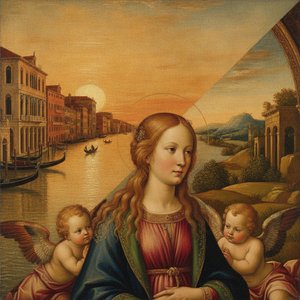
Golden Light & Rich Color: The Timeless Magic of Venetian Renaissance Art
Explore the luminous beauty of Venetian Renaissance art. Discover how masters like Titian used colorito and golden light to redefine painting through texture, emotion, and atmospheric brilliance in a masterclass of historical artistry.