Preview
 Send
Send Share
Share
 Details
 Guide
Guide

 Download
 Similars
 X-Ray
X-Ray Diaporama
 Stats
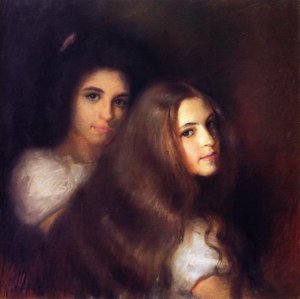
StatsMrs. L. A. Abrahams
 Oil On Canvas
- WallArt
- Academic Realism
 1888
1888- 19th Century
 41.0 x 36.0 cm
 National Gallery of Victoria
 Read More
Hand Made Oil Reproduction
Hand-painted oil on canvas in your size and frame, made to order by our artists. ( Switch to Print Switch to Digital Image)




P118B $10

P118H $10

P118W $10

P438Z $10

P508JH $12

P508YH $12

P805H $10

P805Z $10

P919BZ $10

P919G $10

P919XJ $10

P959ZH $10

P968JZ $12

W106C $8

W218G $10

W218JH $8

W218Y $10

W307PJ $10

W316G $10

W316PJ $8

W316Y $10

W398PJ $8

W4111J $10

W500HY $15

W500JH $15

W692G $12

W849H $8

W940BG $15

W953PJ $8




Pick from our preset sizes that match the artwork's original proportions.

Type the width and the height you need, to fit your frame or your wall. This is hand-painted, so for a size with a different shape the artist can paint a bit more around the picture, or cut a bit — you choose. We send you a digital mockup to approve before the painting starts. The picture shown on this page does not show the real result — only the mockup does.
After order, OriginalUniqueArt.com team will email client for instructions and provide a mockup preview
Worldwide Delivery () in 3/4 weeks instead of standard 5 weeks. (25 October). No compromise on quality.

Free Worldwide Express Shipping

High-Quality Linen Canvas

Full Shipping Insurance

Customs Tax Refund Guarantee

True Color Matching Guarantee

100-Day Return Policy (Defects Only)

100% Money-Back Guarantee

Bulk Discount Offer
 Glass option is only available in size under 110 CM

Mrs. L. A. Abrahams
Reproduction Medium
Reproduction Size
-


Total Price
$ 300
A Quiet Moment in Victorian Domesticity
To gaze upon Mrs. L. A. Abrahams is to be invited into a hushed, intimate chamber of the late nineteenth century. Thomas William Roberts has masterfully captured not just a likeness, but an entire atmosphere—the quiet dignity of domestic life. The subject sits within the comforting embrace of her own home, a space rendered with such palpable detail that one can almost hear the soft clinking of porcelain or smell the faint scent of potted earth. Her presence is central, commanding attention through her serious yet deeply contemplative gaze, which seems to meet the viewer’s eye across the gulf of time. It is a portrait steeped in the quiet resonance of memory and settled routine.
Mastery of Light and Domestic Detail
Roberts' technical brilliance shines through every visible surface. The use of oil on canvas allows for an astonishing depth of color, enabling him to render both the richness of the fabrics and the subtle play of light across the polished surfaces. Observe the dining table, adorned with its collection of cups; each piece catches a distinct highlight, suggesting the morning sun filtering in from an unseen window. The inclusion of the vases and the verdant potted plant are not mere filler; they are carefully placed anchors that ground the scene in reality. This meticulous attention to everyday objects elevates the painting beyond simple portraiture into a profound study of domestic harmony.
The Historical Echo of Australian Art
Created in 1888, this work stands as a significant artifact from Australia's burgeoning artistic history. Thomas William Roberts, whose journey took him from Dorchester to Melbourne, became one of the most defining voices of his era. His ability to absorb and reinterpret the light and landscape of his new home while retaining a classical sense of portraiture is evident here. Owning a reproduction of Mrs. L. A. Abrahams allows contemporary admirers to connect directly with this pivotal moment in Australian cultural heritage, bringing a piece of that pioneering spirit into modern living spaces.
Symbolism and Emotional Resonance for the Modern Collector
The painting speaks volumes without uttering a word. The arrangement—the seated figure surrounded by signs of cultivated life—suggests themes of permanence amidst change, and the quiet strength found within personal sanctuary. For the art lover or interior designer, this piece offers more than mere decoration; it provides an emotional anchor. It suggests that beauty can be found in the unposed moments, in the objects we cherish, and in the steady gaze of a life well-lived. A reproduction allows one to curate not just walls, but moods, infusing any room with the warm, contemplative glow of a bygone era.
Questions & Answers
Is "Mrs. L. A. Abrahams" by Thomas William Roberts in the public domain, and why?
"Mrs. L. A. Abrahams" by Thomas William Roberts is in the public domain - its copyright has expired. Copyright terms are measured from the artist's death, and Thomas William Roberts died in 1931.
Which period of Thomas William Roberts's career does "Mrs. L. A. Abrahams" belong to?
"Mrs. L. A. Abrahams" belongs to the Mature Period of Thomas William Roberts's career. This classification relates the work to the artist's development.
What is a reproduction of "Mrs. L. A. Abrahams" by Thomas William Roberts recommended for?
The suggested use for "Mrs. L. A. Abrahams" by Thomas William Roberts is focal. It can serve other purposes as well.
Artist Biography
Early Life and Formation in Two Worlds
Thomas William Roberts, born on March 9th, 1856, in the quiet Dorset town of Dorchester, England, embarked on a journey that would see him become a pivotal figure in Australian art. His early life was marked by a sense of transience; his father, Richard Roberts, a printer and journalist, moved the family frequently seeking work. This instability culminated in the death of Richard when Tom was just thirteen, forcing his mother, Matilda Agnes Cela Evans, to make the courageous decision to emigrate with her children to Melbourne, Australia, in 1869. Though initially struggling financially, Matilda’s determination ensured young Tom received some education at Dorchester Grammar School before their departure—a foundation that would later inform his artistic vision. The move to Australia was not merely a change of location but a shift into a world brimming with new light, colors, and landscapes that would profoundly shape the artist he became. He initially took on work as a photographer’s assistant, an experience which honed his observational skills and understanding of composition—skills that would prove invaluable in his later paintings.Embracing Impressionism and Defining a National Identity
Roberts' formal artistic training began at the Collingwood and Carlton artisans' schools of design, followed by studies at the National Gallery School under Thomas Clark. However, it was his time at the Royal Academy in London (1881-1884) that truly exposed him to the burgeoning Impressionist movement sweeping Europe. Returning to Melbourne in 1885, Roberts became a driving force behind what would become known as the Heidelberg School—often referred to as Australian Impressionism. He wasn’t simply importing European styles; he was determined to forge an artistic language uniquely suited to the Australian experience. Alongside fellow artists Frederick McCubbin, Arthur Streeton, and Charles Conder, Roberts established artist camps in places like Box Hill, fostering a collaborative environment where they could paint *en plein air*, directly from nature. This dedication to capturing the fleeting effects of light and atmosphere on the distinctly Australian bushland was revolutionary. The 1889 “9 by 5 Impression Exhibition,” featuring small works painted on cigar box lids, was a bold statement—a rejection of academic conventions and an embrace of immediacy and national subject matter.Landscapes of Labor and Life
Roberts’ most celebrated paintings are those that capture the essence of Australian life in the late 19th century. Works like Shearing the Rams (1890) and A Break Away! (1891) aren't merely depictions of rural scenes; they’re powerful narratives celebrating the dignity of labor, the vastness of the outback, and a growing sense of national identity. Shearing the Rams, in particular, is considered an iconic image of Australian pastoral life—a dynamic composition filled with energy and movement, depicting shearers at work on a sprawling sheep station. His use of light and color wasn’t simply aesthetic; it was employed to convey the harshness and beauty of the landscape, and the resilience of those who worked within it. Beyond these grand narratives, Roberts also excelled in portraiture, capturing the character and spirit of his subjects with sensitivity and skill. Miss Florence Greaves (1898) exemplifies his ability to create intimate and evocative portraits that reveal a deep understanding of human psychology.A Legacy Forged in Paint and Advocacy
Roberts’ influence extended far beyond his own canvases. He was a tireless advocate for the establishment of a national art culture in Australia, pushing for the creation of institutions dedicated to supporting local artists. In 1903, he completed The Big Picture, a monumental work commissioned to depict the opening of the first Australian Parliament—a project that cemented his position as a leading figure in shaping Australia’s visual identity. This ambitious undertaking was not without its challenges, but it stands as a testament to Roberts' commitment to documenting and celebrating the nation’s history. He encouraged other artists to embrace uniquely Australian themes and styles, fostering a generation of painters who would continue to build upon his legacy. Though he faced periods of financial hardship and critical debate throughout his career, Tom Roberts remained steadfast in his vision—a vision that ultimately transformed the landscape of Australian art, leaving an enduring mark on the nation’s cultural consciousness. He died in 1931, but his paintings continue to resonate with audiences today, offering a powerful glimpse into the heart and soul of Australia.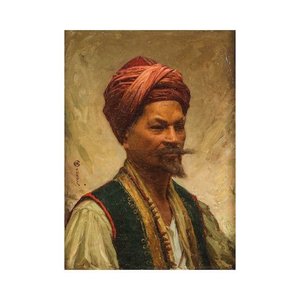
Thomas William Roberts
1856 - 1931 , United Kingdom
Quick Facts
- Full Name: Thomas William Roberts
- Nationality: British-Australian
- Date Of Birth: 1856
- Date Of Death: 1931
- Place Of Birth: Dorchester, United Kingdom
- Notable Artworks:
- A Mountain Muster
- Poppies
- Miss Florence Greaves
- Shearing the Rams
- Artistic Movement Or Style: Impressionism
- Artists Who Influenced This Artist:
- Louis Buvelot
- Eugen von Guerard
- Whistler
- Artists Or Movements Influenced By This Artist:
- Heidelberg School
- Australian Impressionism
Related Articles

The Enduring Legacy of Oil on Canvas: Technique, History & Aesthetic Impact
Explore the rich history & techniques of oil painting – from Renaissance masters to Impressionism. Discover pigments, layering methods, and why this timeless medium endures. Expert insights for artists & art enthusiasts.
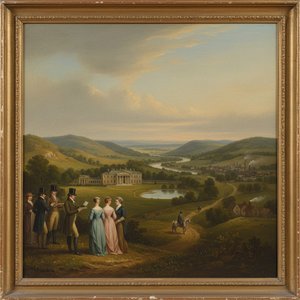
Thomas Barker of Bath: Landscape Painting & Societal Reflection in Early 19th-Century England
Explore the life & work of Thomas Barker of Bath, a key figure in 19th-century English Romanticism. Discover his Parisian success, iconic paintings like 'The Bride of Death', and lasting artistic legacy. Learn more at OriginalUniqueArt.
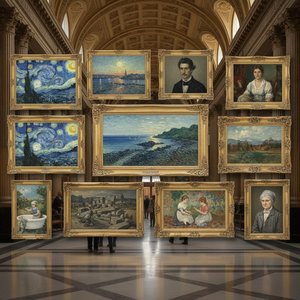
19th Century Masterpieces: 10 Paintings That Defined an Era | OriginalUniqueArt
Journey through 19th century art with OriginalUniqueArt! Explore 10 iconic paintings – from Monet & Renoir to Courbet – and discover the stories behind Romanticism, Realism & Impressionism. Find museum-quality reproductions for your home decor. Explore the full collection online!
Marianne North's Masterpieces: 25 Botanical Paintings That Bloom With Adventure | OriginalUniqueArt
Journey through the vibrant world of Marianne North’s botanical paintings! Explore 25 iconic artworks from this Victorian artist, celebrating exotic flora & travel. Find museum-quality reproductions and curated decor ideas at OriginalUniqueArt.com.

Oil on Canvas: A Historical & Technical Exploration of a Timeless Artistic Medium
Explore the rich history & enduring techniques of oil painting on canvas. Discover the science behind its longevity, conservation practices, and contemporary relevance. Expert insights for art enthusiasts.