Preview
 Send
Send Share
Share
 Details
 Guide
Guide

 Download
 Similars
 X-Ray
X-Ray Diaporama
 Q&A
Q&A Stats
StatsMending the Walls


 Read More
Giclée / Art Print
Museum-quality giclée or canvas print with fast production and flexible finish options. ( Buy Hand Made Painting Switch to Digital Image)




P118B $10

P118H $10

P118W $10

P438Z $10

P508JH $12

P508YH $12

P805H $10

P805Z $10

P919BZ $10

P919G $10

P919XJ $10

P959ZH $10

P968JZ $12

W106C $8

W218G $10

W218JH $8

W218Y $10

W307PJ $10

W316G $10

W316PJ $8

W316Y $10

W398PJ $8

W4111J $10

W500HY $15

W500JH $15

W692G $12

W849H $8

W940BG $15

W953PJ $8




Pick from our preset sizes that match the artwork's original proportions.

Type the width and the height you need, to fit your frame or your wall. A print can only be cut, never made bigger than the picture, so a size with a different shape loses a part of the image. We send you a digital mockup to approve before we print anything. The picture shown on this page does not show the real cut — only the mockup does.
Worldwide Delivery () in 2 weeks instead of standard 4/5 weeks. (29 October)

Free Worldwide Express Shipping

High-Quality Linen Canvas

Full Shipping Insurance

Customs Tax Refund Guarantee

True Color Matching Guarantee

100-Day Return Policy (Defects Only)

100% Money-Back Guarantee

Bulk Discount Offer
 Glass option is only available in size under 110 CM

Mending the Walls
Giclée / Art Print
Reproduction Size
-


Total Price
$ 81
A Serene Encounter with Nature
In the quietude of 1886, Thomas William Roberts captured a moment of profound stillness that continues to resonate with the modern soul. Mending the Walls is not merely a depiction of a woman in a boat; it is an invitation into a sanctuary of peace. As the viewer’s eye meets the canvas, they are immediately transported to a landscape where the boundaries between human industry and the natural world dissolve. The central figure, engaged in the rhythmic, meditative task of mending her nets, serves as an anchor for the composition. Surrounded by the soft blues and verdant greens of a tranquil waterway, she embodies a deep-seated connection to the earth, reminding us of a time when life moved at the pace of the tides and the gentle rustle of reeds.
The painting breathes with a sense of lived experience, where the presence of others in the distance and a loyal dog nearby suggest a communal harmony. This is a world where even the most mundane tasks are elevated to a form of grace. For the collector or interior designer, this piece offers more than just visual beauty; it provides an emotional atmosphere of tranquility and respite, making it an ideal centerpiece for spaces designed for reflection and calm.
Mastery of Light and Texture
Roberts, a master of capturing the ephemeral qualities of light, utilizes a sophisticated technique that brings the scene to life with remarkable dimension. The artist employs a delicate balance of soft brushstrokes and varied textures to differentiate the fluid, shimmering surface of the water from the rugged, enduring presence of the stone walls in the background. This interplay between the ephemeral and the permanent creates a captivating visual tension that draws the viewer deeper into the narrative.
The use of light and shadow is particularly masterful in this work. Light seems to dance across the ripples of the water, catching the edges of the boat and illuminating the figure of the woman, effectively making her the luminous heart of the piece. The subtle transitions between light and dark areas provide a sense of depth that makes the landscape feel expansive yet intimate. Such technical prowess ensures that a high-quality reproduction of this oil on canvas retains its ability to transform a room, offering a rich, tactile experience that celebrates the artistry of the late 19th century.
A Legacy of Connection and Calm
Historically, Roberts’ work reflects a pivotal era in Australian art, where the influence of his English roots met the vibrant, new light of the Australian landscape. In Mending the Walls, we see the culmination of this journey—a style that finds beauty in the everyday and dignity in the quiet moments of labor. The painting serves as a symbolic bridge between the industrious human spirit and the untamed beauty of nature, suggesting that true peace is found when we work in rhythm with our surroundings.
For those looking to adorn their homes or galleries with art that inspires introspection, this piece stands as a timeless testament to the beauty of simplicity. It is an evocative choice for any curated collection, offering a window into a world where every stitch in a net and every ripple in the water tells a story of enduring peace. To possess such a work is to hold a fragment of a more contemplative era, bringing a sense of historical depth and aesthetic elegance to any interior setting.
Questions & Answers
How saturated is the palette of "Mending the Walls"?
The colors of "Mending the Walls" by Thomas William Roberts have a balanced soft saturation. Saturation describes how vivid or muted the colors are.
Can I see "Mending the Walls" by Thomas William Roberts under different lights?
The X-Ray page of "Mending the Walls" by Thomas William Roberts is an interactive viewer that lets you slide through eleven optical layers of the artwork's image, including an X-ray style view.
What feeling is "Mending the Walls" associated with?
The emotional tone recorded for "Mending the Walls" by Thomas William Roberts is calm. It summarizes the feeling the work expresses.
Artist Biography
Early Life and Formation in Two Worlds
Thomas William Roberts, born on March 9th, 1856, in the quiet Dorset town of Dorchester, England, embarked on a journey that would see him become a pivotal figure in Australian art. His early life was marked by a sense of transience; his father, Richard Roberts, a printer and journalist, moved the family frequently seeking work. This instability culminated in the death of Richard when Tom was just thirteen, forcing his mother, Matilda Agnes Cela Evans, to make the courageous decision to emigrate with her children to Melbourne, Australia, in 1869. Though initially struggling financially, Matilda’s determination ensured young Tom received some education at Dorchester Grammar School before their departure—a foundation that would later inform his artistic vision. The move to Australia was not merely a change of location but a shift into a world brimming with new light, colors, and landscapes that would profoundly shape the artist he became. He initially took on work as a photographer’s assistant, an experience which honed his observational skills and understanding of composition—skills that would prove invaluable in his later paintings.Embracing Impressionism and Defining a National Identity
Roberts' formal artistic training began at the Collingwood and Carlton artisans' schools of design, followed by studies at the National Gallery School under Thomas Clark. However, it was his time at the Royal Academy in London (1881-1884) that truly exposed him to the burgeoning Impressionist movement sweeping Europe. Returning to Melbourne in 1885, Roberts became a driving force behind what would become known as the Heidelberg School—often referred to as Australian Impressionism. He wasn’t simply importing European styles; he was determined to forge an artistic language uniquely suited to the Australian experience. Alongside fellow artists Frederick McCubbin, Arthur Streeton, and Charles Conder, Roberts established artist camps in places like Box Hill, fostering a collaborative environment where they could paint *en plein air*, directly from nature. This dedication to capturing the fleeting effects of light and atmosphere on the distinctly Australian bushland was revolutionary. The 1889 “9 by 5 Impression Exhibition,” featuring small works painted on cigar box lids, was a bold statement—a rejection of academic conventions and an embrace of immediacy and national subject matter.Landscapes of Labor and Life
Roberts’ most celebrated paintings are those that capture the essence of Australian life in the late 19th century. Works like Shearing the Rams (1890) and A Break Away! (1891) aren't merely depictions of rural scenes; they’re powerful narratives celebrating the dignity of labor, the vastness of the outback, and a growing sense of national identity. Shearing the Rams, in particular, is considered an iconic image of Australian pastoral life—a dynamic composition filled with energy and movement, depicting shearers at work on a sprawling sheep station. His use of light and color wasn’t simply aesthetic; it was employed to convey the harshness and beauty of the landscape, and the resilience of those who worked within it. Beyond these grand narratives, Roberts also excelled in portraiture, capturing the character and spirit of his subjects with sensitivity and skill. Miss Florence Greaves (1898) exemplifies his ability to create intimate and evocative portraits that reveal a deep understanding of human psychology.A Legacy Forged in Paint and Advocacy
Roberts’ influence extended far beyond his own canvases. He was a tireless advocate for the establishment of a national art culture in Australia, pushing for the creation of institutions dedicated to supporting local artists. In 1903, he completed The Big Picture, a monumental work commissioned to depict the opening of the first Australian Parliament—a project that cemented his position as a leading figure in shaping Australia’s visual identity. This ambitious undertaking was not without its challenges, but it stands as a testament to Roberts' commitment to documenting and celebrating the nation’s history. He encouraged other artists to embrace uniquely Australian themes and styles, fostering a generation of painters who would continue to build upon his legacy. Though he faced periods of financial hardship and critical debate throughout his career, Tom Roberts remained steadfast in his vision—a vision that ultimately transformed the landscape of Australian art, leaving an enduring mark on the nation’s cultural consciousness. He died in 1931, but his paintings continue to resonate with audiences today, offering a powerful glimpse into the heart and soul of Australia.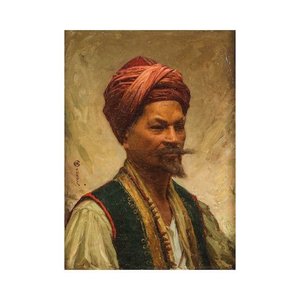
Thomas William Roberts
1856 - 1931 , United Kingdom
Quick Facts
- Full Name: Thomas William Roberts
- Nationality: British-Australian
- Date Of Birth: 1856
- Date Of Death: 1931
- Place Of Birth: Dorchester, United Kingdom
- Notable Artworks:
- A Mountain Muster
- Poppies
- Miss Florence Greaves
- Shearing the Rams
- Artistic Movement Or Style: Impressionism
- Artists Who Influenced This Artist:
- Louis Buvelot
- Eugen von Guerard
- Whistler
- Artists Or Movements Influenced By This Artist:
- Heidelberg School
- Australian Impressionism
Related Articles
Monet's Masterpieces: 25 Iconic Artworks to Transform Your Home
Journey through 25 iconic Claude Monet masterpieces! Explore Impressionism’s beauty, from Water Lilies to Rouen Cathedral. Discover stunning art reproductions & curated decor ideas – explore the full collection online at OriginalUniqueArt.com.
Serene Masterpieces: 10 Artworks for Peaceful Decor |
Find peace with 10 serene masterpieces! Explore calming landscapes by Monet & Van Gogh, tranquil Japanese art like Hokusai’s Great Wave, and more. Discover the stories behind these iconic paintings & bring museum-quality art to your home with . Explore the full collection online.

Serene Waters: A Curated Journey Through the World's Most Iconic Water Lily Masterpieces
Embark on a visual journey through Claude Monet's most iconic water lily masterpieces. Discover the profound beauty of Impressionism, explore the evolution of Giverny's light, and learn how to bring these serene, museum-quality landscapes into your private collection.
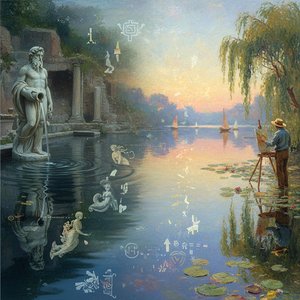
Fluid Reflections: Exploring Water's Symbolism in Art History – From Myth to Impressionism
Explore the rich symbolism of water in art history – from ancient myths to Impressionism's fleeting beauty. Discover masterpieces & find your perfect serene artwork with OriginalUniqueArt.com.

Boats on Canvas: 10 Masterpieces of Maritime Art for Your Home Decor
Sail away with 10 iconic boat paintings! Explore masterpieces by Monet, Van Gogh & Turner. Discover the stories behind these timeless seascapes and find museum-quality art reproductions for your home decor at OriginalUniqueArt.com.