Preview
 Send
Send Share
Share
 Details
 Guide
Guide

 Download
 Similars
 X-Ray
X-Ray Diaporama
 Stats
StatsA Stitch in Time
 Pre-Raphaelite
 1868
1868 53.0 x 36.0 cm
 Harris Museum - Art Gallery
 Read More
Giclée / Art Print
Museum-quality giclée or canvas print with fast production and flexible finish options. ( Buy Hand Made Painting Switch to Digital Image)




































Pick from our preset sizes that match the artwork's original proportions.

Type the width and the height you need, to fit your frame or your wall. A print can only be cut, never made bigger than the picture, so a size with a different shape loses a part of the image. We send you a digital mockup to approve before we print anything. The picture shown on this page does not show the real cut — only the mockup does.
Worldwide Delivery () in 2 weeks instead of standard 4/5 weeks. (23 October)

Free Worldwide Express Shipping

High-Quality Linen Canvas

Full Shipping Insurance

Customs Tax Refund Guarantee

True Color Matching Guarantee

100-Day Return Policy (Defects Only)

100% Money-Back Guarantee

Bulk Discount Offer
 Glass option is only available in size under 110 CM

A Stitch in Time
Giclée / Art Print
Reproduction Size
-


Total Price
$ 81
The Story Behind the Painting
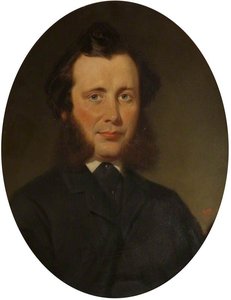
The scene depicts a woman sitting on the floor with her child in front of her, surrounded by everyday objects such as a chair, a dining table, and various bottles. A clock hangs on the wall above, serving as a reminder of the importance of time. The overall atmosphere is cozy and intimate, inviting the viewer to step into the warm and nurturing world of the family. Key Elements of the painting include:- The use of warm colors to create a sense of comfort and security
- The emphasis on the importance of family and relationships
- The symbolism of the clock, reminding us that time is precious and should be used wisely
For those interested in learning more about the artist and his work, I recommend visiting /art/list/?Filter=AQV4AK-Thomas-Wade-A-Stitch-in-Time to explore high-quality reproductions of Thomas Wade's paintings. The Harris Museum - Art Gallery can also be found on /art/list/?Filter=A@D3B8BX-The-Harris-Museum-Art-Gallery-Preston-United-Kingdom, providing a wealth of information about the museum's collection and exhibitions.
Questions & Answers
Who is the author of "A Stitch in Time", and in which movement?
Thomas Wade created "A Stitch in Time" within the Pre-Raphaelite movement.
What is the creation date of "A Stitch in Time" by Thomas Wade?
"A Stitch in Time" dates from 1868. The date places the work within Thomas Wade's career and its era.
Are there works similar to "A Stitch in Time"?
The Similars page of "A Stitch in Time" by Thomas Wade presents related artworks.
Artist Biography
A Life Etched in Shadow and Light: The Remarkable Story of Thomas Wade
The name Thomas Wade resonates with a peculiar blend of artistic talent and societal anomaly. Born in London in 1828, his story is far from the typical trajectory of a Victorian painter. While he achieved considerable recognition for his portraits and scenes of everyday life, Wade’s past was shrouded in secrecy – a secret revealed only after years: he was a transported convict. This duality—the refined skill of an artist juxtaposed with the stigma of penal servitude—makes him a uniquely compelling figure in 19th-century British art history. His early life remains largely undocumented, obscured by the circumstances that led to his conviction for forgery at the age of just nineteen. Sentenced to fourteen years of transportation, he arrived in Van Diemen’s Land (Tasmania) in 1847 aboard the *Lord Auckland*. It was here, amidst the harsh realities of colonial life, that Wade's artistic journey truly began to unfold.From Forgery to Fine Art: A Transformation in Tasmania
Initially employed as a clerk, Wade’s exceptional drawing skills soon became apparent. He quickly gained favour with officials and secured commissions for portraits of prominent colonists and their families. This was no mere survival tactic; Wade possessed genuine artistic ability. His style, heavily influenced by the American portraitist Thomas Sully, emphasized elegance, refinement, and a meticulous attention to detail. He mastered oil painting techniques, capturing not only likenesses but also the character and social standing of his sitters. The irony is striking: a man convicted for creating false documents found success in producing images valued for their authenticity and representation of status. His Tasmanian period (1847-1853) saw him become the most sought-after portrait painter in the colony, documenting the emerging colonial society with an impressive body of work. He wasn’t simply replicating faces; he was building a visual record of a new world, and his talent allowed him access to circles that would have otherwise been closed to a convict.Return to London and Continued Success
In 1853, Wade received a conditional pardon and returned to London. He re-established himself as a professional artist, exhibiting at the Royal Society of British Artists and other prestigious venues. His past remained largely concealed, allowing him to navigate Victorian society without the burden of his criminal record. While he continued to paint portraits – often depicting middle-class families and individuals – Wade also branched out into genre scenes, capturing moments from daily life with a keen eye for narrative detail. These works, though less celebrated than his portraiture, reveal a broader artistic sensibility and an interest in social observation. He skillfully adapted his style to meet the demands of the London art market, producing paintings that were both technically accomplished and commercially viable. His ability to blend Sully’s influence with a distinctly Victorian aesthetic ensured continued patronage.Legacy and Historical Significance
Thomas Wade's legacy is multifaceted. He stands as a testament to the transformative power of art, demonstrating how creativity can flourish even in the most challenging circumstances. His story challenges conventional notions of artistic genius and raises questions about redemption, social mobility, and the enduring impact of the past. The rediscovery of his convict origins in recent decades has added another layer of complexity to his biography, prompting a reassessment of his work within the broader context of colonial history and penal justice.- Artistic Style: Primarily influenced by Thomas Sully, characterized by elegance, refinement, meticulous detail, and a focus on capturing likenesses and social status.
- Key Themes: Portraiture of prominent colonists (Tasmania), middle-class families (London), scenes from daily life, narrative detail.
- Historical Context: Colonial Australia, Victorian society, penal transportation system, the art market in 19th-century Britain.
- Unique Contribution: Documenting colonial Australian society through portraiture; overcoming a criminal past to achieve artistic success; blending artistic skill with social observation.

Thomas Wade
1828 - 1891
Related Articles

The Pre-Raphaelite Brotherhood: Rediscovering Beauty, Romance, and Medieval Magic in Victorian Art
Embark on a journey through the Pre-Raphaelite Brotherhood. Discover the romantic symbolism, medieval magic, and radical beauty of Rossetti and Burne-Jones in this expert exploration of Victorian art history.
The Pre-Raphaelite Brotherhood: Reclaiming Beauty, Nature, and Truth in Victorian Art History
Explore the revolutionary Pre-Raphaelite Brotherhood. Discover how these visionary artists rejected academic tradition to reclaim beauty, nature, and truth through luminous detail and literary depth in Victorian art history.

Sir John Everett Millais: Pre-Raphaelite Rebellion & Victorian Narrative Detail
Explore the revolutionary art of Sir John Everett Millais & the Pre-Raphaelite Brotherhood. Discover their radical realism, symbolic narratives, and lasting impact on Victorian aesthetics. A deep dive into 19th-century masterpieces.

Dante Gabriel Rossetti's 25 Masterpieces: A Journey Through Victorian Art & Symbolism | OriginalUniqueArt
Explore 25 iconic artworks by Dante Gabriel Rossetti, a leading Pre-Raphaelite artist. Discover the stories behind masterpieces like 'Proserpine' & 'Beata Beatrix'. Find museum-quality art reproductions and elevate your home decor with OriginalUniqueArt.com.

Pre-Raphaelite Romanticism: A Guide to Vivid Detail and Medieval Beauty in Victorian Art
Explore the vivid detail and medieval beauty of Pre-Raphaelite Romanticism. Discover the history of masters like Rossetti and Millais through our expert guide to Victorian art, perfect for collectors and professionals seeking authentic, museum-quality reproductions.