Preview
 Send
Send Share
Share
 Details

 Download
 Similars
 X-Ray
X-Ray Diaporama
 Stats
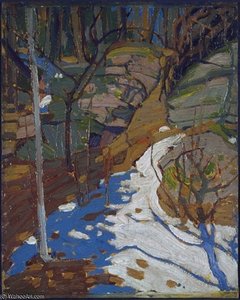
StatsIce Reflections, Spring

 Read More
Hand Made Oil Reproduction
Hand-painted oil on canvas in your size and frame, made to order by our artists. ( Switch to Print Switch to Digital Image)




P118B $10

P118H $10

P118W $10

P438Z $10

P508JH $12

P508YH $12

P805H $10

P805Z $10

P919BZ $10

P919G $10

P919XJ $10

P959ZH $10

P968JZ $12

W106C $8

W218G $10

W218JH $8

W218Y $10

W307PJ $10

W316G $10

W316PJ $8

W316Y $10

W398PJ $8

W4111J $10

W500HY $15

W500JH $15

W692G $12

W849H $8

W940BG $15

W953PJ $8




Pick from our preset sizes that match the artwork's original proportions.

You may enter your own dimensions to fit a specific frame or space. If your selected size does not match the original image's proportions, we will either crop the artwork or extend the painting with additional hand-painted elements. A digital mockup will be sent for your approval before production begins.
Please note that the on-screen preview does not reflect the actual cropping or extension. Only the mockup will accurately show the final composition.
While custom sizes are available, we recommend selecting a dimension from the predefined list to preserve the original proportions.
After order, OriginalUniqueArt.com team will email client for instructions and provide a mockup preview
Worldwide Delivery () in 3/4 weeks instead of standard 5 weeks. (8 September). No compromise on quality.

Free Worldwide Express Shipping

High-Quality Linen Canvas

Full Shipping Insurance

Customs Tax Refund Guarantee

True Color Matching Guarantee

100-Day Return Policy (Defects Only)

100% Money-Back Guarantee

Bulk Discount Offer
 Glass option is only available in size under 110 CM

Ice Reflections, Spring
Reproduction Medium
Reproduction Size
-


Total Price
$ 300
Artist Biography
The Soul of the Ontario Wilderness
Thomas Thomson stands as a pivotal figure in Canadian art history—a painter who profoundly shaped the aesthetic sensibilities of his time and cemented the legacy of the Group of Seven. Born in Claremont, Ontario, amidst a family steeped in farming traditions, Thomson’s artistic journey began with an instinctive fascination for the natural world, particularly the rugged beauty of Algonquin Park. Unlike many artists of his era who pursued formal training, Thomson honed his craft largely through self-teaching and observation—a method that instilled in him a unique perspective on capturing the essence of Ontario's wilderness.
Thomson’s childhood was marked by hardship and rural simplicity, yet it nurtured within him an appreciation for craftsmanship and detail—qualities that would later translate into his distinctive painting style. He worked various jobs before enrolling in a business college, acquiring skills in penmanship and copperplate writing, demonstrating a pragmatic approach to life alongside burgeoning artistic inclinations. Crucially, Thomson’s formative years coincided with the influence of William Brodie, a naturalist who instilled in him a deep respect for scientific observation and encouraged him to immerse himself in the intricacies of Ontario's flora and fauna. This early exposure would prove instrumental in shaping his artistic vision—a vision characterized by an unwavering commitment to portraying nature with uncompromising honesty and emotional resonance.
A Mastery of Texture and Light
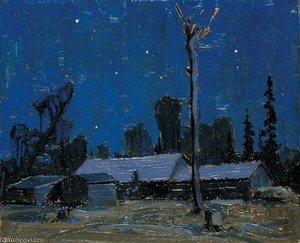
Thomson’s artistic style is instantly recognizable through its expressive power and tactile presence. His work is defined by expansive brushstrokes combined with a liberal application of paint—a technique known as impasto—which became his unmistakable trademark. Rejecting the rigid academic conventions of the late 19th century, he prioritized the conveyance of feeling over precise realism. In masterpieces such as Snow In The Woods (ii), one can observe how his heavy, textured application of paint evokes a profound sense of isolation and melancholy, turning a simple winter forest scene into a deeply psychological landscape.
His ability to manipulate light and atmosphere allowed him to capture the fleeting drama of the Canadian elements. Whether depicting the turbulent energy of a Stormy Sky or the heavy, brooding presence of Landscape With Storm Clouds, Thomson utilized a textured impasto and often a muted palette to communicate the raw power of nature. His work does not merely represent the landscape; it embodies the very movement of the wind and the weight of the clouds, inviting the viewer to experience the sensory reality of the North.
Legacy and Historical Significance
Though his life was tragically short, ending in 1917, the impact of Thomas Thomson on the trajectory of Canadian art remains immeasurable. He served as a vital precursor and inspiration for the Group of Seven, providing a blueprint for how the Canadian identity could be expressed through a rugged, non-European aesthetic. By moving away from the soft, pastoral traditions of colonial landscape painting, he paved the way for a nationalistic style that celebrated the untamed, often harsh, beauty of the Canadian Shield.
Today, Thomson is remembered not just as a painter of scenery, but as a poet of the earth. His contributions can be summarized through several enduring legacies:
- The Development of a National Style: He helped shift the focus of Canadian art from European-inspired landscapes to an authentic representation of the local wilderness.
- Technical Innovation: His use of bold colors and heavy impasto revolutionized the way texture was used to convey emotion in North American landscape painting.
- Spiritual Connection to Nature: Through his work, he transformed the rugged terrain of Algonquin Park into a symbol of the Canadian spirit, blending scientific observation with deep emotional resonance.

thomas thompson
1877 - 1917 , Canada
Quick Facts
- Artistic Movement Or Style: Impressionism
- Artists Or Movements Influenced By This Artist: ['Group of Seven']
- Artists Who Influenced This Artist:
- J. E. H. MacDonald
- Lawren Harris
- Date Of Birth: August 5, 1877
- Date Of Death: July 8, 1917
- Full Name: Thomas John Thomson
- Nationality: Canadian
- Notable Artworks:
- The Jack Pine
- The West Wind
- Stormy Sky
- Place Of Birth: Claremont, Canada
Related Articles

Romantic Landscapes: 10 Masterpieces for Your Home | OriginalUniqueArt
Journey through 10 Romantic landscape masterpieces by Friedrich, Turner & Cole. Explore emotional art, sublime nature scenes & iconic 19th-century paintings. Find museum-quality reproductions for your home at OriginalUniqueArt.com – discover the full collection online!

Arthur Lismer: A Pioneer of Canadian Modernism & the Group of Seven's Visionary Spirit
Explore the life & art of Arthur Lismer, a pivotal figure in Canadian Modernism and founding member of the Group of Seven. Discover his landscapes, teaching legacy & lasting influence on Canadian art history.

Evocations of Place: A Historical Journey Through Landscape Art
Explore the rich history of landscape art with OriginalUniqueArt. Discover renowned artists, movements like Impressionism & Romanticism, and expert guidance for collecting timeless pieces. Find your perfect serene escape today!
Acrylic on Paper: A Modern Canvas for Contemporary Expression
Explore the versatility of acrylic painting on paper! Discover expert techniques, artist insights & archival practices for creating stunning contemporary art. Learn more at OriginalUniqueArt.
Thomas Thomson: Pioneering Canadian Landscape & the Pursuit of National Identity
Explore the evocative landscapes of Tom Thomson, a pivotal figure in Canadian art & precursor to the Group of Seven. Discover his bold style, lasting legacy, and profound impact on shaping a national artistic identity.