Preview
 Send
Send Share
Share
 Details
 Guide
Guide

 Download
 Similars
 X-Ray
X-Ray Diaporama
 Stats
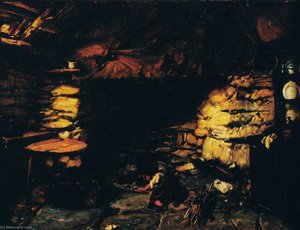
StatsWork in the Kitchen
 Contemporary Realism
 1867
1867 29.0 x 40.0 cm
 The Stirling Smith Art Gallery - Museum
 Read More
Giclée / Art Print
Museum-quality giclée or canvas print with fast production and flexible finish options. ( Buy Hand Made Painting Switch to Digital Image)




































Pick from our preset sizes that match the artwork's original proportions.

Type the width and the height you need, to fit your frame or your wall. A print can only be cut, never made bigger than the picture, so a size with a different shape loses a part of the image. We send you a digital mockup to approve before we print anything. The picture shown on this page does not show the real cut — only the mockup does.
Worldwide Delivery () in 2 weeks instead of standard 4/5 weeks. (22 October)

Free Worldwide Express Shipping

High-Quality Linen Canvas

Full Shipping Insurance

Customs Tax Refund Guarantee

True Color Matching Guarantee

100-Day Return Policy (Defects Only)

100% Money-Back Guarantee

Bulk Discount Offer
 Glass option is only available in size under 110 CM

Work in the Kitchen
Giclée / Art Print
Reproduction Size
-


Total Price
$ 81
A Glimpse into the Kitchen
The painting depicts a kitchen scene with an assortment of fruits and vegetables displayed on a table. A large cauliflower takes center stage, surrounded by apples and broccoli. The arrangement of these fresh produce items creates a sense of depth and visual interest, drawing the viewer's eye through the composition. For more information on still life paintings, visit Thomas Stuart Smith: Kitchen Still Life.Artist's Style and Influences
Thomas Stuart Smith's style is characterized by his use of bold colors and meticulous attention to detail. His work is reminiscent of other still life painters, such as Isaac van Duynen, also known as Deynen or Duijnen, who was a Dutch still life painter. To learn more about Isaac van Duynen, visit Deynen Or Duijnen. Key Features of the painting include:- The use of warm and cool colors to create a sense of balance and harmony
- The careful arrangement of the fruits and vegetables to guide the viewer's eye through the composition
- The attention to detail in the depiction of each item, from the texture of the cauliflower to the sheen on the apples
The Work in the Kitchen painting is a beautiful example of still life art, showcasing Thomas Stuart Smith's skill and attention to detail. Its captivating composition and use of color make it a must-see for art enthusiasts.
Questions & Answers
Are the colors of "Work in the Kitchen" by Thomas Stuart Smith vivid or muted?
"Work in the Kitchen" by Thomas Stuart Smith is recorded with a subtle color saturation and a monochromatic intensity.
What does "Work in the Kitchen" by Thomas Stuart Smith depict?
The subjects of "Work in the Kitchen" are still life, fruits vegetables, kitchen scene, victorian art, color palette, detail painting, rustic charm, scottish art.
Where in Thomas Stuart Smith's career does "Work in the Kitchen" fall, given its date?
The 1867 date places "Work in the Kitchen" in the Mature Period of Thomas Stuart Smith's development.
Artist Biography
The Quiet Grandeur of Thomas Stuart Smith
Thomas Stuart Smith (1815–1869) remains a singular and evocative figure in the tapestry of Scottish art history, a painter who possessed the rare ability to bridge the sweeping emotional heights of Romanticism with the tender, grounded intimacy of everyday observation. Born into a life shaped by unconventional circumstances—as the illegitimate nephew of Alexander Smith, whose estate at Glassing all near Dunblane provided a backdrop of intellectual and landed prestige—Smith’s early years were marked by a cosmopolitan breadth. His formative travels through France and his subsequent return to England allowed him to absorb the shifting currents of European aesthetics, fostering a perspective that was as much about scientific inquiry as it was about artistic passion.
His life and work were deeply embedded in the transformative atmosphere of the Victorian era. While many of his contemporaries sought to capture the monumental shifts of industrialization through heroic narratives, Smith turned his gaze inward and toward the hearth. He found profound meaning in the subtle nuances of domesticity, capturing Welsh interiors bathed in a soft, diffused light and kitchens brimming with the vibrant textures of fresh produce. His canvases served as windows into the human experience, where the psychological depth of a portrait was just as significant as the atmospheric weight of a landscape.
A Synthesis of Realism and Romanticism
The brilliance of Smith’s technique lies in his masterful synthesis of seemingly opposing movements. He was deeply moved by the Pre-Raphaelite Brotherhood, drawing inspiration from the meticulous botanical accuracy and atmospheric precision championed by masters such as John Everett Millais and William Holman Hunt. This influence is visible in his commitment to truthful observation; he approached the natural world with a keen eye for detail that honored the integrity of every leaf, shadow, and fabric fold.
Yet, beneath this layer of meticulous realism lay a heart steeped in Romanticism. Smith did not merely document reality; he sought to evoke mood. Through innovative experimentation with light and perspective, he infused his scenes with a sense of longing and sublime emotion. His work often oscillates between the following elements:
- The Intimate: A focus on the quiet, unobserved moments of daily life and social commentary.
- The Atmospheric: The use of light to create a sense of temporal depth and emotional resonance.
- The Observational: A rigorous dedication to the textures and botanical truths of the natural world.
Legacy and Philanthropic Spirit
Beyond his contributions to the canvas, Thomas Stuart Smith left an indelible mark on the cultural landscape of Scotland through his commitment to education and the preservation of art. His legacy is perhaps most tangibly felt through his role as the founder of the Stirling Smith Art Gallery and Museum. This act of philanthropy ensured that the beauty he sought to capture would remain accessible to future generations, cementing his name not just as a creator of images, but as a guardian of heritage.
In the history of nineteenth-century art, Smith stands as a bridge between eras. He navigated the transition from the grand, idealized visions of the early century to the more grounded, socially conscious realism that would define much of the later Victorian period. His ability to find the extraordinary within the ordinary continues to resonate, reminding us that the most profound truths are often found in the quietest corners of our existence.

Thomas Stuart Smith
1815 - 1869
Quick Facts
- Full Name: Thomas Stuart Smith
- Nationality: Scottish
- Date Of Birth: 1815
- Date Of Death: 1869
- Place Of Birth: Scotland
- Notable Artworks:
- Sun through the Mist
- Work in the Kitchen
- Artistic Movement Or Style: Romanticism
Related Articles
Nature's Bounty: The Timeless Allure and Art History of Fruit Still Life Paintings
Discover the profound beauty of fruit still life paintings. Explore the rich symbolism, Baroque mastery, and timeless allure of nature's bounty through an art-historical lens, perfect for collectors and enthusiasts of classical fine art.

The Enduring Legacy of Oil on Canvas: Technique, History & Aesthetic Impact
Explore the rich history & techniques of oil painting – from Renaissance masters to Impressionism. Discover pigments, layering methods, and why this timeless medium endures. Expert insights for artists & art enthusiasts.

Thomas Stuart Smith: A Study in British Impressionism & the Poetic Landscape
Explore the captivating world of Thomas Stuart Smith (1815-1869), a Scottish painter bridging Romantic realism and British Impressionism. Discover his genre scenes, philanthropic legacy & stunning interiors.
Nature's Bounty: The Art History of Fruit Arrangement Masterpieces and the Baroque Still Life Tradition
Explore the profound beauty of fruit arrangement masterpieces. From Dutch Golden Age opulence to Baroque chiaroscuro, discover the art history, symbolism, and timeless elegance of classical still life paintings for the discerning collector.

The Bountiful Still Life: Symbolism & Artistic Representation of Fruit Across Art History
Explore the rich history of still life painting & the symbolism of fruit across art movements. Discover masterpieces from Caravaggio to Cézanne with OriginalUniqueArt – expert guidance & museum-quality reproductions.