Preview
 Send
Send Share
Share
 Details
 Guide
Guide

 Download
 Similars
 X-Ray
X-Ray Diaporama
 Q&A
Q&A Stats
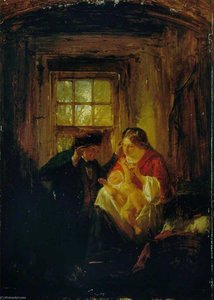
StatsA Lowland Lassie

- 102.0 x 75.0 cm

 Read More
Giclée / Art Print
Museum-quality giclée or canvas print with fast production and flexible finish options. ( Buy Hand Made Painting Switch to Digital Image)




































Pick from our preset sizes that match the artwork's original proportions.

Type the width and the height you need, to fit your frame or your wall. A print can only be cut, never made bigger than the picture, so a size with a different shape loses a part of the image. We send you a digital mockup to approve before we print anything. The picture shown on this page does not show the real cut — only the mockup does.
Worldwide Delivery () in 2 weeks instead of standard 4/5 weeks. (2 November)

Free Worldwide Express Shipping

High-Quality Linen Canvas

Full Shipping Insurance

Customs Tax Refund Guarantee

True Color Matching Guarantee

100-Day Return Policy (Defects Only)

100% Money-Back Guarantee

Bulk Discount Offer
 Glass option is only available in size under 110 CM

A Lowland Lassie
Giclée / Art Print
Reproduction Size
-


Total Price
$ 81
The Artist and His Work
Thomas Faed was a renowned Scottish painter, known for his genre scenes and portraits. He was born in 1826 and died in 1900, leaving behind a legacy of beautiful artworks that continue to captivate audiences today. A Lowland Lassie is one of his most notable works, showcasing his skill in capturing the essence of everyday life. The painting depicts a young woman, dressed in a pink dress and blue scarf, holding a large basket on her head while standing next to two children. The scene is set outdoors, with a fence visible in the background, adding depth and context to the piece. The overall atmosphere of the painting is warm and inviting, highlighting the bond between the mother and her children.Style and Technique
Thomas Faed's style is characterized by his use of oil on canvas, which allows for rich and vibrant colors. His technique is evident in the way he captures the textures and details of the scene, from the folds of the woman's dress to the expressions on the children's faces. For those interested in learning more about Thomas Faed and his work, https://OriginalUniqueArt.com offers a range of resources, including:- Painting by 'Thomas Faed' | Thomas Faed:A Lowland Lassie
- OriginalUniqueArt.com: Thomas Faed | 63 Artworks Thomas Faed
Questions & Answers
Who created "A Lowland Lassie"?
The artist behind "A Lowland Lassie" is Thomas Faed. The work is catalogued under Thomas Faed's name.
Is Thomas Faed, creator of "A Lowland Lassie", known under other names?
Other names recorded for Thomas Faed, creator of "A Lowland Lassie", include Thomas Faed Rsa.
What color saturation does "A Lowland Lassie" by Thomas Faed have?
The colors of "A Lowland Lassie" by Thomas Faed have a muted saturation. Saturation describes how vivid or muted the colors are.
Artist Biography
A Legacy of Scottish Sentiment
Thomas Faed holds a singular place in the annals of Scottish art, often described with the profound reverence that one might accord to Robert Burns’s impact on Scottish song. Born in Kirkcudbrightshire at Barlay Mill, Faed was part of a remarkable family of creators; his brothers James and John, along with his sister Susan, all shared this deep artistic calling. His early life was rooted in the ruggedly beautiful landscape of Galloway, an environment that undoubtedly informed the warmth and domesticity found within his most cherished works. After receiving his formal art education at the school of design in Edinburgh, he began a journey that would lead him from the heart of Scotland to the prestigious studios of London.
His career was marked by significant professional milestones, including his election as an associate of the Royal Scottish Academy in 1849. As his reputation grew, so did his influence within the British art scene; he became an associate of the Royal Academy in 1861 and eventually achieved the status of academician in 1864. This progression reflected not only his technical mastery but also his ability to capture the very essence of Victorian life through a lens of tender realism.
The Art of the Domestic and the Soulful
Faed’s oeuvre is celebrated for its mastery of genre scenes and portraits, works that often serve as windows into the intimate, quiet moments of human existence. He possessed a rare ability to convey complex emotions through subtle details—a downward cast gaze, the gentle clasping of hands, or the soft glow of a fireplace. In his masterpiece Forgiven, created in 1874, he presents a heartwarming scene of familial connection, using soft colors and expressive facial expressions to evoke a sense of serenity and peace. His work often invites the viewer to step into an intimate world, where the innocence of a child or the compassion of a mother can be felt almost tangibly.
Beyond the domestic sphere, Faed’s technical skill allowed him to explore more contemplative and even symbolic themes. In Meg Merilees, he utilized oil on panel to create a luminous finish, capturing a study of human emotion through meticulous brushwork and the strategic use of light and shadow. This piece, much like his other celebrated works such as The Last of the Clan, demonstrates his capacity to imbue a single portrait with profound depth and spiritual aspiration. Whether depicting the ruggedness of the Highlands or the quietude of an interior room, Faed’s paintings remain evocative studies of the human condition.
Artistic Significance and Enduring Presence
The historical significance of Thomas Faed lies in his ability to bridge the gap between rigorous realism and the emotive storytelling characteristic of his era. His works are not merely representations of subjects but are narratives that speak to the values and aesthetics of the mid-19th century. Many of his most important pieces have found permanent homes in some of the world's most esteemed institutions, ensuring that his vision continues to resonate with generations of art lovers:
- The Tate Gallery: Houses significant works such as The Silken Gown, Faults on Both Sides, and The Highland Mother.
- Aberdeen Art Gallery: Contains celebrated paintings including Highland Mary and The Reaper.
- Kelvingrove Gallery: Home to arguably his best-known work, The Last of the Clan.
- Gracefield Arts Center: Preserves the poignant portrait Meg Merilees.
Through his dedication to capturing the essence of human relationships and the beauty of the Scottish landscape, Faed left behind a legacy of visual storytelling that remains as captivating today as it was during his lifetime in London.

Thomas Faed
1826 - 1900 , United Kingdom
Quick Facts
- Artistic Movement Or Style: Genre scenes and portraits
- Full Name: Thomas Faed
- Nationality: Scottish
- Notable Artworks:
- Forgiven
- Meg Merilees
- The Flower of Dunblane
- The Last of the Clan
- The Silken Gown
- Faults on Both Sides
- The Highland Mother
- Highland Mary
- The Reaper
- The Motherless Bairn
- Scott and His Literary Friends at Abbotsford
- Place Of Birth: Kirkcudbright, United Kingdom
- Date Of Birth: 1826
- Date Of Death: 1900