Preview
 Send
Send Share
Share
 Details
 Guide
Guide

 Download
 Similars
 X-Ray
X-Ray Diaporama
 Stats
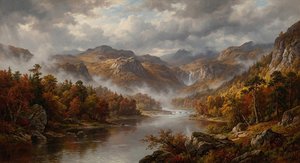
StatsThe Old Mill at Sunset
 Oil On Canvas
- WallArt
- Hudson River School
 1844
1844 66.0 x 91.0 cm
 Nelson-Atkins Museum of Art
 Read More
Hand Made Oil Reproduction
Hand-painted oil on canvas in your size and frame, made to order by our artists. ( Switch to Print Switch to Digital Image)




P118B $10

P118H $10

P118W $10

P438Z $10

P508JH $12

P508YH $12

P805H $10

P805Z $10

P919BZ $10

P919G $10

P919XJ $10

P959ZH $10

P968JZ $12

W106C $8

W218G $10

W218JH $8

W218Y $10

W307PJ $10

W316G $10

W316PJ $8

W316Y $10

W398PJ $8

W4111J $10

W500HY $15

W500JH $15

W692G $12

W849H $8

W940BG $15

W953PJ $8




Pick from our preset sizes that match the artwork's original proportions.

Type the width and the height you need, to fit your frame or your wall. This is hand-painted, so for a size with a different shape the artist can paint a bit more around the picture, or cut a bit — you choose. We send you a digital mockup to approve before the painting starts. The picture shown on this page does not show the real result — only the mockup does.
After order, OriginalUniqueArt.com team will email client for instructions and provide a mockup preview
Worldwide Delivery () in 3/4 weeks instead of standard 5 weeks. (21 October). No compromise on quality.

Free Worldwide Express Shipping

High-Quality Linen Canvas

Full Shipping Insurance

Customs Tax Refund Guarantee

True Color Matching Guarantee

100-Day Return Policy (Defects Only)

100% Money-Back Guarantee

Bulk Discount Offer
 Glass option is only available in size under 110 CM

The Old Mill at Sunset
Reproduction Medium
Reproduction Size
-


Total Price
$ 300
The Old Mill at Sunset: A Romantic Vision of American Identity
Thomas Cole’s “The Old Mill at Sunset,” painted in 1844, isn't merely a depiction of a rural landscape; it’s a profound meditation on the burgeoning spirit of America and its relationship with the natural world. This oil-on-canvas masterpiece, currently residing within the esteemed Nelson-Atkins Museum of Art in Kansas City, embodies the core tenets of the Hudson River School movement – a style that sought to elevate landscape painting beyond simple representation, imbuing it with spiritual significance and historical resonance.
Cole, a pivotal figure in this artistic collective, was deeply influenced by Romanticism’s emphasis on emotion, intuition, and the sublime. He moved away from the rigid academic traditions of European art, instead focusing on capturing the raw beauty and untamed character of the American wilderness. “The Old Mill at Sunset” perfectly exemplifies this shift; it's a scene brimming with atmosphere, where light and shadow dance across rolling hills, a winding river reflects the fiery hues of the setting sun, and a solitary mill stands as a testament to human industry nestled within the grandeur of nature.
A Symphony of Light and Color
The painting’s technical brilliance lies in Cole's masterful manipulation of light and color. He employs a rich, layered technique—a hallmark of the Hudson River School—building up his image with numerous thin glazes of oil paint. This creates an incredible sense of depth and luminosity, particularly evident in the vibrant sunset that dominates the composition. The warm oranges, reds, and yellows bleed into the cooler blues and greens of the landscape, generating a dynamic interplay between warmth and coolness. Notice how Cole uses atmospheric perspective—objects further away appear paler and less distinct—to create a convincing sense of distance and scale.
The mill itself is rendered with meticulous detail, its weathered timbers and spinning wheel suggesting both industry and resilience. However, it’s not the mill that commands our attention; rather, it's the surrounding landscape – the majestic mountains in the background, the tranquil river flowing through the valley, and the dense forest flanking the scene—that truly captivates the viewer. Cole doesn’t simply paint what he sees; he paints what he *feels* about what he sees.
Symbolism and American Identity
“The Old Mill at Sunset” is rich in symbolic meaning, reflecting the anxieties and aspirations of a young nation grappling with its identity. The mill represents human endeavor—the drive to tame and utilize nature for practical purposes. Yet, it’s dwarfed by the overwhelming power of the natural world, suggesting a delicate balance between progress and preservation. The solitary figure on the bridge in the foreground adds another layer of interpretation; he could be seen as an observer, contemplating the relationship between humanity and its environment.
Furthermore, the painting's setting—a rural landscape reminiscent of upstate New York—evokes a sense of nostalgia for a simpler time, harking back to a perceived golden age of American innocence. Cole’s work resonated deeply with his contemporaries who were increasingly concerned about the rapid industrialization and urbanization that threatened to overwhelm the nation’s natural beauty.
A Timeless Masterpiece
“The Old Mill at Sunset” remains a profoundly moving and evocative artwork, offering viewers a glimpse into the heart of American Romanticism. It's a testament to Cole's artistic skill, his deep connection with nature, and his ability to capture the essence of a nation in transition. Its enduring appeal lies not only in its technical brilliance but also in its timeless exploration of fundamental human themes—the relationship between humanity and nature, the pursuit of progress, and the search for meaning in a rapidly changing world. Reproductions of this iconic painting continue to inspire awe and appreciation, transporting viewers to a serene landscape where beauty and contemplation reign supreme.
Questions & Answers
Are there works similar to "The Old Mill at Sunset"?
Works similar to "The Old Mill at Sunset" are listed on the artwork's Similars page.
Where does "The Old Mill at Sunset" fall in Thomas Cole's career?
"The Old Mill at Sunset" represents the Early Period of Thomas Cole.
From which country does the Hudson River School work "The Old Mill at Sunset" come?
The Hudson River School work "The Old Mill at Sunset" was made by an artist born in United Kingdom.
Artist Biography
A Pioneer of American Landscape Painting
Thomas Cole, a name synonymous with the birth of distinctly American art, stands as a pivotal figure in 19th-century painting. Born in Bolton le Moors, Lancashire, England, in 1801, his early life offered little indication of the profound impact he would have on the artistic landscape. Emigrating to the United States with his family in 1818 and settling in Ohio, Cole’s journey was one of self-discovery and artistic awakening. Initially working as an itinerant portrait painter—a common trade at the time—he soon found himself drawn to the untamed beauty of the American wilderness. This shift wasn't merely a change in subject matter; it represented a fundamental divergence from European artistic traditions, which often focused on historical or mythological narratives. Cole’s landscapes weren’t simply depictions of scenery; they were imbued with a spiritual and allegorical depth that resonated deeply with a nation forging its own identity. His move to Catskill, New York, in 1825 proved transformative, providing him with both inspiration and a permanent base from which to explore the surrounding Hudson River Valley—a region that would become inextricably linked with his artistic legacy.The Hudson River School and Romantic Ideals
Cole is rightfully regarded as the founder of the Hudson River School, an art movement characterized by its romantic portrayal of the American landscape. However, to label him simply a “landscape painter” feels inadequate. His work transcended mere representation; it was deeply philosophical, often exploring themes of humanity’s relationship with nature, the passage of time, and the rise and fall of civilizations. Influenced by European Romanticism—particularly the works of Claude Lorrain and J.M.W. Turner—Cole adapted these sensibilities to an American context. Where European Romantics often depicted dramatic, sublime landscapes as a reflection of inner turmoil, Cole’s paintings frequently conveyed a sense of optimism and divine presence within the natural world. He saw in the vastness of the American wilderness a symbol of national potential and spiritual renewal. The Oxbow (1836), perhaps his most iconic work, exemplifies this perfectly—a sweeping vista that contrasts the wild, untamed river valley with the cultivated farmlands, representing both the promise and the challenges of westward expansion.Allegory and The Course of Empire
While celebrated for his realistic depictions of nature, Cole’s artistic ambition extended beyond pure landscape painting. He frequently employed allegory to convey complex moral and philosophical ideas. This is most powerfully demonstrated in his monumental series The Course of Empire, created between 1833 and 1836. Comprising five canvases—"Savage State," "Pastoral State," "Arcadian State," "Consummation," and "Destruction"—the series traces the cyclical history of a civilization, from its pristine origins to its inevitable decline. The paintings are not merely historical narratives; they serve as cautionary tales about the dangers of unchecked ambition and the fragility of human achievement. The Course of Empire resonated deeply with contemporary audiences, reflecting anxieties about the rapid industrialization and westward expansion that were transforming the American landscape. It cemented Cole’s reputation as a visionary artist capable of addressing profound societal concerns through his art.Legacy and Enduring Influence
Thomas Cole's untimely death in 1848 at the age of 47 marked a significant loss for the American art world. However, his influence continued to reverberate through generations of artists. He directly mentored Frederic Edwin Church, who would become one of the leading figures of the second generation of Hudson River School painters. His emphasis on observation from nature, combined with a deeply personal and symbolic approach to landscape painting, laid the foundation for a distinctly American artistic tradition.- Cole’s work continues to be exhibited in major museums across the United States, including the New-York Historical Society, the National Gallery of Art in Washington D.C., and the Smithsonian American Art Museum.
- His paintings are not merely historical artifacts; they remain powerfully evocative and relevant today, prompting viewers to contemplate their own relationship with nature and the enduring questions about humanity’s place in the world.
- The Thomas Cole National Historic Site in Catskill, New York, preserves his home and studio, offering visitors a glimpse into the life and work of this remarkable artist.

Thomas Cole
1801 - 1848 , United Kingdom
Quick Facts
- Full Name: Thomas Cole
- Nationality: American
- Date Of Birth: 1801
- Date Of Death: 1848
- Place Of Birth: Bolton, United Kingdom
- Notable Artworks:
- The Course of Empire
- The Oxbow
- A View from Mount Etna
- The Voyage of Life
- Artistic Movement Or Style: Hudson River School
- Artists Or Movements Influenced By This Artist:
- Asher B. Durand
- Frederic Edwin Church
Related Articles

Wild & Untamed: The High-Impact Energy of American Romanticism and the Hudson River School
Experience the raw power of American Romanticism. Explore the high-impact energy of the Hudson River School through premium, hand-painted oil reproductions that capture the sublime beauty and untamed spirit of the American wilderness for discerning collectors.
The Sublime Landscape: Exploring the Hudson River School Movement
Explore the captivating world of the Hudson River School! Discover the history, artists, and defining characteristics of this iconic American art movement. Learn about Romanticism's influence & find inspiration for your collection.

Robert Spencer: Luminism, Narrative & the American Landscape Tradition
Explore the captivating world of Luminism & the Hudson River School with our expert analysis. Discover the history, artists, and enduring beauty of 19th-century American landscape painting. Find museum-quality reproductions at OriginalUniqueArt.
Hudson River School: 10 Masterpieces That Capture America's Wild Beauty | OriginalUniqueArt
Journey through America's breathtaking landscapes with our guide to the Top 10 Hudson River School masterpieces. Explore Thomas Cole, Frederic Church & more! Find museum-quality art reproductions and elevate your home decor at OriginalUniqueArt.com.

American Romanticism: Capturing the Soul of the Wild Frontier through the Hudson River School
Explore the profound beauty of American Romanticism. Discover how the Hudson River School captured the wild frontier through masterful landscapes, exploring the legacy of legends like Thomas Cole and Asher Durand in this deep dive into art history.