Menu
Preview AR preview Switch to Print Switch to Digital Image Send
Details Guide Add to favorites Download Similars X-Ray Diaporama Stats

The Good Samaritan

Experience Théodule Ribot’s "The Good Samaritan" – a poignant oil painting reflecting 19th-century France. Hand-painted reproductions available at OriginalUniqueArt.com.

Discover Théodule Augustin Ribot, a French realist painter known for his evocative scenes of everyday life & masterful chiaroscuro. Explore his works!

Hand Made Oil Reproduction

Hand-painted oil on canvas in your size and frame, made to order by our artists. ( Switch to Print Switch to Digital Image)

Corner sample of the P118B picture frame: moulded polystyrene, 5 cm wide and 3 cm thick
P118B $10
Corner sample of the P118H picture frame: moulded polystyrene, 5 cm wide and 3 cm thick
P118H $10
Corner sample of the P118W picture frame: moulded polystyrene, 5 cm wide and 3 cm thick
P118W $10
Corner sample of the P438Z picture frame: moulded polystyrene, 5.5 cm wide and 3.5 cm thick
P438Z $10
Corner sample of the P508JH picture frame: moulded polystyrene, 7 cm wide and 3.5 cm thick
P508JH $12
Corner sample of the P508YH picture frame: moulded polystyrene, 7 cm wide and 3.5 cm thick
P508YH $12
Corner sample of the P805H picture frame: moulded polystyrene, 5 cm wide and 3.5 cm thick
P805H $10
Corner sample of the P805Z picture frame: moulded polystyrene, 5 cm wide and 3.5 cm thick
P805Z $10
Corner sample of the P919BZ picture frame: moulded polystyrene, 7 cm wide and 3.5 cm thick
P919BZ $10
Corner sample of the P919G picture frame: moulded polystyrene, 7 cm wide and 3.5 cm thick
P919G $10
Corner sample of the P919XJ picture frame: moulded polystyrene, 7 cm wide and 3.5 cm thick
P919XJ $10
Corner sample of the P959ZH picture frame: moulded polystyrene, 5 cm wide and 3 cm thick
P959ZH $10
Corner sample of the P968JZ picture frame: moulded polystyrene, 6 cm wide and 4 cm thick
P968JZ $12
Corner sample of the W106C picture frame: solid wood, 5 cm wide and 3 cm thick
W106C $8
Corner sample of the W218G picture frame: solid wood, 5 cm wide and 3 cm thick
W218G $10
Corner sample of the W218JH picture frame: solid wood, 5 cm wide and 3 cm thick
W218JH $8
Corner sample of the W218Y picture frame: solid wood, 5 cm wide and 3 cm thick
W218Y $10
Corner sample of the W307PJ picture frame: solid wood, 6 cm wide and 3 cm thick
W307PJ $10
Corner sample of the W316G picture frame: solid wood, 6 cm wide and 3 cm thick
W316G $10
Corner sample of the W316PJ picture frame: solid wood, 6 cm wide and 3 cm thick
W316PJ $8
Corner sample of the W316Y picture frame: solid wood, 6 cm wide and 3 cm thick
W316Y $10
Corner sample of the W398PJ picture frame: solid wood, 5 cm wide and 3 cm thick
W398PJ $8
Corner sample of the W4111J picture frame: solid wood, 6.5 cm wide and 3.5 cm thick
W4111J $10
Corner sample of the W500HY picture frame: solid wood, 7 cm wide and 5 cm thick
W500HY $15
Corner sample of the W500JH picture frame: solid wood, 7 cm wide and 5 cm thick
W500JH $15
Corner sample of the W692G picture frame: solid wood, 8 cm wide and 4 cm thick
W692G $12
Corner sample of the W849H picture frame: solid wood, 5 cm wide and 3 cm thick
W849H $8
Corner sample of the W940BG picture frame: solid wood, 7.5 cm wide and 4.5 cm thick
W940BG $15
Corner sample of the W953PJ picture frame: solid wood, 6 cm wide and 3.5 cm thick
W953PJ $8

Standard
custom
CM
INCH

Pick from our preset sizes that match the artwork's original proportions.

width
height

Type the width and the height you need, to fit your frame or your wall. This is hand-painted, so for a size with a different shape the artist can paint a bit more around the picture, or cut a bit — you choose. We send you a digital mockup to approve before the painting starts. The picture shown on this page does not show the real result — only the mockup does.

Examples of what can be changed: Replace face with customer photo; Add pet (e.g., replace cat with dog); Include hidden message in background; Change background landscape or elements.
After order, OriginalUniqueArt.com team will email client for instructions and provide a mockup preview

Worldwide Delivery () in 3/4 weeks instead of standard 5 weeks. (27 October). No compromise on quality.

Free Worldwide Express Shipping
High-Quality Linen Canvas
Full Shipping Insurance
Customs Tax Refund Guarantee
True Color Matching Guarantee
100-Day Return Policy (Defects Only)
100% Money-Back Guarantee
Bulk Discount Offer

Total Price

$ 300

The Good Samaritan

Reproduction Medium

Reproduction Size

-

Total Price

$ 300

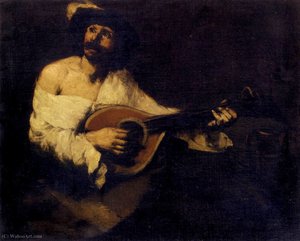
Théodule Augustin Ribot, a French artist born in 1823, was known for his still life and genre paintings. His work, "The Good Samaritan," is one of the most famous examples of his oeuvre. This painting, which measures 98 x 131 cm, is currently housed at the Musée des Beaux-Arts in Pau, France.

Historical Context

Ribot's "The Good Samaritan" was created during a time of great social and political change in France. The country had recently undergone the Franco-Prussian War, which left many people feeling disillusioned and hopeless. Ribot's painting reflects this sense of despair, as it depicts a man lying on the ground, seemingly unconscious or dead, while another man looks on with a mixture of concern and helplessness.

Artistic Style

Ribot was known for his use of chiaroscuro, a technique that involves using strong contrasts between light and dark to create a sense of depth and volume. In "The Good Samaritan," he uses this technique to great effect, as the man lying on the ground is depicted in deep shadow, while the man standing over him is illuminated by a harsh, bright light. This creates a sense of drama and tension, as the viewer is left wondering what will happen next.

Symbolism

"The Good Samaritan" is often interpreted as a commentary on the human condition, particularly in times of crisis. The man lying on the ground can be seen as a symbol of the vulnerable and helpless, while the man standing over him represents those who have the power to help but may not always do so. This interpretation is supported by the title of the painting, which references the biblical story of the Good Samaritan, who stopped to help a stranger in need.

Reproduction

At OriginalUniqueArt, we offer high-quality hand-made oil paintings reproductions of "The Good Samaritan" and other famous works of art. Our skilled artists use traditional techniques to create stunningly realistic reproductions that capture the beauty and detail of the original masterpieces. Whether you're an art lover or a collector, our reproductions are a great way to bring classic works of art into your home or office. Théodule Augustin Ribot: The Good Samaritan (98 x 131 cm,Musée des Beaux-Arts (Pau, France),Oil On Canvas) Note: This article is intended for informational purposes only and should not be considered a substitute for professional academic analysis. For more information on Théodule Augustin Ribot and his work, please visit the Musée des Beaux-Arts in Pau, France or consult reputable art history sources.

Questions & Answers

How is "The Good Samaritan" by Theodule Augustine Ribot proportioned, and how big is it?

The format of "The Good Samaritan" is landscape, and the original measures 98 x 131 cm. Both are useful when planning a reproduction.

How strong is the contrast in "The Good Samaritan" by Theodule Augustine Ribot?

The light-dark contrast of "The Good Samaritan" is recorded as bold. Contrast describes how strongly light and dark areas differ.

Do the colors of "The Good Samaritan" appear strong or soft?

The color intensity of "The Good Samaritan" is monochromatic. Intensity describes how strong the colors appear.


Artist Biography

The Quiet Master of Realism: The Life and Legacy of Théodule Auguste Ribot

Théodule Auguste Ribot stands as a testament to the understated brilliance of French realist painting during the latter half of the nineteenth century. Often overshadowed by his more boisterous contemporaries like Courbet, Ribot’s meticulous observation of everyday life and his masterful manipulation of chiaroscuro secured him a respected place within the artistic landscape of his time. His legacy is one rooted in profound admiration for Baroque masters and characterized by an unwavering commitment to capturing psychological nuance through the lens of truth. Born in 1823 in Saint-Nicolas-de-Azé, France, Ribot’s formative years were marked by practical skills honed alongside artistic inclinations. He began his formal training at the École des Arts et Métiers de Châlons, equipping him with foundational knowledge before relocating to Paris in 1845. Recognizing the necessity of financial stability, he found employment decorating gilded frames for a mirror manufacturer—a role that simultaneously provided income and fostered an acute understanding of visual aesthetics. This early apprenticeship instilled within him a keen eye for detail and color harmony, elements which would later permeate his most celebrated canvases.

A Vision Forged in Light and Labor

Ribot’s artistic journey was not propelled by grand ambitions or revolutionary fervor; rather, it emerged organically from a deep engagement with the natural world and the human condition. His travels to Algeria around 1848 profoundly impacted his sensibilities, fostering an appreciation for dramatic landscapes and informing his stylistic choices regarding light and shadow. Upon returning to Paris in 1851, he continued his artisan’s craft while diligently pursuing painting as a vocation—a dual pursuit that allowed him to sustain himself financially while nurturing a vision focused on the dignity of the common man. His work is defined by a poignant exploration of labor and the quiet moments of existence. Unlike the grand historical narratives favored by many of his era, Ribot found beauty in the mundane and the monumental in the ordinary. His paintings often feature:
  • The Dignity of Labor: Masterful depictions of peasants and workers, such as in 'The Potato Diggers' and 'Vintagers', which offer a soulful glimpse into 19th-century French life.
  • Chiaroscuro Mastery: A sophisticated use of light and dark, reminiscent of the Baroque tradition, to create depth and emotional weight.
  • Narrative Empathy: Works like 'The Good Samaritan' demonstrate his ability to weave profound moral and psychological narratives into simple, realistic scenes.

Historical Significance and Artistic Impact

As a leading figure of the Realism movement, Ribot’s contribution lies in his ability to elevate the everyday to the level of high art without resorting to sentimentality. He avoided the trap of romanticizing poverty, choosing instead to present the textures of life—the grit of soil, the weight of tools, and the weary but resilient expressions of his subjects—with unflinching honesty. This commitment to truthfulness allowed him to capture a specific historical moment in France with a level of intimacy that few others could achieve. Though he may not have sought the loud acclaim of the avant-garde, Ribot’s influence persists through the enduring emotional resonance of his work. He remains a vital link between the dramatic lighting techniques of the past and the social consciousness of modern realism. Today, his paintings serve as evocative windows into a vanished world, reminding us that there is profound beauty to be found in the most humble of human experiences.
Theodule Augustine Ribot

Theodule Augustine Ribot

1823 - 1891 , France

Quick Facts

  • Full Name: Theodule Augustin Ribot
  • Nationality: French
  • Date Of Birth: 1823
  • Date Of Death: 1891
  • Place Of Birth: Saint-Nicolas-de-Azé, France
  • Notable Artworks:
    • Still Life with Apples and a Pomegranate
    • A Girl Arranging a Vase of Flowers
    • The Cook and the Cat
    • The Good Samaritan
  • Artistic Movement Or Style: Realism
  • Artists Who Influenced This Artist:
    • Rembrandt
    • Ribera
    • Courbet
    • Bonvin
  • Artists Or Movements Influenced By This Artist: ['Baroque']
Explore artworks organized by themes, styles, and characteristics.