Preview
 Send
Send Share
Share
 Details

 Download
 Similars
 X-Ray
X-Ray Diaporama
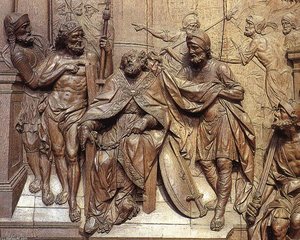
Pulpit


 Read More
Giclée / Art Print
Museum-quality giclée or canvas print with fast production and flexible finish options. ( Buy Hand Made Painting Buy Image)




































Pick from our preset sizes that match the artwork's original proportions.

You may enter your own dimensions to fit a specific frame or space. If your selected size does not match the original image's proportions, we will either crop the artwork or extend the image with a mirrored or solid-fill edge. A digital mockup will be sent for your approval before production begins.
Please note that the on-screen preview does not reflect the actual cropping or extension. Only the mockup will accurately show the final composition.
While custom sizes are available, we recommend selecting a dimension from the predefined list to preserve the original proportions.
Worldwide Delivery () in 2 weeks instead of standard 4/5 weeks. (16 August)

Free Worldwide Express Shipping

High-Quality Linen Canvas

Full Shipping Insurance

Customs Tax Refund Guarantee

True Color Matching Guarantee

60-Day Return Policy (Defects Only)

100% Money-Back Guarantee

Bulk Discount Offer
 Glass option is only available in size under 110 CM

Pulpit
Giclée / Art Print
Reproduction Size
-


Total Price
$ 81
Artist Biography
The Baroque Visions of Theodoor Verhaegen
Born in Mechelen, Belgium, in 1700, Theodoor Verhaegen emerged as a significant voice within the flourishing artistic landscape of the Southern Netherlands during the 18th century. His name, though perhaps less widely recognized than some of his contemporaries, resonates with those who appreciate the dramatic intensity and intricate detail characteristic of Baroque sculpture. Verhaegen’s life was deeply intertwined with the traditions of his family; he was the son of Rombout Verhaegen, a sculptor himself, providing him with an early immersion in the techniques and aesthetic principles that would define his career. Mechelen at this time was a vibrant center for religious art, fueled by both local patronage and the broader currents of Counter-Reformation fervor, creating a fertile ground for sculptors specializing in ornate church furnishings.
A Sculptor Rooted in Tradition
Verhaegen’s artistic journey began within the workshops of Mechelen, where he honed his skills under the guidance of established masters. Notably, he received training from Jan Frans Boeckstuyns, a fellow sculptor with whom he would collaborate on numerous projects throughout his career. This apprenticeship proved crucial in shaping Verhaegen's style, instilling in him a deep understanding of woodcarving techniques and an appreciation for the dynamic compositions that defined Baroque art. The influence of these early experiences is readily apparent in his oeuvre, which consistently demonstrates a mastery of form and a keen eye for expressive detail. He wasn’t merely replicating existing styles; he was building upon them, infusing his work with a unique sensibility.
Religious Works and Artistic Style
The vast majority of Verhaegen's surviving works are religious in nature, reflecting the dominant artistic demands of the period. He specialized in creating elaborate furnishings for churches – pulpits being a particularly prominent feature of his production. These were not simply functional objects; they were intended as focal points for worship, designed to inspire awe and reverence through their sheer visual complexity. His sculptures are characterized by a distinctly Baroque expression, marked by dramatic movement, rich ornamentation, and an emphasis on emotional intensity. The figures he carved often possess a palpable sense of energy, conveying narratives with compelling force. The pulpit of Leliëndaal, now housed in Mechelen Cathedral, stands as a testament to his skill, depicting Christ as the Good Shepherd within a swirling architectural framework brimming with symbolic motifs. Another notable example is the wooden pulpit for Our Lady of Hanswijk Church, also in Mechelen, completed in 1746.
Legacy and Historical Significance
Though Verhaegen’s life ended in Mechelen in 1759, his artistic legacy continues to resonate within Belgian art history. He represents a key figure in the continuation of the Baroque tradition during a period of transition, bridging the gap between the exuberance of the earlier 17th century and the emerging Rococo styles. His work provides valuable insight into the religious and cultural context of the Southern Netherlands, reflecting the prosperity and piety that characterized the era. While not as widely celebrated as some of his peers, Verhaegen’s intricate woodcarvings remain a testament to his skill, dedication, and artistic vision. He contributed significantly to the opulent decoration of ecclesiastical interiors, leaving behind a body of work that continues to captivate and inspire.

theodoor verhaegen
1700 - 1754 , Belgium
Quick Facts
- Artistic Movement Or Style: Baroque
- Artists Who Influenced This Artist:
- Rombout Verhaegen
- Jan Frans Boeckstuyns
- Date Of Birth: 1700
- Date Of Death: 1754
- Full Name: Theodoor Verhaegen
- Nationality: Flemish
- Notable Artworks:
- Cartouche (detail)
- St John the Evangelist
- Pulpit (detail)
- Place Of Birth: Mechelen, Belgium