Preview
 Send
Send Share
Share
 Details
 Guide
Guide

 Download
 Similars
 X-Ray
X-Ray Diaporama
 Stats
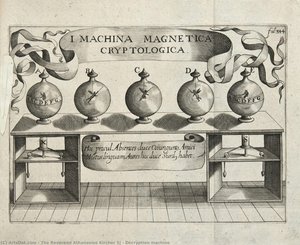
StatsDecryption machine


 Read More
Hand Made Oil Reproduction
Hand-painted oil on canvas in your size and frame, made to order by our artists. ( Switch to Print Switch to Digital Image)




































Pick from our preset sizes that match the artwork's original proportions.

You may enter your own dimensions to fit a specific frame or space. If your selected size does not match the original image's proportions, we will either crop the artwork or extend the painting with additional hand-painted elements. A digital mockup will be sent for your approval before production begins.
Please note that the on-screen preview does not reflect the actual cropping or extension. Only the mockup will accurately show the final composition.
While custom sizes are available, we recommend selecting a dimension from the predefined list to preserve the original proportions.
After order, OriginalUniqueArt.com team will email client for instructions and provide a mockup preview
Worldwide Delivery () in 3/4 weeks instead of standard 5 weeks. (26 September). No compromise on quality.

Free Worldwide Express Shipping

High-Quality Linen Canvas

Full Shipping Insurance

Customs Tax Refund Guarantee

True Color Matching Guarantee

100-Day Return Policy (Defects Only)

100% Money-Back Guarantee

Bulk Discount Offer
 Glass option is only available in size under 110 CM

Decryption machine
Reproduction Medium
Reproduction Size
-


Total Price
$ 300
Artist Biography
A Polymath of the Baroque: The Life and Legacy of Athanasius Kircher
Born in 1602 in Geisa, Germany, to a family of nine children, Athanasius Kircher emerged as one of the most fascinating and enigmatic figures of the 17th century. His life was an extraordinary testament to intellectual curiosity, a relentless pursuit of knowledge that spanned disciplines with breathtaking breadth. From his early education at the Jesuit College in Fulda – where he first encountered the rigorous scholasticism that would shape his thinking – to his ordination as a priest in 1628, Kircher’s path was marked by an insatiable thirst for understanding. Even then, hints of the polymath he would become were evident; alongside theological studies, he demonstrated remarkable aptitude for mathematics, philosophy, and ancient languages like Hebrew and Syriac. A youthful leg injury, reportedly healed through miraculous intervention during his novitiate, perhaps foreshadowed a life dedicated to unraveling mysteries both earthly and divine. This early foundation propelled him toward Rome in 1634, where he would spend the majority of his career and leave an indelible mark on the intellectual landscape of his time.The Kircherian Museum: A Cabinet of Wonders
Upon arriving in Rome, Kircher succeeded Christopher Clavius as mathematician at the Roman College, a position that provided him with both stability and a platform for his burgeoning scholarly pursuits. However, it was the establishment of the *wunderkammer*, or cabinet of curiosities, known as the Kircherian Museum, that truly defined his legacy. This wasn’t merely a collection of oddities; it was a meticulously curated microcosm of the world, filled with artifacts and specimens gathered from Jesuit missions across the globe. The museum became renowned for its diversity – ancient sculptures alongside exotic flora and fauna, geological samples next to technological inventions. It served as both a research center and a public spectacle, attracting visitors eager to marvel at the wonders contained within its walls. Kircher’s network of correspondence was crucial to this endeavor; he maintained contact with scientists, scholars, and missionaries throughout Europe and beyond, relying on their reports to fuel his investigations without necessarily traveling extensively himself. This reliance on second-hand accounts has sometimes been criticized, but it also speaks to Kircher's remarkable ability to synthesize information from disparate sources into a coherent – if often unconventional – worldview.A Universe of Inquiry: From Egyptology to Microscopy
Kircher’s intellectual interests were remarkably expansive. He wasn’t content to specialize; instead, he sought to unify all knowledge into a single, harmonious system. His attempts to decipher Egyptian hieroglyphs, though ultimately flawed by modern standards, represent a pivotal moment in the development of Egyptology. While his methods were often based on mystical interpretations and comparisons to Coptic, he correctly identified the connection between ancient Egyptian and Coptic languages – a crucial breakthrough that laid groundwork for future advancements in the field. Beyond linguistics, Kircher delved into geology, studying volcanoes and earthquakes in places like Malta, Naples, and Sicily, contributing early observations about geological phenomena. He was among the first to observe microbes through a microscope, proposing that infectious microorganisms caused diseases like the plague – an idea centuries ahead of its time. His inventive spirit led him to design various mechanical devices, including magnetic clocks, automatons, and an early form of megaphone. Though often misattributed with inventing the magic lantern, he meticulously studied its principles in his influential work *Ars Magna Lucis et Umbrae*. His prolific output – around 40 major works – testifies to the sheer scope of his investigations. Titles like *Ars Magnesia* (on magnetism), *Prodromus Coptus* (his attempt at deciphering hieroglyphs), and *Mundus Subterraneus* (a comprehensive treatise on the subterranean world) reveal a mind constantly probing the boundaries of human knowledge.The “Last Man Who Knew Everything” and His Enduring Influence
Athanasius Kircher has been famously described as "the last man who knew everything," a fitting epithet for a figure who embodied the culmination of Renaissance polymathy. While many of his specific conclusions have since been superseded by scientific advancements, his work stimulated inquiry and contributed to the development of numerous fields. His collation and synthesis of information from around the world were particularly valuable in an era before widespread communication and standardized knowledge. Historically, Kircher’s reputation suffered due to inaccuracies in his research and a tendency towards speculative interpretations. However, recent scholarship has begun to reassess his contributions, recognizing the value of his broad intellectual curiosity and his role as a disseminator of knowledge. His impact on Egyptology, despite its flaws, is undeniable; his recognition of the link between Egyptian and Coptic languages remains a significant achievement. Athanasius Kircher remains a captivating figure whose life and work exemplify the intellectual spirit of the 17th century – a bridge between Renaissance humanism and the burgeoning Scientific Revolution. He reminds us that even in an age of increasing specialization, the pursuit of knowledge across disciplines can lead to profound insights and enduring legacies. His was a world where curiosity knew no bounds, and the quest for understanding was its own reward.
the reverend athanasius kircher sj
1602 - 1680 , Germany
Quick Facts
- Artistic Movement Or Style: Renaissance man
- Artists Or Movements Influenced By This Artist:
- Egyptology
- Scientific thought
- Date Of Birth: May 2, 1602
- Date Of Death: 1680
- Full Name: Athanasius Kircher SJ
- Nationality: German
- Notable Artworks:
- Illustration of obelisks
- The Labyrinth from Kircher
- Sunflower clock
- Place Of Birth: Geisa, Germany