Preview
 Send
Send Share
Share
 Details
 Guide
Guide

 Download
 Similars
 X-Ray
X-Ray Diaporama
 Stats
StatsPreparatory sketch


 Read More
Hand Made Oil Reproduction
Hand-painted oil on canvas in your size and frame, made to order by our artists. ( Switch to Print Switch to Digital Image)




P118B $10

P118H $10

P118W $10

P438Z $10

P508JH $12

P508YH $12

P805H $10

P805Z $10

P919BZ $10

P919G $10

P919XJ $10

P959ZH $10

P968JZ $12

W106C $8

W218G $10

W218JH $8

W218Y $10

W307PJ $10

W316G $10

W316PJ $8

W316Y $10

W398PJ $8

W4111J $10

W500HY $15

W500JH $15

W692G $12

W849H $8

W940BG $15

W953PJ $8




Pick from our preset sizes that match the artwork's original proportions.

You may enter your own dimensions to fit a specific frame or space. If your selected size does not match the original image's proportions, we will either crop the artwork or extend the painting with additional hand-painted elements. A digital mockup will be sent for your approval before production begins.
Please note that the on-screen preview does not reflect the actual cropping or extension. Only the mockup will accurately show the final composition.
While custom sizes are available, we recommend selecting a dimension from the predefined list to preserve the original proportions.
After order, OriginalUniqueArt.com team will email client for instructions and provide a mockup preview
Worldwide Delivery () in 3/4 weeks instead of standard 5 weeks. (20 September). No compromise on quality.

Free Worldwide Express Shipping

High-Quality Linen Canvas

Full Shipping Insurance

Customs Tax Refund Guarantee

True Color Matching Guarantee

100-Day Return Policy (Defects Only)

100% Money-Back Guarantee

Bulk Discount Offer
 Glass option is only available in size under 110 CM

Preparatory sketch
Reproduction Medium
Reproduction Size
-


Total Price
$ 300
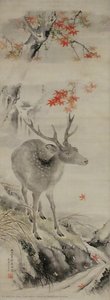
A Delicate Emblem of Renewal: Exploring Taki Katei’s Preparatory Sketch
The artwork, “Preparatory sketch,” by Taki Katei (1830-1901), offers a glimpse into the burgeoning artistic landscape of late Edo and early Meiji Japan. More than just a depiction of plum blossoms—a tree revered in East Asian culture for its resilience and association with springtime—this unassuming sketch embodies a profound dialogue between tradition and modernity, reflecting Katei’s personal journey as an artist and his engagement with the evolving cultural currents of his time.Subject Matter and Composition
At first glance, the piece presents a simple yet meticulously rendered image: branches laden with vibrant red plum blossoms against a muted background. The artist's careful attention to detail captures the delicate beauty of the flowers themselves—their velvety petals unfurling in shades of crimson—and subtly conveys their branching structure. Katei’s masterful use of ink and pigment demonstrates his commitment to the established nihonga style, prioritizing tonal harmony and capturing the essence of natural forms rather than striving for photographic realism.Technique and Materials
Katei employed traditional techniques honed over decades of artistic practice. Mineral pigments—primarily derived from stone—were blended with organic binders like egg yolk or animal glue onto silk or paper. This painstaking process ensured exceptional color saturation and luminosity, characteristics that are particularly noticeable in the radiant hues of the blossoms. The artist’s deliberate brushstrokes contribute to a textured surface that invites contemplation and enhances the overall visual experience.Historical Context: Symbolism and Influence
The sketch's significance extends beyond its aesthetic qualities; it speaks volumes about the cultural values prevalent during Katei’s lifetime. Plum blossom symbolism—representing perseverance, purity, and rebirth—was deeply ingrained in East Asian philosophy and art. The bestowal of “Red Plum Embankment Hall” upon Katei’s new residence by Shen Meishi underscores the importance placed on auspicious imagery and aligning artistic expression with societal aspirations. Furthermore, Katei's work stands as a counterpoint to the burgeoning yōga movement, demonstrating Japan’s embrace of Western artistic conventions while retaining its core aesthetic sensibilities.Emotional Resonance and Artistic Legacy
“Preparatory sketch” transcends mere visual representation; it evokes feelings of tranquility and optimism—a reflection of the blossoming season itself. Katei's ability to distill complex ideas into a single image speaks to the enduring power of art as a vehicle for conveying spiritual and emotional depth. This piece serves as a testament to his artistic vision and contributes significantly to understanding Japan’s artistic heritage, inviting viewers to appreciate not only its beauty but also its profound cultural context.Artist Biography
early life and career
taki katei, a japanese painter, was born on january 27, 1830, in the late tokugawa period. his career spanned two eras, making him an important figure in the transition from traditional to modern japanese art.artistic style and influences
taki katei's work demonstrates the shifts occurring in artistic practice as japanese society changed and expectations altered. his style, though rooted in tradition, shows a gradual incorporation of modern techniques. this blending of old and new makes his artwork a fascinating study of japan's cultural evolution.notable works and associations
* taki katei's paintings are characterized by their use of mineral pigments and organic materials on silk or paper, typical of the nihonga style. * his work can be seen as a response to the rise of western-style painting known as yōga, which was gaining popularity during the meiji period (1868-1912). * taki katei's association with the nihonga art movement places him alongside notable artists like uemura shōen, kazuo shiraga, and kobayashi eitaku.legacy and impact
* taki katei's contributions to japanese art are undeniable. his work serves as a bridge between the traditional yamato e style and the modern nihonga movement. * the taki katei collection at OriginalUniqueArt.com showcases his remarkable talent, with 20 artworks available for viewing and reproduction.key artworks and collections
- taki katei's artwork can be found in various collections, including those at the museo de arte de são paulo (brazil), though this is not confirmed for taki katei specifically.
- for a comprehensive guide to nihonga art and its notable artists, visit the yamato e art movement.
- explore the nihonga art movement at OriginalUniqueArt.com's nihonga collection, featuring artists like taki katei.
conclusion
taki katei, with his unique blend of traditional and modern techniques, remains a pivotal figure in japanese art history. his work, spanning the late tokugawa period and meiji era, offers a captivating glimpse into japan's artistic evolution.- view taki katei's artworks at OriginalUniqueArt.com.
- discover more about the nihonga art movement and its notable artists.
- explore the yamato e style and its influence on japanese art.

Taki Katei
1830 - 1901 , Japan
Quick Facts
- Artistic Movement Or Style: Nihonga
- Artists Or Movements Influenced By This Artist: ['Yamato E Style']
- Artists Who Influenced This Artist: ['Uemura Shoen']
- Date Of Birth: January 27, 1830
- Date Of Death: 1901
- Full Name: Taki Katei
- Nationality: Japanese
- Notable Artworks: ['Cranes in Flight']
- Place Of Birth: Tokyo, Japan
Related Articles

Beyond the Great Wave: The High-Impact Visual Revolution of Japanese Landscape Art
Go beyond Hokusai's Great Wave. Explore the high-impact, graphic world of Japanese Ukiyo-e landscapes and urban prints. Discover how these bold, vibrant woodblock masterpieces continue to shape modern pop culture and contemporary design aesthetics.

Arboreal Echoes: A Historical & Artistic Exploration of Trees in Painting
Explore the rich history of trees in painting! Discover symbolism, Romantic masterpieces by Caspar David Friedrich & beyond. A curated journey for art enthusiasts.

Hokusai's Masterpieces: 25 Iconic Prints & Paintings for Art Lovers | OriginalUniqueArt
Journey through Katsushika Hokusai’s 25 most iconic artworks, including *The Great Wave*. Explore the ukiyo-e master's history, style & timeless Japanese woodblock prints. Find museum-quality reproductions for your home at OriginalUniqueArt.com.
Serenity on Canvas: A Guide to the Timeless Beauty of Japanese Landscape Painting
Discover the serene beauty of Japanese landscape painting. From Hokusai's iconic woodblock prints to meditative sumi-e ink washes, explore a visual journey through the 'floating world' and learn how to bring this timeless Zen aesthetic into your modern home decor.
Arboreal Echoes: A Historical & Artistic Exploration of Trees in Painting
Explore the rich history of trees in painting! Discover symbolism, Romantic masterpieces by Caspar David Friedrich & beyond. A curated journey for art enthusiasts.