 Preview
 Send
Send Share
Share
 Details
 Guide
Guide

 Download
 Similars
 X-Ray
X-Ray Diaporama
 Q&A
Q&A Stats
StatsA View in Venice

- 35.0 x 27.0 cm


 Read More
Giclée / Art Print
Museum-quality giclée or canvas print with fast production and flexible finish options. ( Buy Hand Made Painting Switch to Digital Image)




P118B $10

P118H $10

P118W $10

P438Z $10

P508JH $12

P508YH $12

P805H $10

P805Z $10

P919BZ $10

P919G $10

P919XJ $10

P959ZH $10

P968JZ $12

W106C $8

W218G $10

W218JH $8

W218Y $10

W307PJ $10

W316G $10

W316PJ $8

W316Y $10

W398PJ $8

W4111J $10

W500HY $15

W500JH $15

W692G $12

W849H $8

W940BG $15

W953PJ $8




Pick from our preset sizes that match the artwork's original proportions.

Type the width and the height you need, to fit your frame or your wall. A print can only be cut, never made bigger than the picture, so a size with a different shape loses a part of the image. We send you a digital mockup to approve before we print anything. The picture shown on this page does not show the real cut — only the mockup does.
Worldwide Delivery () in 2 weeks instead of standard 4/5 weeks. (5 November)

Free Worldwide Express Shipping

High-Quality Linen Canvas

Full Shipping Insurance

Customs Tax Refund Guarantee

True Color Matching Guarantee

100-Day Return Policy (Defects Only)

100% Money-Back Guarantee

Bulk Discount Offer
 Glass option is only available in size under 110 CM


A View in Venice
Giclée / Art Print
Reproduction Size
-


Total Price
$ 81
A Window into Venetian Serenity
In her evocative 1880 masterpiece, A View in Venice, Susan Isabel Dacre invites the viewer to step away from the bustle of modern life and drift into a moment of profound tranquility. The painting captures a quintessential Venetian scene, where the rhythmic dance of light upon the water meets the timeless architecture of Italy's most romantic city. At first glance, one is struck by the warmth that radiates from the canvas; Dacre employs a palette dominated by sun-drenched oranges and deep reds, which cling to the facades of the closely packed buildings. These structures, complete with delicate balconies and weathered shutters, stand as silent witnesses to the passage of time, their surfaces reflecting the golden glow of a Mediterranean afternoon.
The composition is anchored by the gentle movement of boats navigating the canal, suggesting a life lived in harmony with the tides. A single figure stands near the center, perhaps a gondolier or a local resident, adding a touch of human narrative to the landscape. This presence serves as an emotional anchor, grounding the dreamlike atmosphere in a relatable reality. As the eye wanders across the water, it encounters the shimmering reflections of the sky and architecture, where the boundary between the solid world and its liquid mirror becomes beautifully blurred.
The Impressionist Touch and Technical Mastery
Technically, A View in Venice is a triumph of late 19th-century impressionistic sensibility. Dacre eschews rigid, clinical lines in favor of soft, fluid brushstrokes that prioritize the essence of light over mere topographical accuracy. This technique allows the artist to capture the ephemeral quality of atmosphere—the way humidity softens the edges of a distant palazzo or how sunlight scatters across a rippling canal. The use of oil on panel provides a rich, luminous depth, allowing the warm pigments to glow from within the layers of paint.
For the discerning collector or interior designer, this painting offers more than just a visual subject; it offers an atmosphere. The interplay of light and shadow creates a dynamic energy that breathes life into any space. Whether placed in a sunlit gallery or a sophisticated study, the work acts as a portal to another era. Its ability to evoke both realism through its architectural detail and dreamlike beauty through its loose execution makes it a versatile centerpiece for those seeking to infuse their surroundings with a sense of historical elegance and romantic nostalgia.
A Legacy of Resilience and Artistry
To understand the soul of this painting, one must consider the hand that held the brush. Susan Isabel Dacre was a woman of remarkable fortitude, navigating the complexities of the Victorian era as both an artist and an advocate for women's rights. Her life, marked by travels through war-torn Europe and her role in founding the Manchester Society of Women Artists, infused her work with a unique depth of perspective. In A View in Venice, we see the culmination of this worldly experience—a refined ability to find peace and beauty amidst the complexities of existence.
Owning a reproduction of this work is an opportunity to possess a fragment of art history. It is a tribute to a period when artists sought to capture the fleeting magic of the natural world, and it remains a timeless invitation to wander through the canals of Venice, lost in the soft light and the enduring charm of a bygone age.
Questions & Answers
What color intensity does "A View in Venice" by Susan Isabel Dacre have?
The color intensity of "A View in Venice" is balanced. Intensity describes how strong the colors appear.
How is "A View in Venice" situated historically?
The art-historical classification of "A View in Venice" by Susan Isabel Dacre is Impressionism, in the 19th-Century period.
Is "A View in Venice" by Susan Isabel Dacre recommended as a gift, and for whom?
"A View in Venice" by Susan Isabel Dacre is recommended as a gift for anniversary, especially for mood. A reproduction of the artwork can be given as a present.
Artist Biography
A Life Painted in Resilience: The Story of Susan Isabel Dacre
Susan Isabel Dacre, born in 1844 amidst the burgeoning Victorian era, was more than just a painter; she was a testament to the quiet revolution unfolding within British society. Her life, stretching into the early decades of the 20th century, mirrored the shifting landscapes of artistic expression and the fervent struggle for women’s rights. Born in Leamington Spa, Dacre's path wasn’t one of immediate privilege or established patronage. Instead, it was forged through observation, dedicated practice, and a determined spirit that refused to be confined by societal expectations. Early years spent moving between convent schooling and governess positions – even witnessing the turmoil of the Franco-Prussian War firsthand during a period in Paris – instilled within her a keen awareness of the world’s complexities, an understanding that would later permeate her art. This early exposure to different cultures and political climates undoubtedly shaped her perspective, fostering both a sensitivity to human emotion and a commitment to social justice.Artistic Development and Influences
Dacre's artistic journey began in earnest upon returning to England in 1871, enrolling at the Manchester School of Art where she quickly distinguished herself, winning the prestigious Queen’s Prize in 1875. This marked a turning point, solidifying her commitment to painting as a profession – a bold move for a woman during that period. Her style evolved from meticulous realism, characteristic of much Victorian art, towards a more nuanced approach incorporating subtle romanticism and an emerging sensitivity to light and color. While pinpointing specific artistic influences proves challenging due to limited documentation, it’s clear her work resonated with the prevailing realist tendencies of the time. However, hints of Impressionistic sensibilities – particularly in her landscape paintings – suggest an openness to contemporary movements unfolding across the Channel. The influence of Lord Leighton is also noteworthy; he provided guidance and observations on painting techniques during a stay in Capri, demonstrating a willingness from established male artists to mentor emerging female talent. Dacre’s portraits, however, remained central to her practice, allowing her to explore character and individuality with remarkable depth.Themes and Notable Works
Dacre's oeuvre is remarkably diverse, encompassing evocative landscapes, intimate genre scenes, and compelling portraits. Italian Women in Church, a poignant depiction of female figures within a religious setting, exemplifies her ability to capture emotional resonance through subtle gestures and atmospheric composition. Her fascination with Italy is further revealed in works like Assisi from Perugia and Assisi from the City Walls, where she masterfully conveys the beauty and tranquility of the Italian countryside using soft brushstrokes and muted tones. Perhaps one of her most tender pieces, The Artist’s Mother, showcases her skill in portraying familial bonds with sensitivity and grace. Recurring themes throughout her work include a celebration of female strength and individuality – often evident in her portraits – alongside an enduring appreciation for the beauty of nature and glimpses into everyday Victorian life. These weren't merely aesthetic choices; they were reflections of her own values and beliefs, subtly challenging conventional representations of women and society.A Champion of Women Artists and Suffrage
Susan Isabel Dacre’s legacy extends far beyond the canvas. She was a dedicated activist who actively championed both artistic opportunities for women and the broader cause of suffrage. In 1876, alongside Annie Louise Swynnerton, she co-founded the Manchester Society of Women Artists, providing a crucial platform for female artists to exhibit their work and network with peers – a space that was sorely lacking at the time. She served as president of this vital organization, demonstrating her leadership and commitment to fostering a supportive community. Her activism didn’t stop there; Dacre was also a member of the executive committee of the Manchester National Society for Women's Suffrage for a decade (1885-95), tirelessly advocating for women’s right to vote. After years of campaigning, she successfully became a member of the council of the Manchester Academy of Fine Arts in 1897, breaking down barriers and paving the way for future generations of female artists to gain recognition within established institutions.Enduring Significance
Susan Isabel Dacre passed away in 1933, leaving behind a body of work that continues to resonate with viewers today. Her significance lies not only in her artistic contributions – the evocative landscapes, compelling portraits, and sensitive genre scenes – but also in her unwavering commitment to social justice. She challenged societal norms, defied expectations, and actively worked to create opportunities for women in both the art world and beyond. Dacre’s life serves as a powerful reminder of the importance of perseverance, artistic vision, and the courage to fight for what one believes in. Her paintings offer valuable insights into Victorian society, gender roles, and the burgeoning feminist movement, making her work not just aesthetically pleasing but historically significant. She was a pioneer who helped shape a more inclusive and equitable future for women artists, ensuring that their voices would be heard and their talents celebrated.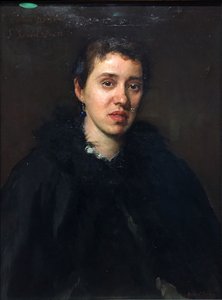
Susan Isabel Dacre
1844 - 1933 , United Kingdom
Quick Facts
- Full Name: Susan Isabel Dacre
- Nationality: British
- Date Of Birth: 1844
- Date Of Death: 1933
- Place Of Birth: Leamington Spa, United Kingdom
- Notable Artworks:
- Italian Women in Church
- A View in Venice
- The Artist’s Mother
- Assisi from Perugia
- Assisi from the City Walls
- Artistic Movement Or Style: Realism, Romanticism
Related Articles

Oil on Panel Masters: 10 Paintings That Revolutionized Art |
Journey through 10 legendary 'Oil on Panel' masterpieces by Van Eyck, Bosch & Bruegel. Explore the stories behind these iconic Renaissance & Baroque paintings and find museum-quality art reproductions to elevate your home decor. Discover all masterpieces on !

Oil on Board: A Historical Survey of Technique, Aesthetic Qualities & Enduring Appeal
Explore the rich history of oil on board painting! Discover techniques, aesthetic qualities & enduring appeal from early masters to modern practice. Expert insights for collectors and art enthusiasts.

Mastering the Surface: The Timeless Elegance and Technical Brilliance of Oil on Panel Painting
Discover the enduring allure of oil on panel painting. Explore the technical mastery, historical significance, and luminous depth that define this prestigious medium, from Renaissance masters to modern fine art reproductions for discerning collectors.

The Timeless Beauty of Oil on Panel: Capturing Light and Texture through the Impressionist Lens
Discover the exquisite depth of oil on panel. Explore how Impressionist masters captured light and texture through tactile brushwork, and learn how to bring these museum-quality, hand-painted masterpieces into your home with expert curation.

Oil on Panel: A Historical Survey of Technique, Support & Aesthetic Evolution
Explore the rich history of oil on panel painting! Discover Renaissance techniques, support structures & aesthetic evolution. Expert insights for art collectors and enthusiasts.


