

 Preview
 Send
Send Share
Share
 Details
 Guide
Guide

 Download
 Similars
 X-Ray
X-Ray Diaporama
 Q&A
Q&A Stats
StatsSad Tunes
 Acrylic On Canvas
- WallArt
- Contemporary Realism
 Modern
 87.0 x 90.0 cm
 Barjeel Art Foundation
 Read More
The artwork displayed on this page is protected by copyright law, which means we cannot legally create or sell an identical reproduction. This protection is enforced under international agreements such as the Berne Convention and by national laws, including those outlined by the U.S. Copyright Law - Title 17.
This method fully complies with copyright regulations because it does not involve copying or duplicating the protected artwork. Instead, it is a creative reinterpretation - a new painting that is influenced by the original but not identical to it.
Giclée / Art Print
Museum-quality giclée or canvas print with fast production and flexible finish options. ( Buy Hand Made Painting Switch to Digital Image)




P118B $10

P118H $10

P118W $10

P438Z $10

P508JH $12

P508YH $12

P805H $10

P805Z $10

P919BZ $10

P919G $10

P919XJ $10

P959ZH $10

P968JZ $12

W106C $8

W218G $10

W218JH $8

W218Y $10

W307PJ $10

W316G $10

W316PJ $8

W316Y $10

W398PJ $8

W4111J $10

W500HY $15

W500JH $15

W692G $12

W849H $8

W940BG $15

W953PJ $8




Pick from our preset sizes that match the artwork's original proportions.

Type the width and the height you need, to fit your frame or your wall. A print can only be cut, never made bigger than the picture, so a size with a different shape loses a part of the image. We send you a digital mockup to approve before we print anything. The picture shown on this page does not show the real cut — only the mockup does.
Worldwide Delivery () in 2 weeks instead of standard 4/5 weeks. (29 October)

Free Worldwide Express Shipping

High-Quality Linen Canvas

Full Shipping Insurance

Customs Tax Refund Guarantee

True Color Matching Guarantee

100-Day Return Policy (Defects Only)

100% Money-Back Guarantee

Bulk Discount Offer
 Glass option is only available in size under 110 CM

Sad Tunes
Giclée / Art Print
Reproduction Size
-


Total Price
$ 81
Suleiman Mansour’s “Sad Tunes”: A Portrait of Palestinian Resilience
“Sad Tunes,” a captivating portrait by Palestinian artist Suleiman Mansour, offers a poignant glimpse into the heart of his homeland and the enduring spirit of its people. Measuring 87 x 90 cm, this painting transcends mere representation; it’s a deeply layered meditation on survival, memory, and the concept of “sumud” – steadfastness – that forms the bedrock of Palestinian identity. The scene depicts two women engaged in musical performance amidst a stark, desert-like landscape, immediately drawing the viewer into a world both beautiful and profoundly melancholic.
- Subject Matter: The central focus is on two women playing musical instruments – a pipe organ and a flute – creating an immediate sense of intimacy and artistic expression.
- Setting: The sandy ground surrounding them evokes the arid landscapes characteristic of Palestine, subtly reinforcing themes of hardship and resilience.
- Supporting Figures: Scattered smaller figures add to the narrative complexity, potentially representing other individuals or symbolic elements within the broader Palestinian experience.
Artistic Style and Technique – A Bridge Between Realism and Symbolism
Suleiman Mansour’s artistic journey began with a formal education at the Bezalel Academy of Arts and Design in Jerusalem, initially influenced by realist traditions. However, he deliberately moved beyond prevailing abstract expressionism, seeking to capture the tangible realities of Palestinian life with meticulous detail. “Sad Tunes” exemplifies this approach; the figures are rendered with a remarkable sensitivity to texture and form, showcasing Mansour’s skill in portraying human emotion and environment. The use of color is restrained yet evocative, contributing significantly to the painting's dramatic atmosphere. The technique employed suggests a deliberate layering of paint, building up depth and emphasizing the tactile qualities of the scene – from the worn surfaces of the instruments to the shifting sands beneath the women’s feet.
Historical Context and Symbolism: “Sumud” in Action
Painted by an artist born in 1947, a year marked by the devastating Nakba (catastrophe), "Sad Tunes" is inextricably linked to Palestinian history. The concept of “sumud,” central to Mansour’s work, speaks to the unwavering determination of Palestinians to maintain their identity and culture despite displacement and adversity. The musical instruments themselves can be interpreted as symbols of hope, resistance, and cultural preservation – a defiant act of expression in the face of challenging circumstances. The handbag placed on the ground near one of the women adds another layer of intrigue, perhaps representing practicality, memory, or even a connection to the past.
Emotional Impact and Artistic Significance
"Sad Tunes" is more than just a beautiful painting; it’s a powerful statement about human resilience. The title itself – “Sad Tunes” – immediately evokes a sense of melancholy and reflection, inviting viewers to contemplate themes of loss, memory, and the enduring spirit of a people. Suleiman Mansour's work continues to resonate deeply with audiences worldwide, offering a poignant reminder of the importance of cultural identity and the strength found in facing adversity. This piece is an exceptional addition for collectors seeking works that carry profound historical and emotional weight, or for interior designers looking to infuse their spaces with a touch of artistic narrative and evocative beauty.
Questions & Answers
What shape and dimensions is "Sad Tunes" by Suleiman Mansour?
The format of "Sad Tunes" is square, and the original measures 87 x 90 cm. Both are useful when planning a reproduction.
In which movement and which era is "Sad Tunes" by Suleiman Mansour placed?
"Sad Tunes" by Suleiman Mansour is placed in the Contemporary Realism movement, within the Modern era of its creator.
Is there a factsheet about "Sad Tunes" by Suleiman Mansour for students?
The Guide page of "Sad Tunes" by Suleiman Mansour offers a printable two-sheet factsheet: the artwork with its identity table, a decade band placing it in the artist's lifetime, other works by the artist, the measured color palette, and ready-to-copy citations in four styles.
Artist Biography
Suleiman Mansour: A Chronicle of Resilience and Palestinian Identity
Born in 1947 in Birzeit, Palestine – a year before the devastating Nakba – Suleiman Mansour’s life has been inextricably linked to the ongoing narrative of his homeland. More than just an artist, he is a cultural chronicler, a visual storyteller deeply rooted in the concept of “sumud” – Arabic for steadfastness or resilience – which permeates every aspect of his work. His paintings and sculptures aren't merely depictions of landscapes; they are profound meditations on survival, memory, and the enduring spirit of the Palestinian people.
Mansour’s early artistic education at the Bezalel Academy of Arts and Design in Jerusalem initially steered him towards a realist style, a deliberate rejection of the prevailing abstract expressionism. He sought to capture the tangible realities of daily life within Palestine – the faces of its inhabitants, the textures of its environment, and the echoes of its history. This commitment to portraying authentic experience would become a defining characteristic of his oeuvre. However, it was his experiences during the First Intifada in 1987 that truly ignited his artistic purpose. Witnessing the struggles and resistance firsthand fueled a desire to use art as a tool for cultural preservation and political commentary.
The Birth of “New Visions” and the Politics of Materials
In 1987, Mansour co-founded the influential collective “New Visions,” alongside artists like Vera Tamari, Tayseer Barakat, and Nabil Anani. This group represented a radical shift in Palestinian art, moving away from traditional gallery spaces and embracing a deeply political stance. Recognizing the limitations imposed by Israeli occupation – particularly the reliance on imported art supplies – they devised a brilliant strategy: to create their own materials using resources found within Palestine itself. Mud became a central element of their work, drawing inspiration from Mansour’s childhood memories of his grandmother crafting beehives and ovens with this humble yet versatile substance.
This deliberate choice of material was profoundly symbolic. The cracks and imperfections inherent in mud mirrored the fissures of Palestinian society, the scars of displacement, and the fragility of existence under occupation. It represented a rejection of external influences and an assertion of self-sufficiency – a powerful visual statement against the imposed limitations of the conflict. As Mansour himself eloquently stated, “After a while, once I started making figures, I realized that the mud also reflects the human fate with the cracks, people waiting to disappear, fall down and go away.”
Landscapes of Loss and Remembrance
Mansour’s most iconic works often depict destroyed Palestinian villages – Yibna, Yalo, Imwas, and Bayt Dajan – rendered in a hauntingly beautiful series created in 1988. These paintings are not celebratory monuments; rather, they serve as poignant memorials to lost communities and the displacement inflicted by conflict. The stark landscapes, often dominated by barren earth and crumbling ruins, evoke a sense of profound loss and enduring sorrow. Yet, within these scenes of devastation, there’s also an undeniable strength – a testament to the spirit of those who remain and their determination to preserve their heritage.
Beyond these monumental works, Mansour's paintings frequently feature women in traditional Palestinian clothing, capturing the dignity and resilience of Palestinian femininity. He also masterfully portrays the Levantine landscape—olive groves, terraced hillsides, and ancient trees—creating a visual tapestry that celebrates the beauty and enduring connection to the land. His work is deeply informed by his cultural heritage and reflects the complexities of life in Palestine.
Legacy and Recognition
Suleiman Mansour’s impact extends far beyond the canvas. He has been a dedicated educator, teaching at numerous institutions including Al-Quds University, shaping generations of Palestinian artists. He served as the head of the League of Palestinian Artists from 1986 to 1990 and played a crucial role in establishing an infrastructure for fine arts within Palestine. His contributions were recognized internationally, with exhibitions held at prestigious venues like the Tel Aviv Museum of Art.
His work has been documented extensively, including co-authoring “Both Sides of Peace: Israeli and Palestinian Political Poster Art,” showcasing his engagement with political discourse through art. Mansour’s legacy is one of unwavering commitment to documenting the Palestinian experience, using his artistic voice to bear witness to a complex and often painful history. He remains an active artist today, continuing to explore themes of sumud and cultural identity.
Further Exploration
- Key Works: “Destroyed Palestinian Villages” series, “Jamal Al Mahamel III (The Camel/Carrier of Hardships)”
- Notable Collective: New Visions
- Themes: Sumud, Resilience, Displacement, Cultural Heritage, Palestinian Identity
To delve deeper into Suleiman Mansour’s work and artistic journey, explore the resources available on OriginalUniqueArt.com: Jamal Al Mahamel III and Suleiman Mansour’s Artist Page.

Suleiman Mansour
1947 - , Palestine
Quick Facts
- Full Name: Suleiman Mansour
- Nationality: Palestinian
- Date Of Birth: 1947
- Place Of Birth: Birzeit, Palestine
- Notable Artworks:
- Destroyed villages (1988)
- Traditional clothing
- Both Sides Peace
- Artistic Movement Or Style: Realism, Sumud art
Related Articles
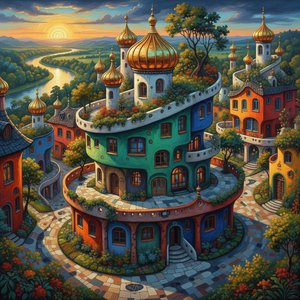
Friedensreich Hundertwasser: A Celebration of Organic Form & Rejection of Straight Lines
Explore the revolutionary art & architecture of Friedensreich Hundertwasser. Discover his rejection of straight lines, organic forms, ecological activism, and iconic projects like the Hundertwasserhaus. A deep dive into a unique artistic vision.

The Art of Legacy: Commissioning Grand-Scale Custom Group Portraits for Families and Organizations
Transform your family's history into a timeless masterpiece. OriginalUniqueArt specializes in luxury, large-scale custom group portrait commissions for 10+ people. Hand-painted by master artists using traditional oil techniques to create an enduring legacy for your home or organization.

The Aesthetic Catalyst: Leveraging Art Installations for Guest Engagement & Organic Social Marketing
Discover how strategic art installations elevate hotel experiences & drive organic social visibility. Expert insights on design, ROI, guest engagement, and creating unforgettable spaces for luxury hospitality brands.
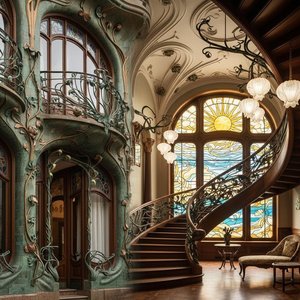
Art Nouveau: The Elegant Fusion of Nature and Design – A Journey Through Organic Sophistication
Discover the exquisite world of Art Nouveau. Explore the elegant fusion of nature and design through architectural masterpieces, organic forms, and the legendary masters of the Belle Époque. Immerse yourself in a journey of timeless sophistication and ornamental beauty.

The Elegance of Art Nouveau: Embracing Nature's Fluid Beauty and the Belle Époque Spirit
Discover the enchanting world of Art Nouveau. Explore the organic beauty, flowing lines, and Belle Époque elegance that defined an era of unparalleled craftsmanship and natural inspiration.


