Preview
 Send
Send Share
Share
 Details

 Download
 Similars
 X-Ray
X-Ray Diaporama
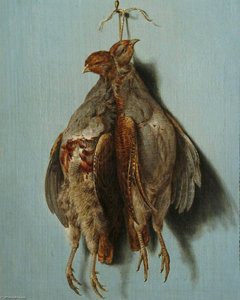
The Last Supper
 1765
1765 150.0 x 191.0 cm
 Read More
Hand Made Oil Reproduction
Hand-painted oil on canvas in your size and frame, made to order by our artists. ( Buy Print Buy Image)




































Pick from our preset sizes that match the artwork's original proportions.

You may enter your own dimensions to fit a specific frame or space. If your selected size does not match the original image's proportions, we will either crop the artwork or extend the painting with additional hand-painted elements. A digital mockup will be sent for your approval before production begins.
Please note that the on-screen preview does not reflect the actual cropping or extension. Only the mockup will accurately show the final composition.
While custom sizes are available, we recommend selecting a dimension from the predefined list to preserve the original proportions.
After order, OriginalUniqueArt.com team will email client for instructions and provide a mockup preview
Worldwide Delivery () in 3/4 weeks instead of standard 5 weeks. (14 August). No compromise on quality.

Free Worldwide Express Shipping

High-Quality Linen Canvas

Full Shipping Insurance

Customs Tax Refund Guarantee

True Color Matching Guarantee

60-Day Return Policy (Defects Only)

100% Money-Back Guarantee

Bulk Discount Offer
 Glass option is only available in size under 110 CM

The Last Supper
Reproduction Medium
Reproduction Size
-


Total Price
$ 300
Artwork Description
Artistic Style and Composition
The Last Supper by Stephen Elmer showcases the artist's skill in depicting still life and dead game. The painting features a semicircular arrangement of Jesus and his disciples around a table, with Jesus blessing the bread and wine. The use of vivid colors, which were unusual for the date it was painted, adds to the overall impact of the artwork. The conservation work done on the painting has restored its original beauty, allowing it to be placed on permanent display.Artist's Background and Other Works
Stephen Elmer was a member of the Society of Artists in 1763 and exhibited numerous pictures up to 1772. He was elected an Associate of the Royal Academy later that year and contributed many paintings, including still life, genre pieces, and portraits. Some of his notable works include The Miser and The Politician. For more information on Stephen Elmer and his artworks, visit https://OriginalUniqueArt.com/@/Stephen-Elmer.- Handmade oil painting reproductions of the Last Supper by Stephen Elmer are available at /art/list/?Filter=AQSMZT-Stephen-Elmer-The-Last-Supper.
- Learn more about the artist and his works on Wikipedia: https://en.wikipedia.org/wiki/Stephen_Elmer.
- Discover other artworks by Stephen Elmer at the Museum of Farnham and explore the world of art at https://OriginalUniqueArt.com.
The Last Supper by Stephen Elmer is a significant work of art that showcases the artist's skill and style. With its vivid colors and masterful composition, this painting is a must-see for art enthusiasts. Visit https://OriginalUniqueArt.com to explore more artworks and learn about the artists who created them.
Artist Biography
Stephen Elmer Ara: A Quiet Master of Still Life and Genre
Stephen Elmer Ara (1717 – 1796) was an English painter who quietly established himself as a respected figure within the artistic circles of Surrey during the Georgian era. Though largely overlooked by mainstream art history, Elmer’s meticulous depictions of still life subjects—particularly dead game—and occasional genre scenes offer a valuable glimpse into the visual culture of his time and demonstrate considerable skill in capturing naturalistic detail. His career spanned from humble beginnings as a maltster to achieving recognition at the Royal Academy, marking him as an artist who persevered through dedication and artistic integrity. Elmer’s formative years were spent in Farnham, where he practiced his craft alongside his family's business interests. This grounding in practical trades seems to have instilled a disciplined approach to artmaking that would characterize much of his oeuvre. He joined the Society of Artists in 1763, an important step for establishing professional credentials and gaining exposure within the burgeoning artistic community. From this point onward, Elmer’s output was prolific, producing numerous canvases that were exhibited repeatedly until 1772, when he began to gain prominence at the Royal Academy. This institution became his primary venue for showcasing his work and securing acclaim—a testament to his ambition and talent. The Royal Academy's patronage proved crucial to Elmer’s artistic development. Between 1773 and 1795, he contributed a remarkable number of paintings, consistently lauded for their boldness, freedom, and unwavering faithfulness to nature. Unlike many artists of the period who favored grand narratives or theatrical compositions, Elmer opted for understated elegance, prioritizing precise observation and skillful rendering of textures and colors. His canvases resonated with viewers due to their ability to convey a profound sense of atmosphere and emotion—a hallmark of his distinctive style. Critics recognized his talent for portraying scenes from everyday life, as evidenced by works like “The Miser” and “The Politician,” engravings that captured the spirit of the age with remarkable accuracy. Elmer’s artistic explorations extended beyond still life; he occasionally ventured into genre painting, producing evocative depictions of domestic interiors and social interactions. Notably, "The Last Supper," formerly adorning the altar of Farnham Church before being relocated to its vestry, stands as a poignant reminder of Elmer's commitment to religious iconography—a subject that demanded considerable artistic sensitivity and technical prowess. Furthermore, his portraits captured the likenesses of prominent figures within Surrey society, demonstrating his ability to convey character and personality through visual representation. His works were reproduced extensively by engravers like John Scott and James Fiddler Miller, ensuring their images reached a wider audience and cementing Elmer’s legacy as an artist whose art transcended geographical boundaries. Sadly, Elmer's artistic endeavors suffered a devastating blow in 1801 when a fire consumed his collection of paintings—including several masterpieces—at Gerrard Street Soho. The loss represented not only a personal tragedy but also a significant setback for the preservation of British art history. Despite this misfortune, Elmer’s nephew, William Elmer, continued to practice painting in Ireland and occasionally exhibited at the Royal Academy between 1783 and 1799, upholding the family tradition of artistic excellence. Though overshadowed by his brother's fame, William Elmer nonetheless achieved recognition as a skilled painter who skillfully navigated the complexities of the Irish art scene. Stephen Elmer Ara’s contribution to British painting remains an enduring testament to quiet dedication and unwavering commitment to capturing the beauty and truthfulness of the natural world—a legacy deserving of renewed appreciation.
stephen elmer
1717 - 1796
Quick Facts
- Artistic Movement Or Style: Still Life Painting
- Date Of Birth: 1717
- Date Of Death: 1796
- Full Name: Stephen Elmer Ara
- Nationality: English
- Notable Artworks:
- The Last Supper
- Cock & Hen Red Grouse in Landscape
- Place Of Birth: England