Preview
 Send
Send Share
Share
 Details
 Guide
Guide

 Download
 Similars
 X-Ray
X-Ray Diaporama
 Stats
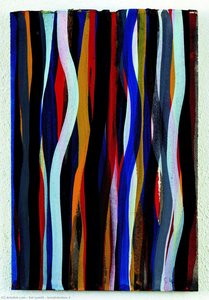
StatsBlack with White Lines, Vertical Not Touching
 Acrylic On Canvas
- WallArt
- Minimalist Abstract Expressionism
 1970
1970 43.0 x 59.0 cm
 MOMA - Museum of Modern Art
 Read More
Hand Made Oil Reproduction
Hand-painted oil on canvas in your size and frame, made to order by our artists. ( Switch to Print Switch to Digital Image)




P118B $10

P118H $10

P118W $10

P438Z $10

P508JH $12

P508YH $12

P805H $10

P805Z $10

P919BZ $10

P919G $10

P919XJ $10

P959ZH $10

P968JZ $12

W106C $8

W218G $10

W218JH $8

W218Y $10

W307PJ $10

W316G $10

W316PJ $8

W316Y $10

W398PJ $8

W4111J $10

W500HY $15

W500JH $15

W692G $12

W849H $8

W940BG $15

W953PJ $8




Pick from our preset sizes that match the artwork's original proportions.

You may enter your own dimensions to fit a specific frame or space. If your selected size does not match the original image's proportions, we will either crop the artwork or extend the painting with additional hand-painted elements. A digital mockup will be sent for your approval before production begins.
Please note that the on-screen preview does not reflect the actual cropping or extension. Only the mockup will accurately show the final composition.
While custom sizes are available, we recommend selecting a dimension from the predefined list to preserve the original proportions.
After order, OriginalUniqueArt.com team will email client for instructions and provide a mockup preview
Worldwide Delivery () in 3/4 weeks instead of standard 5 weeks. (21 September). No compromise on quality.

Free Worldwide Express Shipping

High-Quality Linen Canvas

Full Shipping Insurance

Customs Tax Refund Guarantee

True Color Matching Guarantee

100-Day Return Policy (Defects Only)

100% Money-Back Guarantee

Bulk Discount Offer
 Glass option is only available in size under 110 CM

Black with White Lines, Vertical Not Touching
Reproduction Medium
Reproduction Size
-


Total Price
$ 300
The Essence of Simplicity: Solomon Lewitt’s “Black with White Lines, Vertical Not Touching”
Solomon Lewitt's "Black with White Lines, Vertical Not Touching" isn't merely a drawing; it’s an invitation to contemplate the profound beauty residing within stark simplicity. Created in 1970, this work stands as a cornerstone of Minimalism and a testament to Lewitt’s revolutionary approach to art – one that prioritizes conceptual ideas over representational imagery. The piece immediately commands attention not through vibrant color or complex form, but through its deliberate reduction to the essential: black lines against a black background. It's an exercise in visual restraint, a quiet assertion of order and precision that speaks volumes about the artist’s core philosophy.
The composition is remarkably restrained, yet deeply engaging. The vertical lines, thin and consistently spaced, create a grid-like structure that subtly anchors the eye while simultaneously suggesting infinite repetition. There's no central focal point, no obvious hierarchy – each line contributes equally to the overall effect, fostering a sense of meditative calm. This deliberate lack of visual clutter forces the viewer to slow down, to truly *see* the arrangement and appreciate its inherent balance.
A Conceptual Foundation: Minimalism and Lewitt’s Vision
To understand “Black with White Lines,” it's crucial to grasp Lewitt’s broader artistic vision. He emerged in the late 1960s as a key figure in Minimalism, a movement that rejected traditional notions of art by stripping away all extraneous elements – color, texture, and subject matter – leaving only the fundamental forms and processes. Lewitt wasn't interested in creating beautiful objects; he sought to create *experiences* through art, experiences rooted in intellectual engagement rather than emotional response. His work is fundamentally conceptual—the idea behind the piece is paramount, often exceeding the physical manifestation.
The influence of mathematics and geometry on Lewitt’s practice is undeniable. The precise lines, their consistent spacing, and the overall grid-like structure echo principles found in architectural design and engineering. This deliberate use of structured systems reflects a desire to explore order and control – themes that resonate deeply within Minimalism.
Decoding the Symbolism: Order, Repetition, and Detachment
While seemingly simple on the surface, “Black with White Lines” is rich in symbolic potential. The stark contrast between black and white can be interpreted as representing duality—perhaps good versus evil, order versus chaos, or even consciousness and unconsciousness. The repetitive nature of the lines evokes a sense of rhythm and systemization, suggesting an underlying structure governing the universe. It’s not surprising that this piece has been linked to themes of detachment and austerity – qualities often associated with Minimalist art.
Furthermore, the vertical orientation of the lines can be seen as representing aspiration, reaching towards the heavens, or perhaps a yearning for stability and permanence. The deliberate lack of intersection between the lines reinforces this sense of separation and independence, creating a visual metaphor for individual existence within a larger framework.
Craftsmanship and Reproduction: Bringing Lewitt’s Vision to Life
The artwork itself was likely created using a drawing technique – perhaps with a pencil or fine-tipped pen applied to a black support, such as canvas or paper. The smooth texture suggests careful execution, highlighting the artist's meticulous attention to detail. Reproductions, like this one offered by OriginalUniqueArt, strive to capture not just the visual appearance of the original but also its inherent sense of calm and precision. When selecting a reproduction, consider the quality of materials used – archival paper and pigment are essential for ensuring that the artwork’s colors remain vibrant and true over time.
Artist Biography
The Architect of Ideas: The Life and Legacy of Sol LeWitt
In the vast landscape of twentieth-century modernism, few figures cast as long or as intellectually profound a shadow as Solomon LeWitt. Born on September 9, 1928, in Hartford, Connecticut, to a family of Jewish immigrants from Russia, LeWitt’s journey was one defined by the pursuit of pure thought over mere physical execution. His early years were shaped by a rigorous analytical curiosity, a trait nurtured by his studies at Syracuse University between 1945 and 1949. This academic foundation in mathematics and geometry would later become the very heartbeat of his artistic language, allowing him to strip away the decorative excesses of traditional art to reveal the skeletal beauty of logic and structure.
LeWitt’s evolution as an artist was not a sudden rupture but a deliberate migration from the tangible to the conceptual. While his early explorations involved the tactile nature of painting and drawing, he soon found himself increasingly drawn to the idea behind the mark rather than the mark itself. This shift marked the birth of a pioneer who would bridge the gap between Minimalism and Conceptual Art. He began to view the artist not as a craftsman bound by the hand, but as an architect of instructions. By prioritizing the mental blueprint over the finished object, LeWitt challenged the very definition of authorship, suggesting that once an idea is conceived, its physical manifestation is merely a secondary consequence.
The Revolution of the Wall Drawing
The late 1960s witnessed one of the most radical transformations in contemporary art with the emergence of LeWitt’s iconic wall drawings. Rejecting the permanence and preciousness of traditional sculpture, he introduced "structures"—a term he preferred over "sculptures" to emphasize their mathematical essence—and a series of instructions that could be executed by anyone trained to follow them. These works were not merely decorations but lived experiences, often composed of precise geometric patterns, arcs, and interlocking shapes that breathed life into the architectural spaces they inhabited.
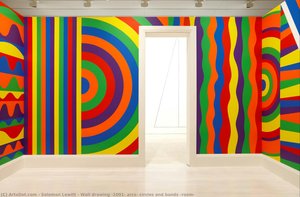
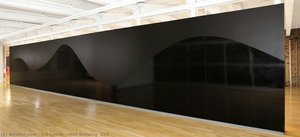
To witness a LeWitt wall drawing is to see logic transformed into poetry. Whether it was the stark, rhythmic repetition found in Black with White Lines, Vertical Not Touching or the vibrant, exuberant energy of Wall Drawing #1091: arcs, circles and bands, his work utilized the power of the line to command space. These pieces often relied on a system of logical, often mathematical instructions that guided assistants or museum installers in their production. This method democratized the act of creation while simultaneously elevating the importance of the concept, ensuring that the artwork existed fundamentally as an intellectual spark before it ever touched a wall.
A Lasting Impression on Modernity
Throughout his prolific career, which spanned decades and included mastery in printmaking, photography, and installation, LeWitt remained steadfast in his commitment to clarity and precision. His ability to find profound beauty in the simplest of forms—such as the striking white Pyramid or the complex, colorful rhythms of his crayon-based wall works—redefined the aesthetic boundaries of the late 20th century. He proved that art could be stripped of its ego and its ornament, yet still retain a soul that resonates deeply with the human desire for order and discovery.
The historical significance of Sol LeWitt cannot be overstated. He provided the vocabulary for generations of artists to explore the boundaries between thought and matter. His legacy lives on in every museum and gallery where the line between the creator and the executor is blurred, and where the strength of an idea is recognized as the ultimate medium. As we look back upon his life, from his beginnings in Hartford to his final days in New York City in 2007, we see a man who did not just make art, but who taught us how to see the profound architecture of thought itself.

solomon lewitt
1928 - 2007 , United States of America
Quick Facts
- Artistic Movement Or Style: Minimalism & Conceptual Art
- Artists Or Movements Influenced By This Artist: ['Minimalism']
- Artists Who Influenced This Artist: ['Frank Lloyd Wright']
- Date Of Birth: September 9, 1928
- Date Of Death: April 8, 2007
- Full Name: Solomon Lewitt
- Nationality: American
- Notable Artworks:
- Distorted Cubes Bozuk Küpler
- Kaldor Public Art Project 11: Sol LeWitt 1998
- Place Of Birth: Hartford, United States
Related Articles

Monochrome Edge: The Ultimate Design Flex—Level Up Your Space with Bold Black & White Art
Master the monochrome aesthetic with high-impact Black & White art from OriginalUniqueArt.com. From custom hand-painted oils to iconic pop culture remixes, discover the ultimate design flex for your urban space. Elevate your decor with bold, premium, and timeless monochrome masterpieces.

Monochrome Visions: Exploring the Aesthetic & Historical Significance of Black & White Photography
Explore the rich history & artistic power of black and white photography. From early techniques to iconic masters like Ansel Adams, discover why monochrome continues to captivate art lovers today. Expert insights for collectors.

Dark Masterpieces: 10 Iconic Paintings Dominated by Black Tones |
Explore 10 iconic paintings dominated by black tones, from Rembrandt’s chiaroscuro to Goya's dark expressions. Discover the stories behind these masterpieces & find museum-quality art reproductions for your home at .

White on Canvas: 10 Masterpieces & Timeless Elegance for Your Home Decor
Explore 10 iconic white paintings by Monet, Whistler & Rothko! Discover the stories behind these serene masterpieces and their impact on art history. Find museum-quality reproductions for your home decor at .

Shadow & Soul: Why Black & White Photography Remains the Ultimate Power Move in Modern Art
Discover why black & white photography remains a powerful force in contemporary art. Explore the impact of light, shadow, and texture through a visual journey of monochrome mastery and learn how to elevate your space with timeless grayscale aesthetics.