

 Preview
 Send
Send Share
Share
 Details
 Guide
Guide

 Download
 Similars
 X-Ray
X-Ray Diaporama
 Stats
StatsCapitol Building

 Read More
Giclée / Art Print
Museum-quality giclée or canvas print with fast production and flexible finish options. ( Buy Hand Made Painting Switch to Digital Image)




































Pick from our preset sizes that match the artwork's original proportions.

Type the width and the height you need, to fit your frame or your wall. A print can only be cut, never made bigger than the picture, so a size with a different shape loses a part of the image. We send you a digital mockup to approve before we print anything. The picture shown on this page does not show the real cut — only the mockup does.
Worldwide Delivery () in 2 weeks instead of standard 4/5 weeks. (24 October)

Free Worldwide Express Shipping

High-Quality Linen Canvas

Full Shipping Insurance

Customs Tax Refund Guarantee

True Color Matching Guarantee

100-Day Return Policy (Defects Only)

100% Money-Back Guarantee

Bulk Discount Offer
 Glass option is only available in size under 110 CM

Capitol Building
Giclée / Art Print
Reproduction Size
-


Total Price
$ 81
Artist Biography
Early Life and Education
Hamilton Sutton Smith, born in Boston, Massachusetts, in 1857, embarked on a life path that defied easy categorization. The third of six children—and the sole son—of John J. and Georgianna Smith, his early years offered little indication of the artistic pursuits that would eventually define him. He initially followed a conventional route, receiving education as both a lawyer and a dentist. However, these professions never fully captured his imagination. A burgeoning fascination with photography began to take hold, ultimately leading him down a path where he could capture moments in time and preserve them for posterity.
A Documentarian of Washington D.C.
Smith’s true calling emerged as a photographer, and it was the nation's capital—Washington, D.C.—that became his primary canvas. He meticulously documented the city’s landmarks with an eye for detail and composition. His photographs weren’t merely records; they were imbued with a sense of civic pride and historical awareness. The Paul Revere House, a symbol of American resilience and revolutionary spirit, was among the many subjects he immortalized through his lens. This dedication to preserving visual history set him apart, offering future generations a glimpse into the architectural and cultural landscape of late 19th-century America.
Beyond Landmarks: Portraits and Personal Connections
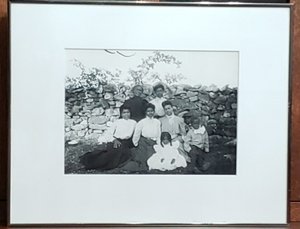
While renowned for his Washington D.C. images, Smith’s photographic work extended beyond grand monuments to encompass intimate family portraits. These portraits reveal a sensitivity and skill in capturing the essence of his subjects—their personalities, their hopes, and their place within the social fabric of the time. His ability to connect with individuals on a personal level is evident in the warmth and authenticity that radiate from these images. The photographs offer a poignant counterpoint to his larger-scale documentation, showcasing a commitment to representing both public history and private lives.
The Influence of John J. Smith and Masonic Affiliation
Understanding Hamilton Sutton Smith’s life is inextricably linked to the legacy of his father, John J. Smith—a remarkable figure in his own right. Born free in Richmond, Virginia, John J. Smith became a prominent abolitionist and entrepreneur in Boston, establishing a barbershop that served as a vital hub for the antislavery movement. His business attracted luminaries like Charles Sumner, William Lloyd Garrison, and Lewis Hayden, solidifying its role as a center of social justice. During the Civil War, John J. Smith actively recruited soldiers for the 5th Cavalry in Washington D.C., demonstrating unwavering dedication to the Union cause. Hamilton’s upbringing within this environment undoubtedly shaped his own values and sense of civic responsibility.
Further enriching his life was his involvement with Freemasonry. He rose through the ranks, attaining the prestigious 33rd Degree—a testament to his character and commitment to the fraternity's principles. Photographs documenting his participation in Masonic ceremonies offer a fascinating glimpse into this often-hidden world, revealing a network of brotherhood and shared ideals. His portrait in full Masonic regalia is particularly striking, symbolizing his dedication to both personal growth and communal service.
Legacy and Historical Significance
Hamilton Sutton Smith passed away in Cambridge, Massachusetts, in 1924, leaving behind a rich photographic archive that continues to captivate and inform. His work stands as a valuable historical resource, providing insights into the architectural evolution of Washington D.C., the lives of ordinary Americans, and the social currents of the late 19th century. He wasn’t simply a photographer; he was a documentarian, a portraitist, and a chronicler of his time—a man who used his art to preserve memories, celebrate history, and connect with the human spirit.
Smith, Hamilton Sutton
1857 - 1924 , United States of America
Quick Facts
- Full Name: Hamilton Sutton Smith
- Nationality: American
- Date Of Birth: 1857
- Date Of Death: 1924
- Place Of Birth: Boston, United States of America
- Notable Artworks:
- Washington D.C. images
- Paul Revere House photo
- Artistic Movement Or Style: Photography


