Preview
 Send
Send Share
Share
 Details

 Download
 Similars
 X-Ray
X-Ray Diaporama
 Stats
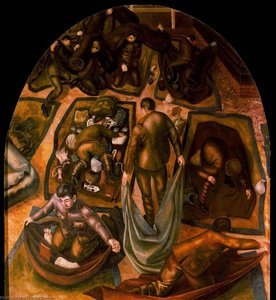
StatsThe Art Class (left outer panel from the 'Empire Marketing Board' series)
 Oil On Canvas
- WallArt
- Modernism
 1929
1929 110.0 x 151.0 cm
 The Stanley - Audrey Burton Gallery
 Read More
Giclée / Art Print
Museum-quality giclée or canvas print with fast production and flexible finish options. ( Buy Hand Made Painting Switch to Digital Image)




P118B $10

P118H $10

P118W $10

P438Z $10

P508JH $12

P508YH $12

P805H $10

P805Z $10

P919BZ $10

P919G $10

P919XJ $10

P959ZH $10

P968JZ $12

W106C $8

W218G $10

W218JH $8

W218Y $10

W307PJ $10

W316G $10

W316PJ $8

W316Y $10

W398PJ $8

W4111J $10

W500HY $15

W500JH $15

W692G $12

W849H $8

W940BG $15

W953PJ $8




Pick from our preset sizes that match the artwork's original proportions.

You may enter your own dimensions to fit a specific frame or space. If your selected size does not match the original image's proportions, we will either crop the artwork or extend the image with a mirrored or solid-fill edge. A digital mockup will be sent for your approval before production begins.
Please note that the on-screen preview does not reflect the actual cropping or extension. Only the mockup will accurately show the final composition.
While custom sizes are available, we recommend selecting a dimension from the predefined list to preserve the original proportions.
Worldwide Delivery () in 2 weeks instead of standard 4/5 weeks. (17 September)

Free Worldwide Express Shipping

High-Quality Linen Canvas

Full Shipping Insurance

Customs Tax Refund Guarantee

True Color Matching Guarantee

100-Day Return Policy (Defects Only)

100% Money-Back Guarantee

Bulk Discount Offer
 Glass option is only available in size under 110 CM

The Art Class (left outer panel from the 'Empire Marketing Board' series)
Giclée / Art Print
Reproduction Size
-


Total Price
$ 81
A Glimpse into Communal Creation: The Art Class
To stand before Sir Stanley Spencer's depiction of The Art Class, particularly this evocative left outer panel from the 'Empire Marketing Board' series, is to step directly into a moment suspended between diligent study and vibrant human connection. This large oil on canvas, dating from 1929, does more than merely record an activity; it captures the very essence of shared endeavor. One can almost hear the rustle of paper, the gentle scrape of charcoal, and the low murmur of focused conversation echoing through the depicted room. The scene is richly populated, featuring at least thirteen figures—a veritable tapestry of humanity engaged in the quiet industry of learning.
Spencer's Vision: Blending the Sacred with the Mundane
Sir Stanley Spencer’s genius lay in his unparalleled ability to infuse the everyday with the sublime. While this particular work showcases a secular gathering—a workshop or classroom where individuals are absorbed in reading, writing, and manipulating tools like scissors—it carries that unmistakable spiritual resonance characteristic of his entire oeuvre. His connection to Cookham, which he viewed as a "village in heaven," permeates even these seemingly ordinary interactions. The figures, though engaged in tangible tasks, possess an almost timeless quality; their postures suggest not just the passing moment, but a participation in a continuous human narrative. It is this masterful blending of the sacred and the quotidian that gives the piece its enduring power.
Technique and Compositional Depth
The technical execution on this 110 x 151 cm canvas is nothing short of remarkable. Spencer employs an oil technique that allows for both meticulous detail and broad, atmospheric washes of color. Observe how the light seems to emanate from various sources, catching the folds of clothing and illuminating the concentration etched upon each face. The composition guides the viewer's eye across the breadth of the room, moving from foreground activity toward the more distant figures, creating a profound sense of depth despite the crowded nature of the subject matter. Every visible element, from the chairs to the bowl spotted near the top right corner, has been placed with an almost deliberate pictorial weight.
Emotional Resonance for the Modern Collector
For the collector or designer seeking art that speaks volumes without shouting, this piece offers profound emotional depth. It is a celebration of intellect, community, and the quiet dignity found in focused work. Owning a reproduction of The Art Class allows one to bring into a modern space not just a painting, but an atmosphere—an invitation to pause, observe, and participate in a moment of shared contemplation. It speaks to the enduring value of craftsmanship, education, and human togetherness, making it a thoughtful centerpiece for any gallery wall or study.
Artist Biography
A Visionary of Cookham: The Life and Art of Sir Stanley Spencer
Born in the idyllic village of Cookham, Berkshire, on June 30th, 1891, Sir Stanley Spencer was an artist inextricably linked to his birthplace. His life and work became a profound exploration of faith, humanity, and the sacred within the everyday, all filtered through the lens of this beloved landscape. The eighth surviving child of William and Anna Caroline Spencer, young Stanley’s early education was unconventional, guided by his sisters Annie and Florence at home before he ventured to the Slade School of Fine Art in London from 1908 to 1912 under the tutelage of Henry Tonks. This formal training provided a foundation, but it was Cookham – which Spencer famously described as “a village in heaven” – that truly shaped his artistic vision. He didn’t merely depict Cookham; he transformed it into a spiritual realm, a canvas upon which biblical narratives unfolded with startling intimacy and modernity.Blending the Sacred and the Secular
Spencer's unique style emerged as a compelling synthesis of influences. The meticulous detail and Pre-Raphaelite reverence for nature resonated deeply within his work, yet he wasn’t simply replicating past masters. He absorbed elements of French Post-Impressionism, particularly the expressive use of color found in Paul Gauguin, and drew inspiration from early Italian painting, notably Giotto's masterful compositions. However, Spencer forged a path distinctly his own. His paintings weren’t mere illustrations of religious stories; they were deeply personal interpretations, populated by villagers he knew intimately cast as biblical figures. This deliberate blurring of the sacred and secular was revolutionary. The Resurrection, Cookham (1924-1926), perhaps his most celebrated work, exemplifies this approach. It isn't a grand, ethereal depiction of resurrection; it’s a vibrant, earthy scene unfolding in the familiar fields surrounding Cookham, with local residents rising from their graves. This grounded spirituality, this insistence on finding the divine within the mundane, became Spencer’s hallmark.Wartime Reflections and Murals of Remembrance
Spencer's artistic journey wasn’t confined to idyllic landscapes and biblical scenes. His experiences during World War I profoundly impacted his work. Serving first at the Beaufort War Hospital in Bristol and later in Macedonia, he witnessed firsthand the horrors of conflict. This experience culminated in a commission to create murals for the Sandham Memorial Chapel at Burghclere in Hampshire (1927-1932). These monumental paintings weren’t glorifications of war; they were honest, unflinching depictions of the lives of ordinary soldiers – their routines, anxieties, and quiet moments of contemplation. The arrangement consciously echoed Giotto's Arena Chapel, but Spencer infused it with a uniquely British sensibility and a deeply humanistic perspective. Later, during World War II, he again served as an Official War Artist, documenting the vital work being done in the shipyards on the Clyde. These paintings, like his earlier wartime works, focused not on heroic battles but on the collective effort and resilience of those contributing to the war effort.Controversy, Personal Life, and Lasting Legacy
Spencer’s career wasn't without its challenges. His intensely personal vision and unconventional depictions of religious themes often provoked controversy. The frankness with which he explored sexuality in works like *Love Among the Nations* (1935) and his nude portraits of his second wife, Patricia Preece, scandalized some critics and led to rejection from the Royal Academy for a period. His personal life was equally complex, marked by passionate relationships and emotional turmoil. He married Hilda Carline in 1918, but their relationship was fraught with difficulties, eventually leading to divorce in 1937. His subsequent marriage to Patricia Preece proved equally turbulent, yet it inspired some of his most daring and innovative work. Despite the controversies, Spencer’s influence on later generations of artists is undeniable. He foreshadowed aspects of Lucian Freud's unflinching realism and paved the way for a more honest and emotionally charged approach to religious art. Sir Stanley Spencer was knighted in 1959, shortly before his death on December 14th, leaving behind a body of work that continues to captivate and challenge viewers with its unique blend of spirituality, humanity, and artistic innovation. His paintings remain powerful testaments to the enduring search for meaning within the ordinary moments of life, forever anchored in the landscape he so deeply loved – Cookham, his village in heaven.
Sir Stanley Spencer
1891 - 1959 , United Kingdom
Quick Facts
- Artistic Movement Or Style: Pre-Raphaelite, Post-Impressionism
- Artists Or Movements Influenced By This Artist: ['Lucian Freud']
- Artists Who Influenced This Artist:
- Paul Gauguin
- Giotto
- Date Of Birth: June 30, 1891
- Date Of Death: December 14, 1959
- Full Name: Sir Stanley Spencer
- Nationality: British
- Notable Artworks:
- The Nativity
- Apple Gatherers
- Self-Portrait (1914)
- The Resurrection, Cookham
- Place Of Birth: Cookham, UK
Related Articles
Sir Stanley Spencer: Reassessing Spiritual Vision & Autobiographical Narrative
Explore the captivating world of Sir Stanley Spencer – a British painter renowned for his unique blend of religious narrative & personal experience. Discover his legacy, key works like 'Christ's Entry into Jerusalem', and lasting influence on modern art.

The Enduring Legacy of Oil on Canvas: Technique, History & Aesthetic Impact
Explore the rich history & techniques of oil painting – from Renaissance masters to Impressionism. Discover pigments, layering methods, and why this timeless medium endures. Expert insights for artists & art enthusiasts.
The Soul of Impressionism: Why Oil on Canvas Captures Eternal Light and Timeless Emotion
Discover the enchanting alchemy of Impressionism. Explore how the mastery of oil on canvas, through glazing and impasto, captures eternal light and emotion. Perfect for lovers of Monet and Van Gogh seeking the profound depth of hand-painted fine art.

The Enduring Legacy of Oil on Canvas: Technique, History & Contemporary Practice
Explore the rich history & enduring techniques of oil painting on canvas. Discover the science behind its longevity, conservation practices, and contemporary relevance. Expert insights for art enthusiasts.

Oil on Canvas: A Historical & Technical Exploration of a Timeless Artistic Medium
Explore the rich history & enduring techniques of oil painting on canvas. Discover the science behind its longevity, conservation practices, and contemporary relevance. Expert insights for art enthusiasts.