Preview
 Send
Send Share
Share
 Details
 Guide
Guide

 Download
 Similars
 X-Ray
X-Ray Diaporama
 Stats
StatsSelf Portrait
 Oil On Canvas
- WallArt
- Contemporary Realism
 1939
1939- Early Modern
 40.0 x 55.0 cm
 Fitzwilliam College
 Read More
The artwork displayed on this page is protected by copyright law, which means we cannot legally create or sell an identical reproduction. This protection is enforced under international agreements such as the Berne Convention and by national laws, including those outlined by the U.S. Copyright Law - Title 17.
This method fully complies with copyright regulations because it does not involve copying or duplicating the protected artwork. Instead, it is a creative reinterpretation - a new painting that is influenced by the original but not identical to it.
Giclée / Art Print
Museum-quality giclée or canvas print with fast production and flexible finish options. ( Buy Hand Made Painting Switch to Digital Image)




P118B $10

P118H $10

P118W $10

P438Z $10

P508JH $12

P508YH $12

P805H $10

P805Z $10

P919BZ $10

P919G $10

P919XJ $10

P959ZH $10

P968JZ $12

W106C $8

W218G $10

W218JH $8

W218Y $10

W307PJ $10

W316G $10

W316PJ $8

W316Y $10

W398PJ $8

W4111J $10

W500HY $15

W500JH $15

W692G $12

W849H $8

W940BG $15

W953PJ $8




Pick from our preset sizes that match the artwork's original proportions.

Type the width and the height you need, to fit your frame or your wall. A print can only be cut, never made bigger than the picture, so a size with a different shape loses a part of the image. We send you a digital mockup to approve before we print anything. The picture shown on this page does not show the real cut — only the mockup does.
Worldwide Delivery () in 2 weeks instead of standard 4/5 weeks. (24 October)

Free Worldwide Express Shipping

High-Quality Linen Canvas

Full Shipping Insurance

Customs Tax Refund Guarantee

True Color Matching Guarantee

100-Day Return Policy (Defects Only)

100% Money-Back Guarantee

Bulk Discount Offer
 Glass option is only available in size under 110 CM

Self Portrait
Giclée / Art Print
Reproduction Size
-


Total Price
$ 81
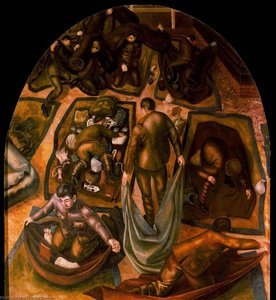
A Portrait of Introspection: Sir Stanley Spencer’s “Self Portrait” (1939)
Sir Stanley Spencer's "Self Portrait," painted in 1939, is more than just a likeness; it’s a profound meditation on identity, faith, and the quiet contemplation of a life lived deeply within the familiar landscape of Cookham. This oil-on-canvas masterpiece, now residing in the Fitzwilliam Museum in Cambridge, offers a rare glimpse into the artist's inner world – a world where the sacred and the mundane intertwine with remarkable intimacy.
The painting immediately draws the eye to Spencer’s own figure, rendered with an almost unsettling directness. He is depicted in a dark suit, his face framed by round spectacles, a thoughtful expression etched upon his brow. The brushstrokes are deliberately loose and expressive, characteristic of the early 20th-century style he embraced – a departure from the rigid formality of academic portraiture. Spencer wasn’t striving for photographic accuracy; instead, he sought to capture the *feeling* of being, the weight of experience, and the subtle nuances of emotion.
Neo-Romanticism and the Cookham Vision
“Self Portrait” firmly places Spencer within the Neo-Romantic movement. This style, prevalent in Britain during the interwar period, rejected the detached objectivity of earlier artistic approaches, prioritizing emotional intensity and subjective experience. Spencer’s connection to Cookham – his childhood home and lifelong muse – is utterly central to understanding this work. He didn't simply paint a village; he imbued it with spiritual significance, transforming it into a microcosm of heaven on earth. This deeply personal vision permeates every aspect of his art.
The muted palette—dominated by browns, blues, and subtle reds—creates an atmosphere of quiet contemplation. The dark background, suggestive of draped fabric or perhaps the interior walls of his studio, serves to isolate Spencer’s figure, intensifying the sense of introspection. Notice how he uses light – a soft, diffused glow from the upper left – to sculpt the planes of his face and clothing, adding depth and volume while simultaneously casting subtle shadows that hint at hidden emotions.
Symbolism in Detail
The inclusion of the paintbrush and palette is particularly significant. It’s not merely an indication of Spencer's profession; it represents his creative process – a constant engagement with the world, seeking to capture its essence on canvas. The artist’s gaze, directed slightly off-center, invites us into this internal dialogue. Some art historians interpret the suit as a symbol of formality and social standing, while others see it as representing Spencer's desire for order and control in a world increasingly marked by uncertainty.
The overall composition is remarkably balanced, despite the subject’s slight off-center placement. This suggests a sense of equilibrium within Spencer himself – a quiet confidence amidst moments of profound reflection. The painting isn’t overtly dramatic; rather, it conveys a subtle but powerful sense of inner strength and resilience.
A Window into a Singular Mind
“Self Portrait” is more than just a beautiful artwork; it's a poignant document of a singular mind grappling with the complexities of faith, identity, and the beauty of everyday life. It’s a testament to Spencer’s ability to find the divine in the ordinary, and to capture that profound connection on canvas. Reproductions of this work offer a remarkable opportunity to bring this intimate portrait into your home, inviting you to contemplate alongside Sir Stanley Spencer as he paused to consider his own place within the world.
Questions & Answers
How does "Self Portrait" fit into Sir Stanley Spencer's themes and style?
Within Sir Stanley Spencer's output, "Self Portrait" sits in the Contemporary Realism style, alongside the themes of biblical undertones, cookham setting, post-impressionist echoes, spencer's style, formal portraiture, social commentary, self-examination, introspective gaze.
What was Sir Stanley Spencer's age when "Self Portrait" was created?
Sir Stanley Spencer was 48 years old when creating "Self Portrait" in 1939. The age is computed from the artist's birth year, 1891.
Which artist and which style stand behind "Self Portrait"?
Behind "Self Portrait" stand Sir Stanley Spencer and the Contemporary Realism movement.
Artist Biography
A Visionary of Cookham: The Life and Art of Sir Stanley Spencer
Born in the idyllic village of Cookham, Berkshire, on June 30th, 1891, Sir Stanley Spencer was an artist inextricably linked to his birthplace. His life and work became a profound exploration of faith, humanity, and the sacred within the everyday, all filtered through the lens of this beloved landscape. The eighth surviving child of William and Anna Caroline Spencer, young Stanley’s early education was unconventional, guided by his sisters Annie and Florence at home before he ventured to the Slade School of Fine Art in London from 1908 to 1912 under the tutelage of Henry Tonks. This formal training provided a foundation, but it was Cookham – which Spencer famously described as “a village in heaven” – that truly shaped his artistic vision. He didn’t merely depict Cookham; he transformed it into a spiritual realm, a canvas upon which biblical narratives unfolded with startling intimacy and modernity.Blending the Sacred and the Secular
Spencer's unique style emerged as a compelling synthesis of influences. The meticulous detail and Pre-Raphaelite reverence for nature resonated deeply within his work, yet he wasn’t simply replicating past masters. He absorbed elements of French Post-Impressionism, particularly the expressive use of color found in Paul Gauguin, and drew inspiration from early Italian painting, notably Giotto's masterful compositions. However, Spencer forged a path distinctly his own. His paintings weren’t mere illustrations of religious stories; they were deeply personal interpretations, populated by villagers he knew intimately cast as biblical figures. This deliberate blurring of the sacred and secular was revolutionary. The Resurrection, Cookham (1924-1926), perhaps his most celebrated work, exemplifies this approach. It isn't a grand, ethereal depiction of resurrection; it’s a vibrant, earthy scene unfolding in the familiar fields surrounding Cookham, with local residents rising from their graves. This grounded spirituality, this insistence on finding the divine within the mundane, became Spencer’s hallmark.Wartime Reflections and Murals of Remembrance
Spencer's artistic journey wasn’t confined to idyllic landscapes and biblical scenes. His experiences during World War I profoundly impacted his work. Serving first at the Beaufort War Hospital in Bristol and later in Macedonia, he witnessed firsthand the horrors of conflict. This experience culminated in a commission to create murals for the Sandham Memorial Chapel at Burghclere in Hampshire (1927-1932). These monumental paintings weren’t glorifications of war; they were honest, unflinching depictions of the lives of ordinary soldiers – their routines, anxieties, and quiet moments of contemplation. The arrangement consciously echoed Giotto's Arena Chapel, but Spencer infused it with a uniquely British sensibility and a deeply humanistic perspective. Later, during World War II, he again served as an Official War Artist, documenting the vital work being done in the shipyards on the Clyde. These paintings, like his earlier wartime works, focused not on heroic battles but on the collective effort and resilience of those contributing to the war effort.Controversy, Personal Life, and Lasting Legacy
Spencer’s career wasn't without its challenges. His intensely personal vision and unconventional depictions of religious themes often provoked controversy. The frankness with which he explored sexuality in works like *Love Among the Nations* (1935) and his nude portraits of his second wife, Patricia Preece, scandalized some critics and led to rejection from the Royal Academy for a period. His personal life was equally complex, marked by passionate relationships and emotional turmoil. He married Hilda Carline in 1918, but their relationship was fraught with difficulties, eventually leading to divorce in 1937. His subsequent marriage to Patricia Preece proved equally turbulent, yet it inspired some of his most daring and innovative work. Despite the controversies, Spencer’s influence on later generations of artists is undeniable. He foreshadowed aspects of Lucian Freud's unflinching realism and paved the way for a more honest and emotionally charged approach to religious art. Sir Stanley Spencer was knighted in 1959, shortly before his death on December 14th, leaving behind a body of work that continues to captivate and challenge viewers with its unique blend of spirituality, humanity, and artistic innovation. His paintings remain powerful testaments to the enduring search for meaning within the ordinary moments of life, forever anchored in the landscape he so deeply loved – Cookham, his village in heaven.
Sir Stanley Spencer
1891 - 1959 , United Kingdom
Quick Facts
- Full Name: Sir Stanley Spencer
- Nationality: British
- Date Of Birth: 1891
- Date Of Death: 1959
- Place Of Birth: Cookham, United Kingdom
- Notable Artworks:
- The Nativity
- Apple Gatherers
- Self-Portrait (1914)
- The Resurrection, Cookham
- Artistic Movement Or Style: Pre-Raphaelite, Post-Impressionism
- Artists Who Influenced This Artist:
- Paul Gauguin
- Giotto
- Artists Or Movements Influenced By This Artist: ['Lucian Freud']
Related Articles

Oil on Canvas: A Historical & Technical Exploration of a Timeless Artistic Medium
Explore the rich history & enduring techniques of oil painting on canvas. Discover the science behind its longevity, conservation practices, and contemporary relevance. Expert insights for art enthusiasts.

The Enduring Power of Painting: A Historical & Contemporary Exploration of Form and Emotion
Explore the rich history & enduring techniques of oil painting with OriginalUniqueArt. Discover masterpieces, learn about art collecting, and find authentic handmade reproductions crafted by skilled artists.

The Enduring Legacy of Oil on Canvas: Technique, History & Aesthetic Impact
Explore the rich history & techniques of oil painting – from Renaissance masters to Impressionism. Discover pigments, layering methods, and why this timeless medium endures. Expert insights for artists & art enthusiasts.
Sir Stanley Spencer: Reassessing Spiritual Vision & Autobiographical Narrative
Explore the captivating world of Sir Stanley Spencer – a British painter renowned for his unique blend of religious narrative & personal experience. Discover his legacy, key works like 'Christ's Entry into Jerusalem', and lasting influence on modern art.
The Enduring Legacy of Likeness: Commissioning Oil Portraits as Vessels of Memory and Emotional Connection
Commission a timeless oil portrait with OriginalUniqueArt.com! Expert artists capture your legacy & emotions in museum-quality paintings. Preserve family history – explore our bespoke services today.