Preview
 Send
Send Share
Share
 Details
 Guide
Guide

 Download
 Similars
 X-Ray
X-Ray Diaporama
 Stats
StatsReturn to Glenrowan
 Oil On Canvas
- WallArt
- Surrealism
 Modern
 91.0 x 122.0 cm
 Canberra Museum and Gallery
 Read More
Giclée / Art Print
Museum-quality giclée or canvas print with fast production and flexible finish options. ( Buy Hand Made Painting Switch to Digital Image)




P118B $10

P118H $10

P118W $10

P438Z $10

P508JH $12

P508YH $12

P805H $10

P805Z $10

P919BZ $10

P919G $10

P919XJ $10

P959ZH $10

P968JZ $12

W106C $8

W218G $10

W218JH $8

W218Y $10

W307PJ $10

W316G $10

W316PJ $8

W316Y $10

W398PJ $8

W4111J $10

W500HY $15

W500JH $15

W692G $12

W849H $8

W940BG $15

W953PJ $8




Pick from our preset sizes that match the artwork's original proportions.

You may enter your own dimensions to fit a specific frame or space. If your selected size does not match the original image's proportions, we will either crop the artwork or extend the image with a mirrored or solid-fill edge. A digital mockup will be sent for your approval before production begins.
Please note that the on-screen preview does not reflect the actual cropping or extension. Only the mockup will accurately show the final composition.
While custom sizes are available, we recommend selecting a dimension from the predefined list to preserve the original proportions.
Worldwide Delivery () in 2 weeks instead of standard 4/5 weeks. (27 September)

Free Worldwide Express Shipping

High-Quality Linen Canvas

Full Shipping Insurance

Customs Tax Refund Guarantee

True Color Matching Guarantee

100-Day Return Policy (Defects Only)

100% Money-Back Guarantee

Bulk Discount Offer
 Glass option is only available in size under 110 CM

Return to Glenrowan
Giclée / Art Print
Reproduction Size
-


Total Price
$ 81
A Landscape of Myth and Memory
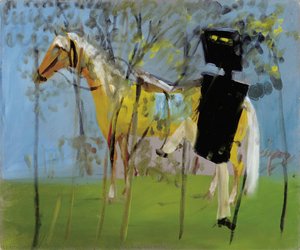
In the vast, evocative expanse of Sir Sidney Robert Nolan’s “Return to Glenrowan,” we are invited into a realm where the boundaries between historical reality and surrealist dreamscape dissolve. Painted in 1946, this monumental work serves as a profound testament to the Australian landscape, not merely as a physical space, but as a vessel for myth, legend, and collective memory. At first glance, the viewer is confronted by a starkly desolate vista, where towering vertical structures pierce a turbulent, swirling sky. These monolithic forms evoke an unsettling sense of isolation, standing like silent sentinels over a landscape that feels both ancient and strangely futuristic. Nolan, a master storyteller of the canvas, utilizes a deliberate simplification of form to strip away the superficial, leaving behind an emotional resonance that lingers long after the first encounter.
The technical mastery of the piece lies in its ability to balance industrial grandeur with a haunting, melancholic atmosphere. Through a sophisticated use of muted blues, deep greens, and earthy yellows, punctuated by stark blacks, Nolan creates a mood of quiet contemplation. The composition is meticulously orchestrated; strong vertical lines from central, tower-like edifices command the eye, while horizontal bands of the expansive earth plane provide a grounding stability. Upon closer inspection, the texture of the oil on canvas reveals a dynamic energy—visible brushstrokes and layered paint applications capture the very movement of the atmosphere, suggesting a sky in constant, restless flux. This painterly approach adds a tactile depth to the work, making the dreamlike scenery feel palpably present.
Symbolism and the Australian Spirit
Beyond its striking visual elements, “Return to Glenrowan” is steeped in symbolic complexity. The structures within the painting—ranging from tower-like edifices to more ambiguous, rocket-like geometric shapes—can be interpreted as symbols of progress, ambition, and the relentless march of technology. Yet, there is an inherent tension in these forms; they also embody an oppressive force, perhaps mirroring the societal anxieties of a world undergoing rapid transformation following the mid-century era. The turbulent sky serves as a mirror to the human psyche, representing inner turmoil, trauma, and the resilience required to navigate a changing world. In this way, Nolan transcends mere landscape painting to engage with the universal struggles of identity and existence.
For the discerning collector or interior designer, this artwork offers more than just aesthetic beauty; it provides a profound focal point for spaces that value depth, intellect, and conversation. The piece’s ability to evoke mystery and a sense of the unknown makes it an extraordinary addition to any curated collection. Whether placed in a contemporary gallery setting or as a centerpiece in a sophisticated residential study, “Return to Glenrowan” brings with it a weight of history and a spirit of Australian modernism. It is a window into a world where the past and the future collide, offering a timeless piece of art that continues to inspire awe and introspection.
Artist Biography
A Life Painted in Myth and Landscape
Sir Sidney Robert Nolan, born in Melbourne in 1917, stands as a monumental figure in 20th-century Australian art. His journey was not one of conventional artistic training but rather an explosive emergence from the working-class streets of St Kilda into a world of vibrant imagination and relentless experimentation. Nolan wasn’t simply a painter; he was a visual storyteller, a mythmaker who wrestled with Australia's history, its landscapes, and its very identity. From his early days as a runner for an illegal betting ring to his eventual acclaim on the international stage, Nolan’s life was marked by a restless energy and a refusal to be confined by artistic norms. He absorbed influences from diverse sources – the poetry of Rimbaud, the spatial innovations of Cézanne, the raw emotion of Danila Vassilieff – yet forged a style uniquely his own, one that resonated with a distinctly Australian sensibility. His early exposure to the harsh realities of Melbourne life and the allure of its underbelly would profoundly shape his artistic vision, imbuing his work with a sense of both defiance and vulnerability.The Shaping of an Iconoclast
Nolan’s formative years were steeped in intellectual ferment. The Heide Circle, centered around patrons John and Sunday Reed, proved pivotal. This haven for artists and writers fostered a spirit of radical experimentation and provided Nolan with crucial support during his developing phase. It was at Heide that he encountered kindred spirits – Albert Tucker, Joy Hester, Arthur Boyd – all grappling with the challenge of creating a distinctly Australian modernism. The influence of modernist literature, particularly the Symbolist poets, cannot be overstated. Rimbaud’s call for a “systematic derangement of the senses” became a guiding principle for Nolan, liberating him from representational constraints and encouraging him to explore the emotional power of color, form, and symbolism. His early works demonstrate this influence, often featuring fragmented figures and dreamlike landscapes that hint at deeper psychological truths. He wasn’t interested in merely depicting reality; he sought to capture its essence, its underlying emotions, and its hidden narratives. This period also saw Nolan experimenting with various media, from stage design for the Ballet Russes to commercial art, each experience contributing to his growing technical prowess and artistic vocabulary.Ned Kelly and the Australian Myth
While Nolan’s oeuvre is remarkably diverse, he is perhaps best known for his series of paintings depicting Ned Kelly, the infamous Australian bushranger. This wasn't simply a historical retelling; it was a profound exploration of Australian identity, lawlessness, and the romanticized figure of the outlaw. Nolan stripped away the conventional heroic imagery associated with Kelly, presenting him as an enigmatic, almost spectral presence encased in iconic armor. The flattened planes of color, the stark contrasts, and the simplified forms create a powerful visual statement that transcends mere representation. The Ned Kelly series became a defining moment in Australian art, transforming the bushranger from a historical figure into a national symbol. It sparked debate, challenged conventional narratives, and forced Australians to confront their complex relationship with their past. Beyond Kelly, Nolan repeatedly returned to themes drawn from Australian history and folklore – The First Fleet, The Burke and Wills Expedition – each series imbued with his signature blend of poetic intensity and historical awareness.A Prolific and Restless Vision
Nolan’s artistic output was astonishingly prolific, spanning painting, sculpture, ceramics, stage design, and even opera sets. He refused to be pigeonholed, constantly reinventing his style and exploring new avenues of expression. His landscapes, often stark and desolate, capture the vastness and harsh beauty of the Australian outback. Works like “Antarctica” demonstrate his ability to convey a sense of isolation and existential unease through minimalist forms and evocative color palettes. He traveled extensively throughout his life – Europe, Africa, America – each journey informing his art with new perspectives and influences. His later works often reflect a more introspective mood, grappling with themes of mortality, memory, and the search for meaning. Despite achieving international recognition, Nolan remained deeply connected to Australia, viewing his art as a means of understanding and interpreting its unique character. He received numerous accolades throughout his career, including appointments as an Officer of the Order of Merit (OM), a Companion of the Order of Australia (AC), and a Commander of the Order of the British Empire (CBE).Legacy and Enduring Influence
Sir Sidney Nolan’s impact on Australian art is undeniable. He challenged conventional artistic norms, embraced experimentation, and created a body of work that continues to resonate with audiences today. His bold depictions of Ned Kelly have become iconic images, instantly recognizable as symbols of Australia's rebellious spirit and complex history. His influence can be seen in the work of countless contemporary artists, who continue to draw inspiration from his innovative techniques and his commitment to exploring Australian identity. Nolan’s paintings are held in major museums and collections around the world, ensuring that his legacy will endure for generations to come. To explore more of his artwork, platforms like OriginalUniqueArt offer a wide range of reproductions, allowing art lovers to experience the power and beauty of his vision firsthand. He left behind not just a collection of paintings but a new way of seeing Australia – a land of myth, mystery, and enduring artistic potential.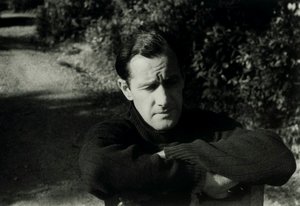
Sir Sidney Robert Nolan
1917 - 1992 , Australia
Quick Facts
- Artistic Movement Or Style: Modernist
- Artists Who Influenced This Artist:
- Rimbaud
- Cézanne
- Kandinsky
- Klee
- Date Of Birth: April 22, 1917
- Date Of Death: November 28, 1992
- Full Name: Sir Sidney Robert Nolan
- Nationality: Australian
- Notable Artworks:
- Ned Kelly series
- Carriers of Horses
- AFL Series
- Landscape w/ motif
- Place Of Birth: Melbourne, Australia
Related Articles
Sandstone & Sunlight: 10 Masterpieces of Earth-Toned Art |
Journey through 10 iconic paintings bathed in 'sand' tones – from Van Gogh to Monet. Explore the stories, techniques & warm palettes of these timeless masterpieces. Find museum-quality art reproductions at and bring classic beauty home.

Serene Blue Backgrounds: Discover Soulful Art to Transform Your Space with Timeless Elegance
Transform your home with soulful blue art. From serene Monet impressions to modern textured sculptures, discover curated masterpieces designed to inspire calm. Explore expert art consultations and bespoke hand-painted reproductions to create your personal sanctuary.
Earthy Hues & Masterpieces: Top 10 Paintings with 'Mushroom' Tones |
Explore 10 iconic paintings with captivating 'mushroom' tones! Discover Van Gogh, Monet & Rembrandt’s masterpieces—earthy palettes, rich history & artistic techniques. Find museum-quality art reproductions and curated decor ideas at

Romantic Landscapes: 10 Masterpieces for Your Home | OriginalUniqueArt
Journey through 10 Romantic landscape masterpieces by Friedrich, Turner & Cole. Explore emotional art, sublime nature scenes & iconic 19th-century paintings. Find museum-quality reproductions for your home at OriginalUniqueArt.com – discover the full collection online!

Slate Blue Masterpieces: 10 Iconic Paintings & Timeless Home Decor Ideas
Immerse yourself in the captivating world of slate blue! Explore 10 iconic paintings by Monet, Van Gogh & Renoir. Discover their stories, techniques & find museum-quality art reproductions for your home at .