Switch to Print
 Read More







































 For artworks or reproductions larger than 105 cm (approximately 41 inches) on any side, the frame will be shipped as a kit, disassembled. This method ensures safe delivery and prevents damage during transport.


A Vision of the Red Centre: The Abstracted Majesty of Central Australia
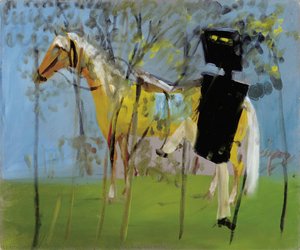
In the vast, sun-drenched expanse of the Australian interior, where the horizon blurs between earth and sky, Sir Sidney Robert Nolan captured a reality that transcends mere topography. Central Australia is not simply a landscape painting; it is a profound meditation on pattern, perception, and the mythic quality of the outback. Created in 1949, this masterpiece invites the viewer to experience the desert not as a static scene, but as a living, breathing entity. Nolan, a titan of 20th-century Australian art, possessed a singular ability to distill the raw, often harsh essence of the continent into a visual language that feels both ancient and avant-garde. Through his eyes, the rugged mountain ranges and undulating hills become part of a rhythmic dance, where geological forms appear to emerge from and dissolve back into the earth.
The painting’s power lies in its unique stylistic synthesis, reminiscent of Cubist collage and the spontaneous abstractions of Paul Klee. Nolan famously drew inspiration from the perspective of an aerial view, imagining the landscape from an altitude of 10,000 feet. This elevated vantage point allowed him to strip away the clutter of the foreground and focus on the mesmerizing, random patterns etched upon the earth’s surface. The result is a composition that feels remarkably modern—a tapestry of shifting shapes where the distinction between solid rock and ephemeral shadow is intentionally blurred. For the discerning collector or interior designer, this work offers a sophisticated focal point that brings a sense of structured movement and intellectual depth to any curated space.
Technique and the Texture of Drought
To touch the surface of this work—even through a high-quality reproduction—is to encounter the ruggedness of the Australian spirit. Nolan utilized a specialized drybrush technique, applying thin, deliberate layers of oil paint onto hardboard. This method was essential for capturing the parched, textured reality of the desert. By manipulating the pigment to create a sense of friction and grit, he successfully evoked the heat of the sun and the desiccated nature of the terrain. The color palette is a masterful study in contrast: deep, earthy ochres and burnt siennas collide with sudden bursts of brilliant orange and cool, atmospheric blues. These hues do more than represent color; they communicate the intense thermal shifts of the desert, where the warmth of the day gives way to the biting chill of the nocturnal air.
This technical mastery serves a deeper symbolic purpose. The painting was conceived during a period when Nolan was documenting the devastating effects of drought in the rural interior. Every stroke carries the weight of this environmental struggle, imbuing the landscape with a sense of vulnerability and resilience. The mountains, appearing like ghostly silhouettes against an incandescent sky, act as monuments to endurance. For those seeking to decorate a space with art that possesses true emotional gravity, Central Australia provides a window into a world where nature is both beautiful and formidable, offering a timeless connection to the primal elements of our planet.
An Invitation to Wonder
Beyond its historical significance and technical brilliance, Central Australia serves as an emotional gateway. It evokes a sense of profound wonder, pulling the viewer into a space of quiet contemplation. There is a rhythmic, almost musical quality to the way the hills rise and fall, a visual cadence that can soothe the mind while stimulating the imagination. Whether placed in a contemporary gallery setting or a warm, residential study, this painting acts as an anchor of authenticity and mythic storytelling.
Owning a reproduction of such a seminal work allows one to inhabit Nolan’s dreamscape daily. It is an opportunity to surround oneself with the legacy of the Angry Penguins movement and the enduring mystery of the Australian outback. As a piece of fine art, it transcends decoration; it becomes a conversation starter, a piece of history, and a permanent tribute to the breathtaking complexity of the natural world.
Questions & Answers
Is "Central Australia" more bright or more dark overall?
"Central Australia" is balanced overall, and its luminance is soft shadow.
What use and space are recommended for "Central Australia" by Sir Sidney Robert Nolan?
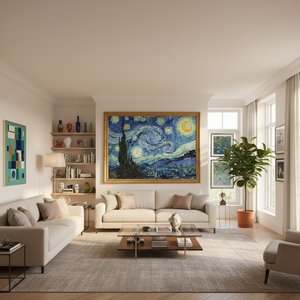
"Central Australia" by Sir Sidney Robert Nolan is recommended for accent, ideally in a living room. Use and space together guide where a reproduction fits.
Where does "Central Australia" by Sir Sidney Robert Nolan sit in art history?
"Central Australia" by Sir Sidney Robert Nolan belongs to the Cubist movement, within the Modern period. Together they give the work its place in art history.
More about this painting
 Preview
 Send
Send Share
Share
 Details
 Guide
Guide

 Download
 Similars
 X-Ray
X-Ray Diaporama
 Q&A
Q&A Stats
Stats