Preview
 Send
Send Share
Share
 Details
 Guide
Guide

 Download
 Similars
 X-Ray
X-Ray Diaporama
 Q&A
Q&A Stats
StatsBacchus


 Read More
Giclée / Art Print
Museum-quality giclée or canvas print with fast production and flexible finish options. ( Buy Hand Made Painting Switch to Digital Image)




P118B $10

P118H $10

P118W $10

P438Z $10

P508JH $12

P508YH $12

P805H $10

P805Z $10

P919BZ $10

P919G $10

P919XJ $10

P959ZH $10

P968JZ $12

W106C $8

W218G $10

W218JH $8

W218Y $10

W307PJ $10

W316G $10

W316PJ $8

W316Y $10

W398PJ $8

W4111J $10

W500HY $15

W500JH $15

W692G $12

W849H $8

W940BG $15

W953PJ $8




Pick from our preset sizes that match the artwork's original proportions.

Type the width and the height you need, to fit your frame or your wall. A print can only be cut, never made bigger than the picture, so a size with a different shape loses a part of the image. We send you a digital mockup to approve before we print anything. The picture shown on this page does not show the real cut — only the mockup does.
Worldwide Delivery () in 2 weeks instead of standard 4/5 weeks. (15 November)

Free Worldwide Express Shipping

High-Quality Linen Canvas

Full Shipping Insurance

Customs Tax Refund Guarantee

True Color Matching Guarantee

100-Day Return Policy (Defects Only)

100% Money-Back Guarantee

Bulk Discount Offer
 Glass option is only available in size under 110 CM

Bacchus
Giclée / Art Print
Reproduction Size
-


Total Price
$ 81
The Genesis of a Masterpiece: Peter Paul Rubens and the World of Dionysus
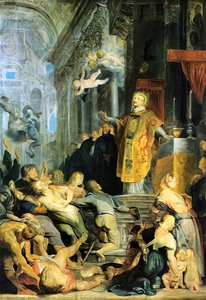
Peter Paul Rubens, born in Siegen, Germany in 1577, wasn’t merely an artist; he was a conduit to the vibrant heart of the Baroque era. His life, marked by diplomatic service and prolific output, culminated in works that pulsate with energy, color, and a profound understanding of human emotion – most notably his iconic ‘Bacchus.’ This painting isn't simply a depiction of a mythological scene; it’s an immersive experience, a carefully constructed tableau designed to transport the viewer into the intoxicating world of Dionysus, the Greek god of wine, revelry, and ecstatic abandon. Rubens, deeply influenced by the classical ideals he encountered during his formative years in Italy, skillfully blended these influences with the dramatic intensity characteristic of the Baroque style, creating an artwork that is both intellectually stimulating and viscerally engaging.
- Early Influences: Rubens’s journey to Italy proved transformative. He studied the works of giants like Leonardo da Vinci and Michelangelo, absorbing their mastery of anatomy, perspective, and composition. However, it was Caravaggio's revolutionary use of *tenebrism* – dramatic contrasts between light and shadow – that truly ignited his artistic imagination.
- A Synthesis of Styles: Rubens didn’t simply mimic his Italian predecessors; he synthesized their techniques with the rich color palettes and dynamic compositions favored by Flemish masters, forging a uniquely powerful style.
The Scene Unfolds: A Bacchanal of Excess
‘Bacchus’ presents a lively gathering – a bacchanal, as it were – brimming with figures in various states of merriment and intoxication. The composition is remarkably dynamic, eschewing static formality for a sense of unrestrained movement. We see men reclining on chairs, others standing or even lying prone amidst scattered cups and overflowing wine jugs. The central figure, undeniably Bacchus himself, holds aloft a goblet, radiating an aura of both power and vulnerability. The inclusion of two dogs – one near the left side, another towards the right – adds to the painting’s primal energy, subtly referencing the god's association with wildness and instinct.
(Image of Bacchus by Peter Paul Rubens)
Decoding the Symbolism: Myth, Wine, and Human Nature
Beyond its immediate visual appeal, ‘Bacchus’ is laden with symbolic meaning. The painting directly references the ancient Greek myth of Dionysus, a god often depicted as embodying both divine power and human vulnerability. The overflowing wine symbolizes intoxication, excess, and the blurring of boundaries between reality and illusion. The figures themselves represent various facets of human nature – pleasure-seeking, indulgence, and even a touch of madness. Notice how Rubens masterfully portrays the interplay of emotions: laughter, drunkenness, sensuality, and perhaps even a hint of despair. The painting isn’t simply celebrating wine; it's exploring the complex relationship between humanity and its desires.
A Legacy in Art History: Connections and Comparisons
Rubens’ ‘Bacchus’ stands as a pivotal work within the broader tradition of mythological paintings, echoing earlier depictions by artists like Caravaggio and Titian. Caravaggio's own 'Bacchus,' with its stark contrasts of light and shadow and dramatic portrayal of intoxication, shares a similar intensity. Similarly, Rubens’s *Bacchanal of the Andrians*, also in the Hermitage Museum, demonstrates a clear lineage of influence. Studying these works together reveals how Rubens built upon the foundations laid by his predecessors while forging his own distinctive artistic voice. For those seeking to delve deeper into the world of Rubens and his contemporaries, we encourage you to explore the resources provided: Caravaggio (Michelangelo Merisi): Bacchus and Sir Peter Paul Rubens: Backanal på Andros on OriginalUniqueArt.
Questions & Answers
What luminance does "Bacchus" by Peter Paul Rubens have?
The luminance recorded for "Bacchus" by Peter Paul Rubens is soft shadow.
How many people view "Bacchus"?
The Stats page of "Bacchus" by Peter Paul Rubens presents public visit statistics: monthly visits of this artwork, a comparison with the artist's most viewed works, and where its visitors come from.
What does "Bacchus" by Peter Paul Rubens depict, and in what mood?
"Bacchus" shows bacchus, dionysus, wine, celebration, mythology, rubens, baroque, revelry, and its recorded mood is dramatic.
Artist Biography
Early Life, Family and Training
To understand the scale of Peter Paul Rubens, one must look at the displacement that defined his beginnings. Born on 28 June 1577 in Siegen, Germany, his early years were shaped by the religious instability of the era. His father, Jan Rubens, was a lawyer who fled religious persecution, a move that forced the family to navigate the shifting political landscapes of the time. This background of movement and survival provided a practical resilience that would later underpin his complex professional life. He was the son of Jan Rubens and Maria Pypelincks, and his upbringing was rooted in the social realities of the Southern Netherlands.
His technical foundation was built through a series of disciplined apprenticeships that moved him from basic landscape studies toward the complex iconography of history painting. In 1592, he began his training under Tobias Verhaecht, a landscape painter who provided the essential groundwork in composition. This was followed by a four-year apprenticeship with Adam van Noort, a specialist in portraiture and mythological scenes. These years were not merely about learning to hold a brush; they were about absorbing the structural mechanics of the Flemish tradition. By the time he began working with Otto van Veen between 1594 and 1598, Rubens had already acquired the technical vocabulary necessary to move beyond simple representation into the realm of sophisticated narrative art.
The Italian Awakening and Artistic Synthesis
In 1600, Rubens left the Low Countries for Italy, a move that fundamentally altered his visual language. He did not merely observe the Italian tradition; he absorbed it through eight years of direct engagement with the works of Michelangelo, Raphael, and Titian. This period was not a passive study. By serving the Duke of Mantua, he gained access to the high-stakes environment of Italian courtly art, where the demands of patronage required a sophisticated command of form and narrative. He took the anatomical precision of Michelangelo and the coloristic depth of Titian, stripping away the static qualities of the High Renaissance to create something more muscular and immediate.
The result was a synthesis that moved beyond imitation. Rubens took the classical ideals he encountered in Italy and infused them with a Flemish sense of vitality. He understood that movement required more than just depicted action; it required a specific tension in the human figure and a command of light that felt physical rather than merely decorative. When he returned to Antwerp in 1608, he brought back a style that was ready to dominate the European market. He had successfully merged the intellectual rigor of Italian humanism with a raw, energetic approach to composition.
- Prometheus Bound (completed 1612)
A Master of Many Forms
Rubens’s output was defined by a refusal to remain within a single genre. He operated with a versatility that allowed him to command the production of altarpieces, portraits, landscapes, and history paintings. This breadth was not a sign of scattered focus but a calculated expansion of his visual influence. He moved between the sacred and the secular with ease, applying his command of composition to everything from religious narratives to the intimate details of a sitter's likeness.
His reach extended into the commercial and decorative sectors of the seventeenth-century market. He was a prolific designer of cartoons for Flemish tapestry workshops, translating complex narratives into patterns for weavers. Beyond the canvas, his graphic work was essential to the publishing industry in Antwerp, where he designed frontispieces for local publishers. This ability to scale his vision from massive church commissions to small-scale printed works ensured his aesthetic presence was felt across different media.
Technique and Style
Rubens’s visual language is defined by a relentless sense of motion. He rejected static imagery in favor of energetic and dramatic arrangements that force the viewer to engage with the scene. This dynamism is not merely a compositional choice but a structural necessity in his work. By utilizing chiaroscuro, he sculpted human forms with a precision that emphasized musculature and physical presence. This interplay of light and shadow provides the weight necessary to ground his often swirling, high-energy subjects.
His approach to color and texture relies on a sophisticated layering process. He employed glazing, applying thin, translucent layers of pigment over thicker undercoats to achieve a depth of color that feels internal rather than surface-level. This technique allowed him to capture the specific luminosity of skin tones and the heavy weight of fabric. His style prioritized a sense of sensuality and physical vitality, ensuring that every figure possessed a palpable, breathing quality. He did not merely depict bodies; he engineered them through light and pigment to command attention.
- The Descent from the Cross (c. 1616-1617)
- The Raising of the Cross (1610-1611)
- The Judgement of Paris (c. 1636)
Patrons, Workshop and Commissions
Rubens operated with the precision of a high-stakes businessman, building one of the most successful artistic enterprises in European history. By 1610, he had opened his own studio in Antwerp, a move that transformed his practice from individual creation into a massive production engine. This was not a mere collection of assistants; it was a sophisticated operation designed to meet the relentless demands of his international clientele. He functioned as a central hub for talent, coordinating complex projects that required specialized skills to achieve his specific visual standards.
His professional status was cemented by his position as court painter to the Archduke and Archduchess in Brussels. This role provided more than just steady work; it placed him at the center of political and social power. To manage the sheer volume of his commissions, Rubens relied on a network of skilled collaborators. He integrated the talents of other significant artists into his workflow, including Frans Snyders, Paul de Vos, Jacob Jordaens, and Jan Brueghel the Elder. This collaborative model allowed him to execute massive, multi-layered compositions that a single hand could not have completed in a lifetime.
- The Descent from the Cross (c. 1616-1617)
- The Raising of the Cross (1610-1611)
- The Meeting of Marie de' Medici and Henry IV at Lyons (1625)
Later Years and Death
By 1630, Rubens had integrated his private life with his professional status through his marriage to Hélène Fourment. This union provided a steady presence in his Antwerp studio during a period when his responsibilities extended far beyond the canvas. He was not merely a painter but a high-stakes diplomat, navigating the complex political currents of Europe through missions to England, France, and Spain. These diplomatic endeavors required a level of intellectual agility and social maneuvering that matched his technical command of oil and pigment.
His productivity remained high even as his political duties intensified. He continued to paint prolifically, maintaining a massive output that sustained his reputation across the continent. The sheer volume of his work in these final years reflects a man who managed a vast artistic enterprise while simultaneously acting as a cultural intermediary for the Southern Netherlands. He remained active in the artistic and political life of Antwerp until his death on 30 May 1640.
Legacy and Influence
Rubens remains the most influential figure in the Flemish Baroque tradition. His work functioned as a bridge between the divine and the human, translating complex religious and mythological narratives into a visual language of physical presence. He did not merely paint scenes; he engineered spectacles of visual grandeur. This ability to command space and movement ensured his influence reached far beyond the borders of the Southern Netherlands.
The impact of his method on subsequent generations of artists is immeasurable. He established a standard for high-energy dynamism that later painters had to either adopt or react against. His studio functioned as a massive engine of production, setting a precedent for how large-scale artistic enterprises could operate across Europe. By synthesizing the classical grace of the Renaissance with a raw, muscular energy, he redefined the expressive potential of oil on canvas.
- The Descent from the Cross
- The Raising of the Cross
- Prometheus Bound

Peter Paul Rubens
1577 - 1640 , Germany
Quick Facts
- Artistic Movement Or Style: Baroque
- Artists Or Movements Influenced By This Artist:
- Anthony van Dyck
- Jacob Jordaens
- Eugène Delacroix
- Artists Who Influenced This Artist:
- Michelangelo
- Raphael
- Titian
- Tobias Verhaecht
- Adam van Noort
- Otto van Veen
- Full Name: Sir Peter Paul Rubens
- Nationality: Flemish
- Notable Artworks:
- The Descent from the Cross
- The Raising of the Cross
- The Judgement of Paris
- Prometheus Bound
- Self-portrait
- Place Of Birth: Siegen, Germany
- Date Of Birth: 1577
- Date Of Death: 1640
Related Articles
The Enduring Echo of Antiquity: Classical Ideals in Art from Renaissance to Modernism
Explore the lasting impact of classical ideals on art from the Renaissance to Modernism. Discover key movements, iconic artists & find museum-quality reproductions at OriginalUniqueArt.

Masterpieces of Motion: The Top 25 Greatest Artworks by Peter Paul Rubens
Immerse yourself in the dramatic beauty of Baroque masterworks. Explore our curated list of the top 25 Peter Paul Rubens paintings, from mythological epics to powerful portraits. Find inspiration for museum-quality art reproductions and decor. Discover all masterpieces on OriginalUniqueArt.com.

Mastering the Baroque: The Top 25 Essential Artworks by Peter Paul Rubens
Explore 25 iconic Baroque masterpieces by Peter Paul Rubens. Discover timeless art legends on OriginalUniqueArt.com.

Dutch Baroque Masters: 10 Paintings That Shaped an Era | OriginalUniqueArt
Journey through the Golden Age with our guide to the Top 10 Dutch Baroque masterpieces! Explore iconic paintings by Rembrandt, Vermeer & Frans Hals. Find museum-quality art reproductions and elevate your home decor at OriginalUniqueArt.com.
Gustave Moreau: Symbolism's Enigmatic Visionary & Precursors of Modern Fantasy Art
Explore the captivating world of Gustave Moreau, the leading Symbolist painter. Discover his iconic masterpieces, influences, and lasting legacy. Expert analysis for collectors & art enthusiasts.