Menu

() ·

A painting made for you, by hand

Study (verso)

Hand Made Oil Reproduction

Hand-painted oil on canvas in your size and frame, made to order by our artists. ( Switch to Print Switch to Digital Image)

Collectible Description

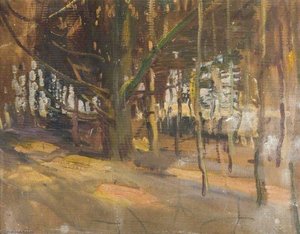
A serene oil study capturing a horse grazing in lush grass by Sir Alfred James Munnings, reflecting the timeless beauty of British equestrian art that you can bring into your own collection.

Artist Biography

Sir Alfred James Munnings (1878-1959): Discover England's foremost horse painter! Explore vibrant Impressionistic scenes of hunting, racing & rural life. A passionate defender of traditional art.

from ·

Chapter 1

How large should it be?

Slide to change the size; the picture on the left shows the frame at its real width. The proportions of the original are kept.

Standard
custom
CM
INCH

Pick from our preset sizes that match the artwork's original proportions.

width
height

Type the width and the height you need, to fit your frame or your wall. This is hand-painted, so for a size with a different shape the artist can paint a bit more around the picture, or cut a bit — you choose. We send you a digital mockup to approve before the painting starts. The picture shown on this page does not show the real result — only the mockup does.

Chapter 2

How should it arrive?

Choose the edges of the stretched canvas

Choose your frame

Corner sample of the WhiteWrap canvas edge finish, stretched on solid wood bars
White $1
Corner sample of the BlurSideWrap canvas edge finish, stretched on solid wood bars
Blurside $1
Corner sample of the ExtendedWrap canvas edge finish, stretched on solid wood bars
Extended $1
Corner sample of the P118B picture frame: moulded polystyrene, 5 cm wide and 3 cm thick
P118B $10
Corner sample of the P118H picture frame: moulded polystyrene, 5 cm wide and 3 cm thick
P118H $10
Corner sample of the P118W picture frame: moulded polystyrene, 5 cm wide and 3 cm thick
P118W $10
Corner sample of the P438Z picture frame: moulded polystyrene, 5.5 cm wide and 3.5 cm thick
P438Z $10
Corner sample of the P508JH picture frame: moulded polystyrene, 7 cm wide and 3.5 cm thick
P508JH $12
Corner sample of the P508YH picture frame: moulded polystyrene, 7 cm wide and 3.5 cm thick
P508YH $12
Corner sample of the P805H picture frame: moulded polystyrene, 5 cm wide and 3.5 cm thick
P805H $10
Corner sample of the P805Z picture frame: moulded polystyrene, 5 cm wide and 3.5 cm thick
P805Z $10
Corner sample of the P919BZ picture frame: moulded polystyrene, 7 cm wide and 3.5 cm thick
P919BZ $10
Corner sample of the P919G picture frame: moulded polystyrene, 7 cm wide and 3.5 cm thick
P919G $10
Corner sample of the P919XJ picture frame: moulded polystyrene, 7 cm wide and 3.5 cm thick
P919XJ $10
Corner sample of the P959ZH picture frame: moulded polystyrene, 5 cm wide and 3 cm thick
P959ZH $10
Corner sample of the P968JZ picture frame: moulded polystyrene, 6 cm wide and 4 cm thick
P968JZ $12
Corner sample of the W106C picture frame: solid wood, 5 cm wide and 3 cm thick
W106C $8
Corner sample of the W218G picture frame: solid wood, 5 cm wide and 3 cm thick
W218G $10
Corner sample of the W218JH picture frame: solid wood, 5 cm wide and 3 cm thick
W218JH $8
Corner sample of the W218Y picture frame: solid wood, 5 cm wide and 3 cm thick
W218Y $10
Corner sample of the W307PJ picture frame: solid wood, 6 cm wide and 3 cm thick
W307PJ $10
Corner sample of the W316G picture frame: solid wood, 6 cm wide and 3 cm thick
W316G $10
Corner sample of the W316PJ picture frame: solid wood, 6 cm wide and 3 cm thick
W316PJ $8
Corner sample of the W316Y picture frame: solid wood, 6 cm wide and 3 cm thick
W316Y $10
Corner sample of the W398PJ picture frame: solid wood, 5 cm wide and 3 cm thick
W398PJ $8
Corner sample of the W4111J picture frame: solid wood, 6.5 cm wide and 3.5 cm thick
W4111J $10
Corner sample of the W500HY picture frame: solid wood, 7 cm wide and 5 cm thick
W500HY $15
Corner sample of the W500JH picture frame: solid wood, 7 cm wide and 5 cm thick
W500JH $15
Corner sample of the W692G picture frame: solid wood, 8 cm wide and 4 cm thick
W692G $12
Corner sample of the W849H picture frame: solid wood, 5 cm wide and 3 cm thick
W849H $8
Corner sample of the W940BG picture frame: solid wood, 7.5 cm wide and 4.5 cm thick
W940BG $15
Corner sample of the W953PJ picture frame: solid wood, 6 cm wide and 3.5 cm thick
W953PJ $8
Corner sample of the H24-GOLD picture frame: carved wood with gesso, 10 cm wide and 6 cm thick
H24-GOLD $30
Corner sample of the H24-SILVER picture frame: carved wood with gesso, 10 cm wide and 6 cm thick
H24-SILVER $30
Corner sample of the H36-GOLD picture frame: carved wood with gesso, 15 cm wide and 6.5 cm thick
H36-GOLD $45
Corner sample of the H36-SILVER picture frame: carved wood with gesso, 15 cm wide and 6.5 cm thick
H36-SILVER $45
Frame preview
Framed

Moulding: . Overall size with the frame: .

Chapter 3

Who paints it, and should anything change?

Examples of what can be changed: Replace face with customer photo; Add pet (e.g., replace cat with dog); Include hidden message in background; Change background landscape or elements.
After order, OriginalUniqueArt.com team will email client for instructions and provide a mockup preview

Worldwide Delivery () in 3/4 weeks instead of standard 5 weeks. (29 October). No compromise on quality.

Chapter 4

The finishing touches

A nameplate, as in a museum?

Engraved Bronze Plaque Details

This elegant plaque features the artist's name and the title of the artwork, finely engraved for a timeless presentation.

It is made from bronze with a refined, elegant finish. The text is precisely laser-engraved for a sharp and permanent result. Measuring 9x2 cm, the plaque is compact yet easy to read. It's built to be durable and scratch-resistant, offering a professional, museum-quality look. Mounting is simple thanks to the included adhesive backing.

Transparent Acrylic Plaque Details

The plaque includes essential engraved details such as the artist's name, the title of the artwork, the date it was created, the type of media used-like oil on canvas or watercolor-a brief description of the piece, and a QR code that links to the complete artwork information.

It is crafted from clear acrylic, offering a sleek, modern appearance. The text is UV-engraved in black to ensure strong visual contrast. With a size of 10x15 cm, it ensures optimal readability. It comes equipped with two metal hooks for secure wall mounting. The plaque is designed to be weather-resistant, making it suitable for various environments, and it includes interactive features that work seamlessly with smartphone scanning.

Black Acrylic Plaque Details

This elegant plaque includes engraved information such as the artist's name, the title of the artwork, the date it was created, the type of media used (like oil on canvas or watercolor), a short description of the artwork, and a QR code for quick access to more information.

The plaque itself is made from refined black acrylic with a premium finish. The text is laser-engraved in white for high contrast and readability. Its size is 10x15 cm, designed to be easy to read. It comes with two metal hooks for professional mounting. The design is sleek and fits any interior style. It is also weather-resistant and durable, with built-in digital integration for mobile compatibility.

A protective varnish?

When do you need it?

Chapter 5

Your painting, as you ordered it

Study (verso)

Reproduction Medium

Reproduction Size

-

Elite Senior Artist

More detail, finesse, and extra production time

-

Reproduction Frame

-

-

For artworks or reproductions larger than 105 cm (approximately 41 inches) on any side, the frame will be shipped as a kit, disassembled. This method ensures safe delivery and prevents damage during transport.

Professional assembly required - this is not a DIY product.
The kit must be assembled and the canvas stretched by an experienced professional framer, using wood glue (not supplied), a canvas stretching plier and clamps to hold the bars square while the glue dries. Incorrect assembly or uneven canvas tension can permanently damage the artwork and is not covered by our warranty.

  • All solid wood bars are included, precisely cut to size.

  • Assembled with the screws provided, plus wood glue for the corner joints, which is not supplied and must be sourced by your framer.

  • Professional tools are required and not included: a canvas stretching plier (tensioner) and clamps to hold the bars square while the glue dries.

Important:
The corner joints require wood glue, the bars must be held with clamps until the glue is fully dry, and tightening the canvas on the assembled frame requires a canvas stretching plier. None of these are included in the kit. Please arrange an experienced professional framer before ordering this size.

Nameplate

-

-

Protective Varnish

Glossy Varnish (enhances colors, protects against light/moisture)

-

Customize My Artwork

Examples of what can be changed: Replace face with customer photo; Add pet (e.g., replace cat with dog); Include hidden message in background; Change background landscape or elements.

-

Urgent

Worldwide Delivery () in 3/4 weeks instead of standard 5 weeks. (29 October). No compromise on quality.

-

Express Shipping

Worldwide Delivery () in 5 weeks. (5 November).

Included

Total Price

$ 300

Total Price $ 300

Glass option is only available in size under 110 CM

Included with every order

  • Free Worldwide Express Shipping
  • High-Quality Linen Canvas
  • Full Shipping Insurance
  • Customs Tax Refund Guarantee
  • True Color Matching Guarantee
  • 100-Day Return Policy (Defects Only)
  • 100% Money-Back Guarantee
  • Bulk Discount Offer

The Quiet Intimacy of an Equine Moment

In the delicate realm of British Impressionism, few moments capture the profound stillness of rural life as tenderly as Sir Alfred James Munnings’s Study (verso). This intimate oil on panel serves as a window into a private, unobserved second in time, where the grandeur of the horse is replaced by a sense of gentle vulnerability. The painting depicts a single horse, its head bowed toward the earth, lost in a moment of quiet foraging amidst the lush grasses. There is no thunder of hooves or dramatic gallop here; instead, Munnings invites us into a sanctuary of peace, where the only movement is the soft rustle of the meadow and the rhythmic grazing of a creature at rest.

The composition, though modest in its 25 x 33 cm scale, possesses an expansive emotional depth. By focusing on the horse’s downward gaze, Munnings directs our attention to the connection between the animal and the land. This downward focus creates a closed loop of intimacy, making the viewer feel less like an intruder and more like a silent witness to a natural ritual. For collectors and lovers of classical realism, this piece offers a rare glimpse into the artist's preparatory mind—a study that prioritizes the essence of life over the spectacle of action.

Mastery of Light and Texture

Technically, this work exemplifies Munnings’s ability to manipulate oil paint to evoke the tactile reality of the English countryside. The brushwork is masterful, blending the fluid, impressionistic strokes required to render the swaying blades of grass with a more controlled precision used to define the muscular anatomy of the horse. One can almost feel the weight of the animal and the dampness of the earth beneath its hooves. The light in this study is soft and diffused, characteristic of the overcast, luminous skies often found in the East Anglian landscapes that so inspired the artist.

The palette is a sophisticated arrangement of earthy tones—deep greens, muted ochres, and warm browns—which ground the subject in a sense of timelessness. For interior designers seeking to introduce a sense of calm and heritage into a space, this painting provides an anchor of organic warmth. The subtle interplay of light and shadow across the horse's coat adds a three-dimensional quality that breathes life into the panel, ensuring that even as a reproduction, the work retains its soulful, living presence.

A Legacy of Rural Tradition

To understand this study is to understand the heart of Sir Alfred James Munnings himself. As a painter whose life was inextricably linked to the equine world, Munnings sought to preserve a vanishing way of life—a Britain defined by the rhythms of hunting, racing, and the pastoral beauty of the countryside. This particular work, housed in the Munnings Art Museum in Colchester, represents the foundational sketches of a master documenting a disappearing era. It is more than just a depiction of an animal; it is a nostalgic tribute to the dignity of nature.

Owning or displaying a high-quality reproduction of such a piece allows one to bring a fragment of this historical elegance into the modern home. Whether placed in a sunlit library or a sophisticated contemporary living room, Study (verso) acts as a meditative focal point. It reminds us of the beauty found in simplicity and the enduring grace of the natural world, making it an incomparable choice for those who value art that speaks to both the eye and the soul.

Questions & Answers

From which era does "Study (verso)" date?

"Study (verso)" by Sir Alfred James Munnings dates from the Modern period. The period gives the historical context of the work.

Can I see "Study (verso)" by Sir Alfred James Munnings under different lights?

The X-Ray view of "Study (verso)" by Sir Alfred James Munnings is on the artwork's X-Ray page: an interactive examination of the image through eleven optical layers.

What kind of piece is "Study (verso)"?

"Study (verso)" by Sir Alfred James Munnings is classified as wall art. The category describes the kind of artwork the original is.

More about this painting

Preview AR preview Switch to Print Switch to Digital Image Send
Details Guide Add to favorites Download Similars X-Ray Diaporama Q&A Stats

In numbers

  • 29frames to choose from
  • standard sizes, in its own proportions
  • 5weeks to paint and deliver it

About the original

Sir Alfred James Munnings

Sir Alfred James Munnings

1878 - 1959, United Kingdom

Quick facts about Sir Alfred James Munnings

  • Full Name: Sir Alfred James Munnings
  • Nationality: British
  • Date Of Birth: 1878
  • Date Of Death: 1959
  • Place Of Birth: Mendham Township, United Kingdom
  • Notable Artworks:
    • The Fancy Dress Ball
    • A Piper
    • Sky Study -
  • Artistic Movement Or Style: Impressionism
  • Artists Who Influenced This Artist: ['Newlyn School painters']

Artist Biography

A Life Immersed in Equine Grace

Sir Alfred James Munnings, a name inextricably linked to the vibrant depiction of horses and the romantic allure of rural England, occupies a pivotal position within 20th-century British art. Born in 1878 amidst the rolling landscapes of Suffolk, his life was profoundly shaped by an enduring connection with the equine world – a bond that would define his artistic vision and propel him to prominence. Munnings wasn’t simply recording what he saw; he was preserving a feeling, an atmosphere, a world poised on the brink of irreversible change. He captured a vanishing way of life, a keenly observed portrait of Britain steeped in tradition, hunting, and the rhythms of the countryside.

From Rural Beginnings to Artistic Development

Munnings’s artistic journey began not within the formal confines of an academy, but in the practical world of a Norwich printing house. This apprenticeship honed his skills in design and observation while simultaneously allowing him to pursue studies at the Norwich School of Art. It was a formative period, instilling a discipline that would serve him well as he navigated the challenges of establishing himself as an artist. Early influences included the plein air painters of the Newlyn School in Cornwall, where he embraced their commitment to capturing light and atmosphere directly from nature. This immersion in Impressionistic techniques laid the groundwork for his signature style – loose brushwork, a vibrant palette, and a palpable sense of movement. His early works often depicted rural scenes, particularly those featuring gypsies and horses roaming the Suffolk countryside, imbued with a romantic sensibility that showcased his growing mastery of color and light. These paintings weren’t merely representations; they were expressions of a deep affection for the land and its inhabitants.

War, Recognition, and a Champion of Tradition

The First World War profoundly shaped both Munnings's artistic perspective and his public profile. Though initially deemed unfit for combat, he served as an official war artist with the Canadian Cavalry Brigade, documenting the vital role horses played in the conflict. This experience brought him face-to-face with the harsh realities of war – the suffering, the loss, and the enduring bond between humans and animals. His paintings from this period are not glorifications of battle, but poignant reflections on sacrifice and resilience, capturing a somber beauty amidst devastation. The post-war years witnessed a surge in Munnings’s popularity and financial security. Prestigious commissions poured in, allowing him to acquire Castle House in Dedham, Essex – a property that would become both his home and studio for the remainder of his life. He became a sought-after portraitist, capturing the likenesses of prominent figures from the aristocracy and racing world. His ability to convey not only physical resemblance but also character and spirit cemented his reputation as one of Britain’s leading artists. However, Munnings was also a staunch defender of traditional artistic values.

A Controversial Voice and Enduring Legacy

Munnings's artistic philosophy was deeply rooted in tradition, and he became a vocal critic of the burgeoning modernist movements that were challenging conventional notions of art. His famous – and often controversial – 1949 BBC radio broadcast saw him launch a scathing attack on Cubism and Surrealism, delivered with characteristic candor (and reportedly fueled by alcohol). While his remarks sparked outrage among proponents of modern art, they also resonated with those who valued representational painting and the enduring power of artistic skill. He wasn’t simply resisting change for its own sake; he believed in the importance of preserving artistic standards and celebrating beauty in its traditional forms. This conviction culminated in his election as President of the Royal Academy in 1944, a position he held until 1949, solidifying his status within the British art establishment. He was knighted Bachelor in 1944 and appointed a Knight Commander of the Royal Victorian Order in 1947, further acknowledging his contributions to the nation’s cultural life. Sir Alfred James Munnings left behind a vast and compelling body of work that continues to captivate audiences today. His paintings offer a window into a bygone era – a world of horses, hunting, and rural landscapes that has largely disappeared. The Munnings Art Museum, established by his wife Violet at Castle House, serves as a testament to his enduring legacy, preserving his art and providing a space for future generations to appreciate his unique vision. Beyond the technical brilliance of his paintings, it is Munnings’s ability to evoke emotion that truly sets him apart. He captured not just the physical beauty of horses, but also their spirit, their power, and their connection to the human heart. His work remains a powerful reminder of the enduring appeal of representational painting and the importance of preserving artistic traditions in an ever-changing world.

Major Achievements

  • Royal Academy President: Elected President of the Royal Academy in 1944, serving until 1949.
  • Knighthood: Knighted Bachelor in 1944 and appointed a Knight Commander of the Royal Victorian Order in 1947.
  • War Artist Commissions: Recognized for his work documenting the Canadian Cavalry during WWI.
  • Sculptural Work: Created sculptures, including an equestrian statue of Edward Horner.

His legacy endures not only through his masterful paintings but also as a passionate advocate for artistic tradition in a rapidly modernizing world.

Quick Facts

  • Movement: Tonal Impressionism
  • Influences: Scottish Landscape Painting
  • Artist: Sir Alfred James Munnings
  • Artistic style: Romantic Landscape Painting
  • Medium: Oil on panel