Preview
 Send
Send Share
Share
 Details
 Guide
Guide

 Download
 Similars
 X-Ray
X-Ray Diaporama
 Q&A
Q&A Stats
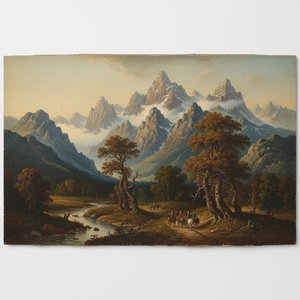
StatsMountainous Landscape

- 51.0 x 76.0 cm

 Read More
Giclée / Art Print
Museum-quality giclée or canvas print with fast production and flexible finish options. ( Buy Hand Made Painting Switch to Digital Image)




































Pick from our preset sizes that match the artwork's original proportions.

Type the width and the height you need, to fit your frame or your wall. A print can only be cut, never made bigger than the picture, so a size with a different shape loses a part of the image. We send you a digital mockup to approve before we print anything. The picture shown on this page does not show the real cut — only the mockup does.
Worldwide Delivery () in 2 weeks instead of standard 4/5 weeks. (7 November)

Free Worldwide Express Shipping

High-Quality Linen Canvas

Full Shipping Insurance

Customs Tax Refund Guarantee

True Color Matching Guarantee

100-Day Return Policy (Defects Only)

100% Money-Back Guarantee

Bulk Discount Offer
 Glass option is only available in size under 110 CM

Mountainous Landscape
Giclée / Art Print
Reproduction Size
-


Total Price
$ 81
Artist Biography
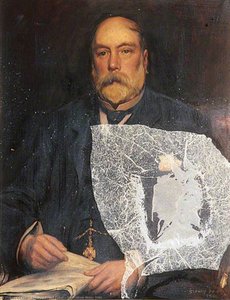
The Architect of Shadows: The Life and Legacy of Sidney Edward Paget
In the fog-shrouded streets of Victorian London, where mystery and deduction met in the gaslit corners of Baker Street, one man’s pen provided the visual heartbeat for a legend. Sidney Edward Paget was not merely an illustrator; he was the visual architect of the world's most famous consulting detective. While Arthur Conan Doyle provided the brilliant mind of Sherlock Holmes through prose, it was Paget who breathed physical form into the character, gifting him the sharp, observant gaze and the iconic silhouette that would haunt the collective imagination for generations. His work transcended simple decoration, acting as a vital bridge between the written word and the reader's sensory experience, crafting an atmosphere of tension and meticulous detail that defined the golden age of detective fiction.
Born on the 4th of October, 1860, to a family of modest means in Clerkenwell, Paget’s journey into the heart of the British art scene began with formal rigor. The son of a vestry clerk and a music professor, he possessed an innate sensitivity to both structure and emotion. His enrollment in the Royal Academy Schools in 1879 marked the beginning of a transformative era. It was within these hallowed halls that Paget forged connections that would later bleed into his most famous narratives. Most notably, he befriended Alfred Morris Butler, an architecture student whose very presence would become etched into the annals of literary history. As Paget sought to ground his illustrations in reality, Butler served as a primary model for the character of Dr. John Watson, ensuring that the companion to Holmes possessed a tangible, human weight that resonated with authenticity.
A Symbiosis of Ink and Imagination
The true explosion of Paget’s fame arrived in 1889, a year that saw the debut of A Study in Scarlet. When commissioned by Doyle to illustrate the burgeoning Holmes canon for The Strand Magazine, Paget embarked on a creative partnership that would yield eighteen profound illustrations. His approach was nothing short of revolutionary for the period. Eschewing the grand, theatrical gestures common in contemporary periodical art, Paget embraced a philosophy of understated observation. He understood that the essence of a detective story lies in the minute, often overlooked detail—the smudge of ash, the particular tilt of a hat, or the subtle tension in a sitter's hand. Through his masterful use of charcoal and pencil, he created compositions that prioritized the logic of deduction, mirroring the very mental processes of his protagonists.
His technical prowess allowed him to navigate the complex textures of Victorian life, from the opulent drawing rooms of the elite to the grimy, claustrophobic alleys of the East End. This versatility ensured that his work felt deeply embedded in the social fabric of the era. Beyond the Holmesian triumphs, Paget’s talent was recognized by the prestigious Royal Academy, where he exhibited numerous portraits and paintings between 1879 and 1905. His ability to capture psychological depth through subtle facial expressions allowed him to portray characters not as mere archetypes, but as living, breathing entities caught in the throes of mystery and peril.
The Enduring Silhouette
Though his life was tragically short, ending in 1908 at the age of forty-seven, the impact of Sidney Edward Paget remains indelible. He belonged to a remarkable lineage of illustrators; his brothers, Henry M. Paget and Walter Paget, were also significant contributors to the visual landscape of their time. Yet, it is the middle brother, Sidney, who achieved a unique form of immortality. His illustrations did more than just accompany text; they established the visual vocabulary for an entire genre. When we imagine Holmes leaning forward in thought or Watson observing with wary curiosity, we are seeing through the lens that Paget polished.
The historical significance of his work lies in its ability to have shaped the very identity of a cultural icon. Without Paget’s meticulous attention to the nuances of costume, light, and shadow, the visual legacy of Sherlock Holmes might have lacked the grounded, gritty realism that makes the character so enduring. He remains a master of the atmospheric, a storyteller who used the tip of a pencil to weave shadows into the very fabric of London's history, ensuring that even long after the gaslights dimmed, the image of the Great Detective would remain forever clear.

Sidney Edward Paget
1860 - 1908
Quick Facts
- Full Name: Sidney Edward Paget
- Nationality: British
- Date Of Birth: 1860
- Date Of Death: 1908
- Place Of Birth: London, England
- Notable Artworks: ['Sherlock Holmes Illustrations']
- Artistic Movement Or Style: Victorian Illustration
- Artists Who Influenced This Artist: ['Alfred Morris Butler']
- Artists Or Movements Influenced By This Artist: ['Arthur Conan Doyle']
Related Articles
Majestic Peaks on Canvas: A Historical & Artistic Exploration of Mountains in Fine Art
Explore the history of mountain painting! Discover Romantic masterpieces & key artists like Dahl & Calame. Learn about the Sublime & Picturesque aesthetics and find your perfect artwork at OriginalUniqueArt.

Capturing the Wild: A Visual Journey Through Nature's Most Breathtaking Masterpieces
Embark on a visual journey through nature's most breathtaking masterpieces. From dramatic mountain vistas to serene pastoral scenes, explore the timeless beauty of classical landscapes and discover how to bring the majesty of the wild into your home with museum-quality art.

Summit of the Soul: Exploring the Sublime Majesty of Mountain Landscapes in Art History
Explore the sublime power of mountain landscapes through the eyes of Romantic masters. Discover art history's most majestic peaks today.

Majestic Peaks: The Timeless Allure of Mountain Landscape Artworks and the Sublime Spirit of the Alps
Discover the profound beauty of mountain landscape art. From Romanticism to Expressionism, explore masterpieces that capture the sublime. OriginalUniqueArt offers museum-quality, hand-painted oil reproductions and bespoke commissions for the discerning global collector.

Majestic Peaks: A Curated Guide to the World's Most Iconic Mountain Masterpieces and the Sublime Art of Landscape Painting
Explore the profound history of mountain masterpieces. From Romanticism to the Hudson River School, discover how masters captured the sublime. Learn about iconic alpine landscapes and find museum-quality, hand-painted oil reproductions for your collection.