Preview
 Send
Send Share
Share
 Details

 Download
 Similars
 X-Ray
X-Ray Diaporama
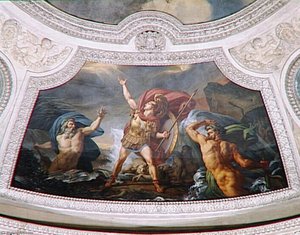
NAPOLEON IER VISITANT L'ESCALIER DU MUSEE DU LOUVRE SOUS LA CONDUITE DES ARCHITECTES PERCIER ET FONTAINE


 Read More
Hand Made Oil Reproduction
Hand-painted oil on canvas in your size and frame, made to order by our artists. ( Switch to Print Switch to Image)




P118B $10

P118H $10

P118W $10

P438Z $10

P508JH $12

P508YH $12

P805H $10

P805Z $10

P919BZ $10

P919G $10

P919XJ $10

P959ZH $10

P968JZ $12

W106C $8

W218G $10

W218JH $8

W218Y $10

W307PJ $10

W316G $10

W316PJ $8

W316Y $10

W398PJ $8

W4111J $10

W500HY $15

W500JH $15

W692G $12

W849H $8

W940BG $15

W953PJ $8




Pick from our preset sizes that match the artwork's original proportions.

You may enter your own dimensions to fit a specific frame or space. If your selected size does not match the original image's proportions, we will either crop the artwork or extend the painting with additional hand-painted elements. A digital mockup will be sent for your approval before production begins.
Please note that the on-screen preview does not reflect the actual cropping or extension. Only the mockup will accurately show the final composition.
While custom sizes are available, we recommend selecting a dimension from the predefined list to preserve the original proportions.
After order, OriginalUniqueArt.com team will email client for instructions and provide a mockup preview
Worldwide Delivery () in 3/4 weeks instead of standard 5 weeks. (5 August). No compromise on quality.

Free Worldwide Express Shipping

High-Quality Linen Canvas

Full Shipping Insurance

Customs Tax Refund Guarantee

True Color Matching Guarantee

60-Day Return Policy (Defects Only)

100% Money-Back Guarantee

Bulk Discount Offer
 Glass option is only available in size under 110 CM

NAPOLEON IER VISITANT L'ESCALIER DU MUSEE DU LOUVRE SOUS LA CONDUITE DES ARCHITECTES PERCIER ET FONTAINE
Reproduction Medium
Reproduction Size
-


Total Price
$ 300
Artwork Description
A Monumental Portrait of Power: Couder’s Vision of Napoleon at the Louvre
Auguste Couder's “Napoleon Ier Visitant L’Escalier Du Musée Du Louvre Sous La Conduite Des Architectes Percier Et Fontaine,” painted in 1833, stands as a testament to the enduring fascination with Napoleonic grandeur and the meticulous craftsmanship of French Romanticism. Commissioned by Louis-Philippe, Duc d'Orléans, this monumental canvas isn’t merely a depiction of an event; it’s a carefully constructed narrative designed to solidify the Bourbon monarchy’s legitimacy amidst the turbulent aftermath of revolution.
- Subject Matter: The painting captures Napoleon Bonaparte’s visit to the Louvre Museum under the guidance of architects Jean Nicolas Pierre Percier and Claude Michel François Fontaine. This scene commemorates the reopening of the museum after its closure during the Napoleonic Wars, symbolizing France's triumphant return to cultural prestige.
- Style & Technique: Couder adheres rigorously to the academic tradition championed by David, employing a balanced composition and precise draughtsmanship characteristic of the École de peinture française. The artist skillfully utilizes oil paint on canvas—a technique favored for its luminosity and ability to convey texture—to achieve remarkable realism in portraying the figures and architectural details.
- Historical Context: Painted during Louis-Philippe’s reign, “Napoleon” serves as a deliberate propaganda piece. Percier and Fontaine's involvement underscores the royal patronage of art and reinforces the image of France as a beacon of civilization and artistic excellence. The painting reflects the broader Romantic preoccupation with heroic narratives and idealized representations of historical figures.
Symbolism: Hierarchy and Restoration
Beyond its factual representation, Couder’s artwork is laden with symbolic significance. Napoleon dominates the composition, positioned prominently at the top right corner, embodying imperial authority and ambition. The surrounding figures—military officers and dignitaries—represent the elite circles supporting Louis-Philippe's rule. Notably, the inclusion of horses symbolizes power and majesty, mirroring Napoleonic conquests.
- Architectural Detail: Percier and Fontaine’s architectural prowess is meticulously rendered, emphasizing the Louvre’s grandeur as a symbol of artistic heritage and royal patronage. The clock hanging on the wall serves as a subtle reminder of time passing—a commentary on Napoleon's reign and France's journey toward stability.
- Color Palette: Couder employs a muted palette dominated by browns, ochres, and reds—colors associated with seriousness and dignity—creating an atmosphere of solemn contemplation. The artist’s careful attention to tonal gradations enhances the painting’s visual impact and contributes to its overall sense of grandeur.
Emotional Impact: Reverence for Glory
"Napoleon Ier Visitant L'Escalier Du Louvre Sous La Conduite Des Architectes Percier Et Fontaine" evokes a profound feeling of reverence for Napoleonic glory and the restoration of French cultural identity. Couder’s masterful execution captures not only the visual splendor of the scene but also its emotional resonance—a celebration of artistic achievement and royal legitimacy. It remains an enduring emblem of France's triumphant return to prominence after years of upheaval.
- Provenance: The painting originated in a series commissioned by Louis-Philippe for the Galerie d’Apollon at the Louvre, showcasing the Duc’s commitment to elevating French art and culture. Its subsequent acquisition by Emmanuel Bréon and its donation to the Musée National des Beaux Arts de Malmaison underscore its significance as a cornerstone of French artistic heritage.
- References: Further exploration can be found in Thierry Sarmant's “Napoléon et Paris,” published by Paris Musées (2015), and Isabelle Leroy-Jay Lemaistre’s “Napoléon et le Louvre dans les collections des musées français” (2017).
Artist Biography
A Life Painted in History: The World of Louis-Charles-Auguste Couder
Born amidst the burgeoning artistic energy of London in 1789, Louis-Charles-Auguste Couder would become a significant voice in 19th-century French historical painting. Though perhaps not as celebrated today as some of his contemporaries, Couder’s canvases offer a compelling window into an era defined by revolution, empire, and the enduring power of classical ideals. His journey began with formative training under two titans of the French art world: Jean-Baptiste Regnault and Jacques-Louis David. This dual mentorship profoundly shaped his artistic sensibilities, instilling in him both a rigorous academic approach and a keen understanding of dramatic narrative. David’s influence is particularly evident in Couder's early works – a precision of draftsmanship, balanced compositions, and an unwavering commitment to historical accuracy characterize these initial explorations. Yet, Regnault’s contribution was equally vital, fostering Couder’s ability to imbue his scenes with emotional intensity and compelling storytelling. He wasn’t merely recreating history; he was breathing life into it.Blending Influences: The Development of a Unique Style
Couder skillfully synthesized the contrasting strengths of his mentors, forging a style that resonated with the artistic currents of his time. The Neoclassical foundation laid by David provided the structural backbone for his compositions, while Regnault’s emphasis on dramatic effect infused them with a palpable sense of energy and emotion. This synthesis wasn't simply technical; it was conceptual. Couder didn’t just want to depict historical events; he wanted viewers to *feel* their weight and significance. His canvases became stages for heroism, sacrifice, and the grandeur of past civilizations. He frequently turned to classical mythology and history as sources of inspiration, themes that allowed him to explore universal human experiences through a lens of timeless elegance. This period saw Couder honing his skills in portraiture too, demonstrating an exceptional ability to capture not only physical likeness but also the inner character of his subjects. The result was a body of work marked by both intellectual rigor and emotional depth – paintings that were visually stunning and intellectually stimulating.Moments Frozen in Time: Major Works and Themes
Several works stand as testaments to Couder’s artistic prowess and historical insight. Perhaps his most renowned painting is the Siege of Yorktown (1781), a vivid depiction of a pivotal moment in the American Revolutionary War. This wasn't merely a battle scene; it was a carefully constructed narrative, showcasing the complex interplay of forces that determined the outcome of the conflict. Closely related is Washington, Rochambeau, La Fayette et leur état major à Yorktown, which focuses on the key figures orchestrating the siege, offering an intimate glimpse into the strategic minds behind the victory. Beyond his depictions of American history, Couder demonstrated a remarkable ability to capture significant political events closer to home with works like Installation du conseil d'Etat au palais du Petit Luxembourg (1799). These paintings weren’t simply historical records; they were carefully crafted statements about power, authority, and the unfolding drama of French politics. His painting “PRISE DE LA VILLE DE LERIDA.13 OCTOBRE 1707” is a magnificent example of his dramatic style. The artwork "TANNEGUY DUCHATEL" showcases Couder’s mastery of chiaroscuro lighting, dynamic composition and rich textures.Recognition and Legacy: A Place in the French Art World
Couder's talent didn't go unnoticed by his peers. In 1839, he was inducted into the prestigious Académie des Beaux-Arts, a recognition of his artistic merit and standing within the French art world. This honor solidified his position as a leading historical painter of his time. Further acknowledging his contributions to French society, he was appointed an officer of the Légion d'honneur – a distinction reserved for individuals who had made exceptional achievements in their respective fields. His paintings were regularly exhibited in prominent salons and galleries, earning him critical acclaim and establishing a loyal following among collectors and connoisseurs. Couder’s personal life also reflected his connection to the artistic community; he married Cornélie Stouf, daughter of the celebrated sculptor Jean-Baptiste Stouf. He was laid to rest in the renowned Père Lachaise Cemetery in Paris, a final resting place shared by many other prominent figures in French art and culture. While perhaps not as widely recognized today as some of his contemporaries, Couder’s contributions to historical painting remain significant. His work provides valuable insights into the artistic tastes and historical perspectives of 19th-century France, offering a unique European perspective on pivotal events like the American Revolution. His legacy endures in the carefully rendered details, dramatic compositions, and enduring emotional power of his paintings – testaments to a life dedicated to capturing moments frozen in time.
couder auguste
1789 - 1873 , United Kingdom
Quick Facts
- Artistic Movement Or Style: Neoclassical, Historical painting
- Artists Who Influenced This Artist:
- Jean-Baptiste Regnault
- Jacques-Louis David
- Date Of Birth: 1789
- Date Of Death: 1873
- Full Name: Louis-Charles-Auguste Couder
- Nationality: French
- Notable Artworks:
- Siege of Yorktown
- Installation du conseil d'Etat
- TANNEGUY DUCHATEL
- Séance d'ouverture...
- Place Of Birth: London, United Kingdom
Related Articles
Timeless Resonance: Exploring Classic Vibe in Art – A Historical & Aesthetic Analysis
Explore the rich history & enduring aesthetic of Classicism art! Discover key movements, iconic artists like Raphael & David, and its lasting influence on Western art. Deepen your appreciation today.
Jean-Louis Ernest Meissonier: Realism, Historical Narrative & Artistic Perfection
Explore the world of Jean-Louis Ernest Meissonier, a master of French Realism renowned for his meticulously detailed historical & military scenes. Discover his iconic artworks and lasting legacy.

Reflections on Representation: Exploring the Meta-Narrative of 'Artwork' within Artistic Discourse
Explore the complex layers of artistic representation with OriginalUniqueArt.com's expert analysis of art history, self-reflexivity, and cultural context. Discover insights for discerning collectors.
Charles Le Brun: Master of French Baroque Classicism & His Enduring Legacy
Explore the life & art of Charles Le Brun, master of French Baroque Classicism. Discover his royal commissions, influence on Versailles, and enduring legacy through detailed analysis & stunning artworks.
F.A.Q.: Painting Techniques – Achieving Museum-Quality Reproductions for Elite Collectors
Discover 's expert techniques for creating museum-quality art reproductions. Trusted by elite collectors worldwide, we offer authentic handmade oil paintings & custom artwork with unparalleled quality and personalized service.