 Preview
 Send
Send Share
Share
 Details

 Download
 Similars
 X-Ray
X-Ray Diaporama
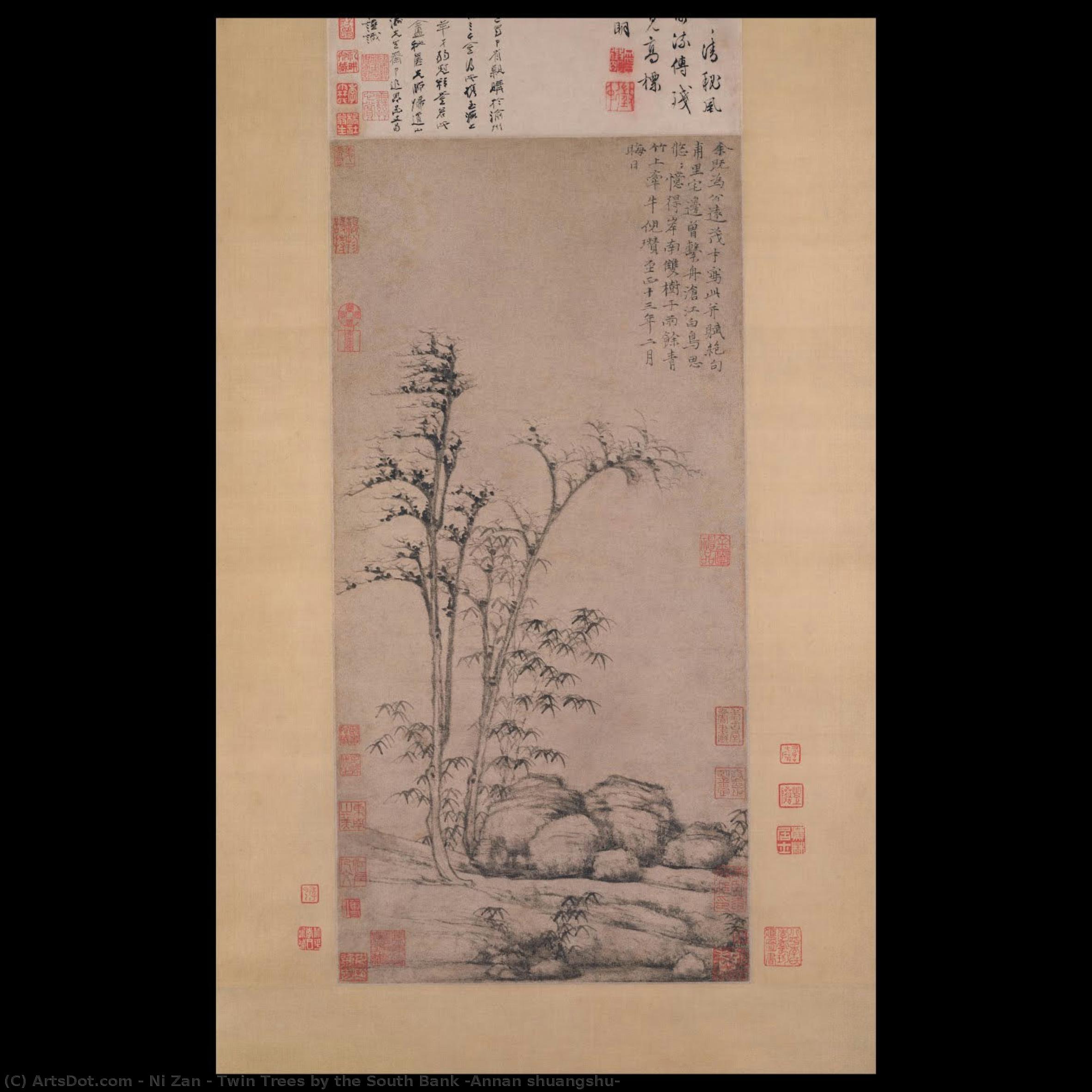
Twin Trees by the South Bank (Annan shuangshu)


 Read More
Hand Made Oil Reproduction
Hand-painted oil on canvas in your size and frame, made to order by our artists. ( Switch to Print Switch to Image)




P118B $10

P118H $10

P118W $10

P438Z $10

P508JH $12

P508YH $12

P805H $10

P805Z $10

P919BZ $10

P919G $10

P919XJ $10

P959ZH $10

P968JZ $12

W106C $8

W218G $10

W218JH $8

W218Y $10

W307PJ $10

W316G $10

W316PJ $8

W316Y $10

W398PJ $8

W4111J $10

W500HY $15

W500JH $15

W692G $12

W849H $8

W940BG $15

W953PJ $8




Pick from our preset sizes that match the artwork's original proportions.

You may enter your own dimensions to fit a specific frame or space. If your selected size does not match the original image's proportions, we will either crop the artwork or extend the painting with additional hand-painted elements. A digital mockup will be sent for your approval before production begins.
Please note that the on-screen preview does not reflect the actual cropping or extension. Only the mockup will accurately show the final composition.
While custom sizes are available, we recommend selecting a dimension from the predefined list to preserve the original proportions.
After order, OriginalUniqueArt.com team will email client for instructions and provide a mockup preview
Worldwide Delivery () in 3/4 weeks instead of standard 5 weeks. (11 August). No compromise on quality.

Free Worldwide Express Shipping

High-Quality Linen Canvas

Full Shipping Insurance

Customs Tax Refund Guarantee

True Color Matching Guarantee

60-Day Return Policy (Defects Only)

100% Money-Back Guarantee

Bulk Discount Offer
 Glass option is only available in size under 110 CM

Twin Trees by the South Bank (Annan shuangshu)
Reproduction Medium
Reproduction Size
-


Total Price
$ 300
Artwork Description
The Quiet Majesty of Nature: An Encounter with Ni Zan's Twin Trees
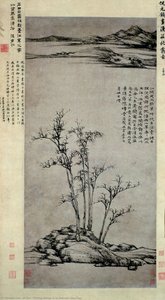
To gaze upon Twin Trees by the South Bank is not merely to observe a painting; it is to step into a moment of profound, contemplative stillness. This masterpiece by the Yuan dynasty master, Ni Zan, transports the viewer to a secluded corner of nature where time seems to slow its breath. The composition centers around two gracefully rendered trees, their branches reaching out like elegant calligraphy against a luminous white expanse. Beneath them rest scattered rocks, grounding the ethereal beauty in tangible earth. It is a scene that speaks volumes without uttering a single word, inviting introspection into the quiet corners of the soul.
Mastery in Monochrome: Technique and Style
Ni Zan’s genius lies in his masterful handling of ink monochrome. His style, so distinct among the great literati painters, eschews grand narratives for an intimate dialogue with emptiness. The technique employed here is characterized by sparse composition and deliberate negative space—the white background is not merely empty; it is an active participant in the artwork, breathing life into the trees and rocks. Observe how the ink washes define the foliage and bark with a delicate precision that belies the subject's natural wildness. This economy of means forces the eye to linger, appreciating the subtle gradations of black wash against the pristine ground, a hallmark of his mature style developed after 1345.
A Reflection on Yuan Dynasty Philosophy
Dating from 1353, this work is deeply embedded in the cultural currents of the late Yuan dynasty. For collectors and connoisseurs, understanding Ni Zan means appreciating his philosophical stance. He was a painter who sought self-expression over mere imitation of grand historical scenes. His preference for isolated landscapes, often featuring widely separated riverbanks or solitary groves, reflected a yearning for personal retreat amidst the turbulence of times. The inclusion of Chinese characters, perhaps poetic inscriptions or auspicious phrases, further anchors the piece within the scholarly tradition, suggesting that this view was once contemplated by a mind steeped in Confucian thought and aesthetic contemplation.
Symbolism and Emotional Resonance
The symbolism woven into Twin Trees is rich yet understated. The twin trees themselves can represent duality—perhaps yin and yang, or the balance between human endeavor and natural permanence. The rocks suggest endurance against the flow of time, while the overall tranquility evokes a sense of *qi* (vital energy) that is both restorative and deeply meditative. For those seeking to infuse a space with an atmosphere of calm sophistication, this piece offers unparalleled emotional resonance. It whispers of resilience, reminding us that true beauty often resides in simplicity and quietude.
Bringing the Serenity Home
For interior designers or discerning collectors, acquiring a high-quality reproduction of Twin Trees by the South Bank is an act of curating tranquility. Imagine this artwork gracing a study, a gallery wall, or a serene living space. Its restrained palette ensures it complements almost any décor—from minimalist modernism to richly appointed traditional interiors. It serves not just as decoration, but as a focal point for contemplation, transforming a mere room into a sanctuary inspired by the enduring grace of nature.
Artist Biography
early life and background
ni zan, a renowned chinese painter, was born in 1301 into a wealthy family in wuxi. his courtesy name was yuan zhen (元鎮), and his art names were yun lin zi (雲林子), huan xia sheng (幻霞生), and jing man min (荊蠻民). despite being born after the death of kublai khan, ni zan's family could afford a rigorous confucian education for him.artistic style and contributions
ni zan is considered one of the four masters of the yuan dynasty, alongside huang gongwang, wu zhen, and wang meng. his paintings, characterized by ink-monochrome landscapes with widely separated riverbanks, foreground trees silhouetted against water, and sparse compositions without people, defy traditional chinese painting concepts. ni zan's distinctive style, developed after 1345, was a conscious expression of self-expression.notable works and travels
some of ni zan's notable works include:- fishing village in an autumn clear day (china modern and contemporary art document research center, beijing, china), showcasing his unique style.
- twin trees by the south bank (annan shuangshu) (princeton university art museum, princeton, united states), reflecting his growth as an artist.
- wind among the trees on the riverbank, created between 1356 and 1366, when ni zan led a refugee's life, residing with his family southwest of suzhou (https://OriginalUniqueArt.com/@@/d2xa3n-ni-zan-wind-among-the-trees-on-the-riverbank).
legacy and influence
ni zan's work was highly valued during his lifetime, and he travelled throughout southern china, painting and relying on the hospitality of friends. after the establishment of the ming dynasty, ni zan returned to his hometown in 1371 and painted his rongxi studio, epitomizing his style (https://OriginalUniqueArt.com/@/ni-zan). his legacy continues to inspire artists and art enthusiasts alike. view more of ni zan's works on OriginalUniqueArt: [https://OriginalUniqueArt.com/@/ni-zan](https://OriginalUniqueArt.com/@/ni-zan) explore the four masters of the yuan dynasty: [https://OriginalUniqueArt.com/@@/a@d3c5zh](https://OriginalUniqueArt.com/@@/a@d3c5zh)
Ni Zan
1301 - 1374 , China
Quick Facts
- Artistic Movement Or Style: Four Masters of the Yuan dynasty
- Date Of Birth: 1301
- Date Of Death: 1374
- Full Name: Ni Zan
- Nationality: Chinese
- Notable Artworks:
- Fishing Village in an Autumn Clear Day
- Woods and Valleys of Mount Yu
- Place Of Birth: Wuxi, China
Related Articles
Beyond the Horizon: 10 Landscape Masterpieces for Your Home Decor
Journey through 10 breathtaking landscape paintings by Monet, Van Gogh & more! Explore iconic artworks, artistic techniques & find inspiration for your home decor. Museum-quality reproductions at OriginalUniqueArt.com. Discover all masterpieces on OriginalUniqueArt.com

Hokusai's Masterpieces: 25 Iconic Prints & Paintings for Art Lovers | OriginalUniqueArt
Journey through Katsushika Hokusai’s 25 most iconic artworks, including *The Great Wave*. Explore the ukiyo-e master's history, style & timeless Japanese woodblock prints. Find museum-quality reproductions for your home at OriginalUniqueArt.com.

Romantic Landscapes: 10 Masterpieces for Your Home | OriginalUniqueArt
Journey through 10 Romantic landscape masterpieces by Friedrich, Turner & Cole. Explore emotional art, sublime nature scenes & iconic 19th-century paintings. Find museum-quality reproductions for your home at OriginalUniqueArt.com – discover the full collection online!

Evocations of Place: A Historical Journey Through Landscape Art
Explore the rich history of landscape art with OriginalUniqueArt. Discover renowned artists, movements like Impressionism & Romanticism, and expert guidance for collecting timeless pieces. Find your perfect serene escape today!
The Alchemy of Ink: Mastering the Timeless Beauty and Art History of Paper and Brush
Embark on a sophisticated exploration of ink wash painting and Sumi-e. Uncover the profound historical lineages, Zen philosophies, and technical mastery behind this timeless medium in our authoritative guide for fine art enthusiasts.