- Home

- Digital Image
- setlur gopal vasudev
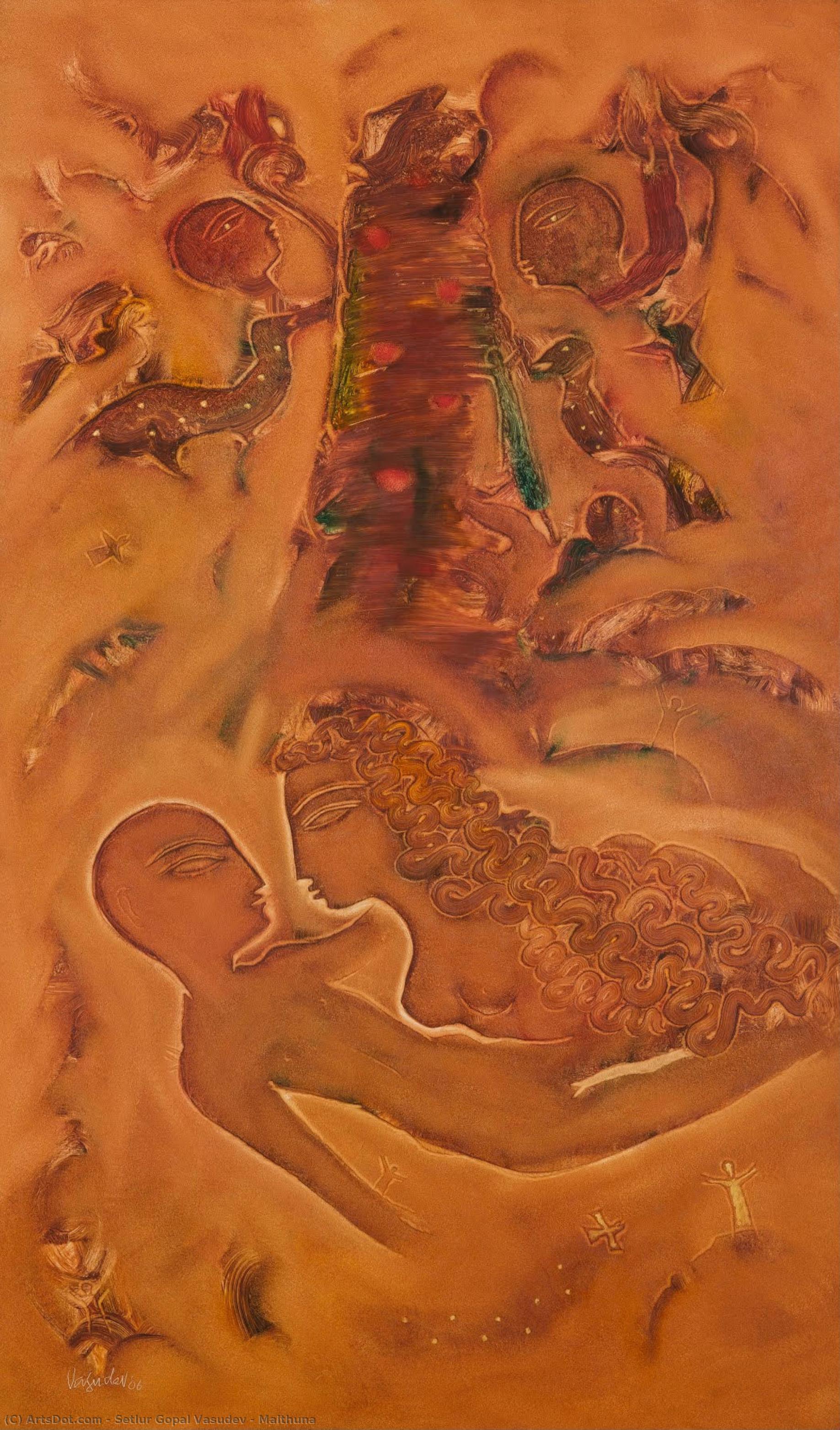
- Maithuna
 Preview
 Send
Send Share
Share
 Details

 Download
 Similars
 X-Ray
X-Ray Diaporama
Maithuna
 Oil On Canvas
- WallArt
- Madras Movement
 2006
2006- Contemporary
 176.0 x 104.0 cm
 Cholamandal Artists' Village
 Read More
Purchase a high-resolution, enhanced digital image, far superior to the online preview.
Each file is meticulously prepared by our in-house specialists using advanced tools and expert manual retouching. We ensure every image has exceptional clarity, precise color accuracy, and fine detail.
The final file is delivered via email within 72 hours, optimized for immediate use in professional, editorial, and print environments. This is the same quality trusted by top-tier design studios, publishers, and galleries.
Digital Image
Download a high-resolution file for personal display, printing, and creative projects. ( Switch to Print Switch to hand made Painting)
Included in Every Digital Image Order
Expert Digital Delivery, Guaranteed
When you choose OriginalUniqueArt.com, you're not just getting an image - you're receiving a professionally enhanced digital artwork, crafted with precision and backed by a satisfaction guarantee. Here's everything that comes with your order, automatically:

Fast Email Delivery
Your high-resolution digital image file will be emailed to you within 72 hours of ordering - ready for immediate use.

AI-Enhanced Digital File
Your artwork is professionally optimized using advanced AI tools and manual editing, ensuring maximum detail, clarity, and color accuracy.

Free Lifetime Re-Delivery
Accidentally deleted or lost your file? No worries - we'll resend it to you anytime, free of charge.

No Import Fees - Ever
Enjoy your artwork instantly with zero customs, duties, or delivery fees - digital downloads are always tax-free.

Color Accuracy Guarantee
We ensure your digital image reflects the original colors as closely as possible using professional tools and color management.

60-Day Satisfaction Guarantee
If you're not satisfied with your digital image, we'll revise it or refund 100% within 60 days - no questions asked.

100% Money-Back Guarantee
Not satisfied? Get a full refund within 60 days of receiving your digital file - no questions asked.

Bulk Order Discounts
Buy 3 images, save 10% - Buy 5, save 15% - Buy 10+, save 20%. Great for creative projects, galleries, and agencies.
Artist Biography
Robert Delaunay: A Pioneer of Color and Rhythm
Robert Delaunay, born Robert-Victor-Felix Delaunay in Paris on April 12, 1885, was a pivotal figure in the early development of modern art. His life, marked by both artistic innovation and personal drama, profoundly shaped his distinctive style – a vibrant synthesis of Cubism, Orphism, and Simultanism. Initially apprenticed to a theatrical designer, Delaunay’s early career focused on stagecraft, but it was his burgeoning interest in painting that ultimately defined him. He found himself drawn to the radical ideas circulating within Parisian artistic circles, particularly those championed by figures like Henri Matisse and Pablo Picasso, yet he forged his own unique path, one characterized by an intense exploration of color and its dynamic relationships. His work reflects a deep engagement with the world around him, from the bustling streets of Paris to the serene beauty of the Mediterranean coast.Early Influences and the Birth of Orphism
Delaunay’s artistic journey began in the early 20th century, coinciding with significant shifts in European art. He was deeply influenced by Neo-Impressionism, particularly the work of Paul Gauguin and Georges Seurat, which emphasized the use of pure colors and scientific color theory. However, Delaunay quickly moved beyond mere imitation, developing his own distinct approach – Orphism. This movement, named after the Greek word for “light,” sought to liberate color from its traditional representational function. Instead of depicting objects realistically, Delaunay used color as an independent element, creating dynamic rhythms and harmonies on the canvas. He collaborated closely with his wife, Sonia Delaunay, who was a key figure in developing Orphism’s visual language, often exploring geometric abstraction and textile design alongside him. Their shared aesthetic vision became a cornerstone of their artistic partnership.Key Characteristics and Artistic Techniques
Delaunay's paintings are immediately recognizable by their bold use of color – vibrant reds, yellows, blues, and greens—applied in flat planes with minimal shading or modeling. He employed techniques reminiscent of Cubism, breaking down forms into geometric shapes and presenting multiple viewpoints simultaneously. However, unlike the fragmented forms of Picasso’s Cubism, Delaunay's compositions are characterized by a sense of dynamism and movement. His canvases often feature overlapping circles, squares, and rectangles, arranged in rhythmic patterns that evoke feelings of energy and excitement. He frequently incorporated elements of Simultanism, a technique developed alongside Orphism, which aimed to capture the simultaneous perception of objects – how they appear at different moments in time. Delaunay’s use of color was not merely decorative; it served as a means of expressing emotion and conveying abstract ideas about space, light, and rhythm.Major Works and Historical Significance
Throughout his career, Delaunay produced a vast body of work encompassing paintings, sculptures, textiles, and designs. Notable examples include *Endless Rhythm* (1913), a dynamic composition dominated by overlapping circles and squares; *The Eiffel Tower* (1910-1914), which captures the iconic Parisian landmark through an abstracted lens; and his monumental panels for the Aeronautics pavilion at the 1937 Paris International Exhibition, showcasing his mastery of scale and color. His work was exhibited widely in Europe and America, gaining recognition from influential critics and collectors. Delaunay’s influence extended beyond painting, impacting fields such as graphic design and textile art. He played a crucial role in shaping the development of abstract art in the early 20th century, paving the way for later movements like Constructivism and Bauhaus.Later Years and Legacy
Robert Delaunay continued to paint and exhibit throughout his life, though his style evolved somewhat during his later years. He increasingly focused on exploring color relationships and creating abstract compositions that were both visually striking and emotionally resonant. He died in Montpellier, France, on October 25, 1941, leaving behind a rich legacy of artistic innovation. His pioneering work in Orphism helped to liberate color from its traditional role and opened up new possibilities for abstraction. Today, his paintings are celebrated for their vibrant energy, dynamic rhythms, and profound exploration of the relationship between color, form, and emotion. The Musée Matisse de Nice houses an extensive collection of his works, offering a valuable insight into the life and art of this extraordinary artist.
setlur gopal vasudev
1941 - , India
Quick Facts
- Artistic Movement Or Style:
- Divisionism
- Cubism
- Orphic Cubism
- Simultanism
- Artists Or Movements Influenced By This Artist:
- Klee
- Marc
- Apolinaire
- Artists Who Influenced This Artist:
- Neo-Impressionism
- Cézanne
- Date Of Birth: 1885-04-12
- Date Of Death: 1941-10-25
- Full Name: Robert Delaunay
- Nationality: French
- Notable Artworks:
- Endless Rhythm
- The Eiffel Tower
- City
- Place Of Birth: Paris, France

