Preview
 Send
Send Share
Share
 Details

 Download
 Similars
 X-Ray
X-Ray Diaporama
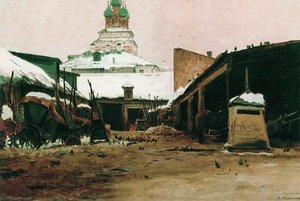
A Meadow
 Read More
Giclée / Art Print
Museum-quality giclée or canvas print with fast production and flexible finish options. ( Buy Hand Made Painting Buy Image)




































Pick from our preset sizes that match the artwork's original proportions.

You may enter your own dimensions to fit a specific frame or space. If your selected size does not match the original image's proportions, we will either crop the artwork or extend the image with a mirrored or solid-fill edge. A digital mockup will be sent for your approval before production begins.
Please note that the on-screen preview does not reflect the actual cropping or extension. Only the mockup will accurately show the final composition.
While custom sizes are available, we recommend selecting a dimension from the predefined list to preserve the original proportions.
Worldwide Delivery () in 2 weeks instead of standard 4/5 weeks. (19 August)

Free Worldwide Express Shipping

High-Quality Linen Canvas

Full Shipping Insurance

Customs Tax Refund Guarantee

True Color Matching Guarantee

60-Day Return Policy (Defects Only)

100% Money-Back Guarantee

Bulk Discount Offer
 Glass option is only available in size under 110 CM

A Meadow
Giclée / Art Print
Reproduction Size
-


Total Price
$ 81
Artist Biography
A Brush with the Soul of Russia: The Life and Art of Sergei Svetoslavsky
Sergei Ivanovich Svetoslavsky, born in 1857 in Kiev, was more than just a painter; he was a chronicler of a vanishing world. His canvases aren’t merely depictions of landscapes or cityscapes, but rather poignant elegies to the Russia he knew – a land steeped in tradition, undergoing rapid transformation, and ultimately, grappling with its own identity. Svetoslavsky's artistic journey began within the nurturing walls of the Kiev Drawing School, where he received foundational training that would later blossom into a distinctive style characterized by atmospheric perspective, meticulous detail, and a profound sense of melancholy. He wasn’t drawn to the grand historical narratives favored by some of his contemporaries; instead, he found beauty in the everyday – the quiet streets of old Kiev, the bustling marketplaces, the serene expanses of the Ukrainian countryside. This early focus on local scenes foreshadowed a lifelong dedication to capturing the spirit of place and the lives of ordinary people.From Peredvizhniki Realism to Personal Vision
Svetoslavsky’s artistic development was deeply intertwined with the *Peredvizhniki* movement, also known as The Wanderers. This group of Russian realist artists rejected the academic constraints of the Imperial Academy of Arts and instead sought to bring art directly to the people through traveling exhibitions. Joining their ranks in 1880 proved pivotal. He absorbed their commitment to social commentary and accurate representation, but he quickly began to infuse this realism with a uniquely lyrical quality. While his early works clearly demonstrate the influence of artists like Ivan Shishkin and Arkhip Kuindzhi – masters of naturalistic detail and dramatic lighting – Svetoslavsky gradually moved away from purely objective depiction. He wasn’t interested in simply *showing* what he saw; he wanted to convey how it *felt*. This is evident in his masterful use of color, often muted and atmospheric, creating a sense of distance and nostalgia. His paintings began to breathe with an emotional resonance that set him apart.Kiev: A City Etched in Memory
The city of Kiev served as Svetoslavsky’s primary muse throughout much of his career. He documented its architectural landmarks – the golden domes of St. Sophia Cathedral, the winding streets of Podil, the majestic Dnieper River – with an almost obsessive attention to detail. However, these weren't sterile topographical studies. They were imbued with a deep affection for the city’s history and character. His paintings of Kiev often feature scenes of daily life: merchants haggling in the marketplace, children playing in the streets, workers unloading goods from boats. These vignettes offer a glimpse into the soul of the city – its vibrancy, its resilience, and its inherent beauty. He captured a pre-industrial Kiev, a world on the cusp of change, preserving it for posterity with remarkable sensitivity. “The Old Podil,” for example, is not just a painting of a neighborhood; it’s a testament to a way of life that was rapidly disappearing.Beyond Ukraine: Central Asian Journeys and Artistic Expansion
While Kiev remained central to his artistic vision, Svetoslavsky also embarked on several journeys to Central Asia in the late 19th and early 20th centuries. These expeditions broadened his horizons and introduced new subjects into his repertoire. He depicted the exotic landscapes of Turkestan – vast deserts, towering mountains, ancient cities – with the same meticulous detail and atmospheric sensitivity he brought to his Ukrainian scenes. However, these Central Asian paintings also reveal a growing interest in ethnographic detail. He portrayed the local people – their customs, their clothing, their daily lives – with respect and dignity. This period marked a subtle shift in his artistic focus, from purely landscape-based depictions to a more nuanced exploration of cultural identity. His series on Samarkand, for instance, showcases not only the architectural splendor of the city but also the rich tapestry of its social life.Legacy and Historical Significance
Sergei Svetoslavsky’s artistic legacy lies in his ability to capture the essence of a place – its beauty, its history, and its soul. He wasn't a revolutionary artist in the same vein as some of his contemporaries; he didn’t seek to radically overturn established conventions. Instead, he refined existing techniques and infused them with a uniquely personal vision. His paintings offer a valuable glimpse into the Russia of his time – a land undergoing profound social and political change. He documented a world that was rapidly disappearing, preserving it for future generations with remarkable sensitivity and artistry.- His work provides invaluable historical documentation of Kiev and Central Asia in the late 19th and early 20th centuries.
- He masterfully blended realism with a lyrical quality, creating paintings that are both accurate and emotionally resonant.
- Svetoslavsky’s dedication to capturing the lives of ordinary people sets him apart from many of his contemporaries.
- His atmospheric perspective and meticulous detail continue to captivate viewers today.