Text size

() ·

A painting made for you, by hand

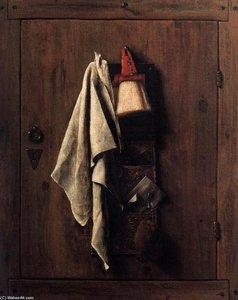
Old Man Looking Through a Window

Hand Made Oil Reproduction

Hand-painted oil on canvas in your size and frame, made to order by our artists. ( Switch to Print Switch to Digital Image)

Collectible Description

Experience the Baroque drama of Samuel Dirksz van Hoogstraten's Old Man Looking Through a Window; explore this masterful study of isolation from the Dutch Golden Age.

Artist Biography

Samuel van Hoogstraten (1627-1678): Dutch Golden Age painter influenced by Rembrandt, known for tromp-l'oeil, perspective boxes & his art treatise.

from ·

Chapter 1

How large should it be?

Slide to change the size; the picture on the left shows the frame at its real width. The proportions of the original are kept.

Standard
custom
CM
INCH

Pick from our preset sizes that match the artwork's original proportions.

width
height

Type the width and the height you need, to fit your frame or your wall. This is hand-painted, so for a size with a different shape the artist can paint a bit more around the picture, or cut a bit — you choose. We send you a digital mockup to approve before the painting starts. The picture shown on this page does not show the real result — only the mockup does.

Chapter 2

How should it arrive?

Choose the edges of the stretched canvas

Choose your frame

Corner sample of the WhiteWrap canvas edge finish, stretched on solid wood bars
White $1
Corner sample of the BlurSideWrap canvas edge finish, stretched on solid wood bars
Blurside $1
Corner sample of the ExtendedWrap canvas edge finish, stretched on solid wood bars
Extended $1
Corner sample of the P118B picture frame: moulded polystyrene, 5 cm wide and 3 cm thick
P118B $10
Corner sample of the P118H picture frame: moulded polystyrene, 5 cm wide and 3 cm thick
P118H $10
Corner sample of the P118W picture frame: moulded polystyrene, 5 cm wide and 3 cm thick
P118W $10
Corner sample of the P438Z picture frame: moulded polystyrene, 5.5 cm wide and 3.5 cm thick
P438Z $10
Corner sample of the P508JH picture frame: moulded polystyrene, 7 cm wide and 3.5 cm thick
P508JH $12
Corner sample of the P508YH picture frame: moulded polystyrene, 7 cm wide and 3.5 cm thick
P508YH $12
Corner sample of the P805H picture frame: moulded polystyrene, 5 cm wide and 3.5 cm thick
P805H $10
Corner sample of the P805Z picture frame: moulded polystyrene, 5 cm wide and 3.5 cm thick
P805Z $10
Corner sample of the P919BZ picture frame: moulded polystyrene, 7 cm wide and 3.5 cm thick
P919BZ $10
Corner sample of the P919G picture frame: moulded polystyrene, 7 cm wide and 3.5 cm thick
P919G $10
Corner sample of the P919XJ picture frame: moulded polystyrene, 7 cm wide and 3.5 cm thick
P919XJ $10
Corner sample of the P959ZH picture frame: moulded polystyrene, 5 cm wide and 3 cm thick
P959ZH $10
Corner sample of the P968JZ picture frame: moulded polystyrene, 6 cm wide and 4 cm thick
P968JZ $12
Corner sample of the W106C picture frame: solid wood, 5 cm wide and 3 cm thick
W106C $8
Corner sample of the W218G picture frame: solid wood, 5 cm wide and 3 cm thick
W218G $10
Corner sample of the W218JH picture frame: solid wood, 5 cm wide and 3 cm thick
W218JH $8
Corner sample of the W218Y picture frame: solid wood, 5 cm wide and 3 cm thick
W218Y $10
Corner sample of the W307PJ picture frame: solid wood, 6 cm wide and 3 cm thick
W307PJ $10
Corner sample of the W316G picture frame: solid wood, 6 cm wide and 3 cm thick
W316G $10
Corner sample of the W316PJ picture frame: solid wood, 6 cm wide and 3 cm thick
W316PJ $8
Corner sample of the W316Y picture frame: solid wood, 6 cm wide and 3 cm thick
W316Y $10
Corner sample of the W398PJ picture frame: solid wood, 5 cm wide and 3 cm thick
W398PJ $8
Corner sample of the W4111J picture frame: solid wood, 6.5 cm wide and 3.5 cm thick
W4111J $10
Corner sample of the W500HY picture frame: solid wood, 7 cm wide and 5 cm thick
W500HY $15
Corner sample of the W500JH picture frame: solid wood, 7 cm wide and 5 cm thick
W500JH $15
Corner sample of the W692G picture frame: solid wood, 8 cm wide and 4 cm thick
W692G $12
Corner sample of the W849H picture frame: solid wood, 5 cm wide and 3 cm thick
W849H $8
Corner sample of the W940BG picture frame: solid wood, 7.5 cm wide and 4.5 cm thick
W940BG $15
Corner sample of the W953PJ picture frame: solid wood, 6 cm wide and 3.5 cm thick
W953PJ $8
Corner sample of the H24-GOLD picture frame: carved wood with gesso, 10 cm wide and 6 cm thick
H24-GOLD $30
Corner sample of the H24-SILVER picture frame: carved wood with gesso, 10 cm wide and 6 cm thick
H24-SILVER $30
Corner sample of the H36-GOLD picture frame: carved wood with gesso, 15 cm wide and 6.5 cm thick
H36-GOLD $45
Corner sample of the H36-SILVER picture frame: carved wood with gesso, 15 cm wide and 6.5 cm thick
H36-SILVER $45
Frame preview
Framed

Moulding: . Overall size with the frame: .

Chapter 3

Who paints it, and should anything change?

Examples of what can be changed: Replace face with customer photo; Add pet (e.g., replace cat with dog); Include hidden message in background; Change background landscape or elements.
After order, OriginalUniqueArt.com team will email client for instructions and provide a mockup preview

Worldwide Delivery () in 3/4 weeks instead of standard 5 weeks. (9 November). No compromise on quality.

Chapter 4

The finishing touches

A nameplate, as in a museum?

Engraved Bronze Plaque Details

This elegant plaque features the artist's name and the title of the artwork, finely engraved for a timeless presentation.

It is made from bronze with a refined, elegant finish. The text is precisely laser-engraved for a sharp and permanent result. Measuring 9x2 cm, the plaque is compact yet easy to read. It's built to be durable and scratch-resistant, offering a professional, museum-quality look. Mounting is simple thanks to the included adhesive backing.

Transparent Acrylic Plaque Details

The plaque includes essential engraved details such as the artist's name, the title of the artwork, the date it was created, the type of media used-like oil on canvas or watercolor-a brief description of the piece, and a QR code that links to the complete artwork information.

It is crafted from clear acrylic, offering a sleek, modern appearance. The text is UV-engraved in black to ensure strong visual contrast. With a size of 10x15 cm, it ensures optimal readability. It comes equipped with two metal hooks for secure wall mounting. The plaque is designed to be weather-resistant, making it suitable for various environments, and it includes interactive features that work seamlessly with smartphone scanning.

Black Acrylic Plaque Details

This elegant plaque includes engraved information such as the artist's name, the title of the artwork, the date it was created, the type of media used (like oil on canvas or watercolor), a short description of the artwork, and a QR code for quick access to more information.

The plaque itself is made from refined black acrylic with a premium finish. The text is laser-engraved in white for high contrast and readability. Its size is 10x15 cm, designed to be easy to read. It comes with two metal hooks for professional mounting. The design is sleek and fits any interior style. It is also weather-resistant and durable, with built-in digital integration for mobile compatibility.

A protective varnish?

When do you need it?

Chapter 5

Your painting, as you ordered it

Old Man Looking Through a Window

Reproduction Medium

Reproduction Size

-

Elite Senior Artist

More detail, finesse, and extra production time

-

Reproduction Frame

-

-

For artworks or reproductions larger than 105 cm (approximately 41 inches) on any side, the frame will be shipped as a kit, disassembled. This method ensures safe delivery and prevents damage during transport.

Professional assembly required - this is not a DIY product.
The kit must be assembled and the canvas stretched by an experienced professional framer, using wood glue (not supplied), a canvas stretching plier and clamps to hold the bars square while the glue dries. Incorrect assembly or uneven canvas tension can permanently damage the artwork and is not covered by our warranty.

  • All solid wood bars are included, precisely cut to size.

  • Assembled with the screws provided, plus wood glue for the corner joints, which is not supplied and must be sourced by your framer.

  • Professional tools are required and not included: a canvas stretching plier (tensioner) and clamps to hold the bars square while the glue dries.

Important:
The corner joints require wood glue, the bars must be held with clamps until the glue is fully dry, and tightening the canvas on the assembled frame requires a canvas stretching plier. None of these are included in the kit. Please arrange an experienced professional framer before ordering this size.

Nameplate

-

-

Protective Varnish

Glossy Varnish (enhances colors, protects against light/moisture)

-

Customize My Artwork

Examples of what can be changed: Replace face with customer photo; Add pet (e.g., replace cat with dog); Include hidden message in background; Change background landscape or elements.

-

Urgent

Worldwide Delivery () in 3/4 weeks instead of standard 5 weeks. (9 November). No compromise on quality.

-

Express Shipping

Worldwide Delivery () in 5 weeks. (16 November).

Included

Total Price

$ 300

Total Price $ 300

Glass option is only available in size under 110 CM

Included with every order

  • Free Worldwide Express Shipping
  • High-Quality Linen Canvas
  • Full Shipping Insurance
  • Customs Tax Refund Guarantee
  • True Color Matching Guarantee
  • 100-Day Return Policy (Defects Only)
  • 100% Money-Back Guarantee
  • Bulk Discount Offer

A Window Into Eternity: The Melancholy Mastery of Van Hoogstraten

In the quiet, shadowed corners of the Dutch Golden Age, few artists possessed the intellectual depth and technical wizardry of Samuel Dirksz van Hoogstraten. His 1653 masterpiece, "Old Man Looking Through a Window," is far more than a mere portrait; it is a profound psychological journey captured in oil. As we gaze upon the weathered face of the subject, we are not just observing an elderly man, but participating in a carefully orchestrated meditation on time, isolation, and the very nature of perception. The painting serves as a threshold between the viewer’s world and a private, somber reality, inviting us to contemplate the fleeting essence of human existence through the lens of Baroque theatricality.

The composition is anchored by a sense of profound confinement. The subject, positioned centrally, peers through the iron bars of a window, his expression etched with a quiet, lingering sadness. This structural element—the window frame—acts as both a physical barrier and a symbolic gateway. Through Van Hoostraten’s expert use of trompe-l'œil, the boundaries between the canvas and reality begin to blur. The artist invites us into a space where the stone carving of the window frame feels tangible, almost heavy with the weight of history, creating an immersive experience that has captivated collectors and art enthusiasts for centuries.

The Alchemy of Light and Shadow

To understand the emotional gravity of this work, one must look to the artist's masterful command of chiaroscuro. Drawing from the profound influence of his mentor, Rembrandt, Van Hoogstraten employs dramatic contrasts between deep, velvety shadows and piercing highlights to sculpt the man’s features. This technique does not merely illuminate the subject; it breathes life into his very soul. The light catches the subtle textures of his beard and the weary creases around his eyes, revealing a narrative of lived experience, hardship, and reflection. Every brushstroke is executed with the precision of a stone carver, rendering the materiality of the scene—from the cold metal of the bars to the soft, aged skin of the man—with astonishing realism.

For the discerning interior designer or collector, this painting offers an unparalleled sense of gravitas. The interplay of light and dark creates a dynamic energy that can anchor a room, providing a focal point that demands contemplation. It is a piece that does not merely decorate a wall but transforms an environment, infusing it with a sense of historical depth and intellectual curiosity. Whether placed in a sunlit gallery or a moody, library-style study, the painting’s ability to manipulate atmosphere makes it a timeless choice for those seeking art that speaks to the complexities of the human condition.

A Legacy of Illusion and Intellect

Beyond its visual splendor, "Old Man Looking Through a Window" stands as a testament to the philosophical currents of seventeenth-century Europe. Van Hoogstraten was not only a painter but a poet and an art theorist who sought to dissect reality itself. This painting is a manifestation of that scientific and artistic inquiry—a study in how light defines form and how perspective shapes our understanding of truth. The subtle gradations of color and the meticulous attention to texture serve as a bridge between the tangible world and the ephemeral nature of thought.

Owning a high-quality reproduction of this work allows one to bring this piece of Dutch heritage into the modern home. It offers an opportunity to surround oneself with the brilliance of the Baroque era, providing daily inspiration through its masterful execution and hauntingly beautiful subject matter. In every detail, from the heavy stone textures to the melancholic gaze of the old man, lies a story of endurance and the eternal search for meaning through the windows of our own perception.

Questions & Answers

Is "Old Man Looking Through a Window" by Samuel Dirksz van Hoogstraten in the public domain, and why?

The copyright status of "Old Man Looking Through a Window" - in the public domain - its copyright has expired - follows from the artist's death in 1678.

What is the creation date of "Old Man Looking Through a Window" by Samuel Dirksz van Hoogstraten?

"Old Man Looking Through a Window" by Samuel Dirksz van Hoogstraten was created in 1653.

From which country does the Baroque Illusion Intellect work "Old Man Looking Through a Window" come?

The Baroque Illusion Intellect work "Old Man Looking Through a Window" was made by an artist born in Netherlands.

More about this painting

Preview AR preview Switch to Print Switch to Digital Image Send
Details Guide Add to favorites Download Similars X-Ray Diaporama Q&A Stats

In numbers

  • 1653the year it was painted
  • 29frames to choose from
  • standard sizes, in its own proportions
  • 5weeks to paint and deliver it
Samuel Dirksz van Hoogstraten

Samuel Dirksz van Hoogstraten

1627 - 1678, Netherlands

Quick facts about Samuel Dirksz van Hoogstraten

  • Full Name: Samuel Dirksz van Hoogstraten
  • Nationality: Dutch
  • Date Of Birth: 1627
  • Date Of Death: 1678
  • Place Of Birth: Dordrecht, Netherlands
  • Notable Artworks:
    • Portrait of Mathys van den Brouck
    • The Anemic Lady
    • View of a Corridor
    • Man at a Window
    • Vanitas
  • Artistic Movement Or Style: Dutch Golden Age, Baroque
  • Artists Who Influenced This Artist:
    • Rembrandt
    • Dirk van Hoogstraten
  • Artists Or Movements Influenced By This Artist:
    • Aert de Gelder
    • Cornelis van der Meulen
    • Godfried Schalcken

Artist Biography

A Master of Illusion and Intellect: The World of Samuel Dirksz van Hoogstraten

Samuel Dirksz van Hoogstraten, a name resonating with the ingenuity of the Dutch Golden Age, was far more than simply a painter. Born in Dordrecht in 1627 and passing away there in 1678, he embodied the era’s spirit of intellectual curiosity, artistic innovation, and burgeoning mercantile power. He wasn't merely recording reality on canvas; he was dissecting it, playing with perception, and exploring the very nature of representation itself. Van Hoogstraten distinguished himself not only through his skillful brushwork but also as a poet and a profound art theorist, leaving behind a legacy that extends beyond the visual realm into the world of ideas. His journey began within the family workshop of his father, Dirk van Hoogstraten, laying a foundational understanding of artistic principles before venturing to Amsterdam – the beating heart of Dutch artistry in the 17th century. It was there he entered the esteemed studio of Rembrandt van Rijn, an experience that would indelibly shape his early style and approach to light and shadow.

From Rembrandt’s Shadow to Independent Vision

The influence of Rembrandt is undeniably present in Van Hoogstraten's initial works. A portrait from 1645, now residing in the Liechtenstein collection in Vienna, serves as a clear testament to this apprenticeship. However, unlike many students who remained tethered to their master’s style, Van Hoogstraten possessed an insatiable desire for experimentation and a restless spirit that propelled him beyond imitation. He wasn't content to simply replicate Rembrandt’s chiaroscuro; he sought to deconstruct it, analyze its effects, and ultimately forge his own unique artistic voice. This pursuit led him on extensive travels throughout Europe – to Vienna, Rome, and London – exposing him to diverse artistic traditions and fueling his intellectual growth. These journeys weren't merely sightseeing expeditions; they were immersive studies in architecture, perspective, and the prevailing aesthetic sensibilities of each locale. Upon returning to Dordrecht, he married in 1656 and assumed a civic role as provost of the mint, demonstrating a multifaceted talent that extended beyond the artistic sphere. This period saw him further refine his skills, moving towards an increasingly sophisticated understanding of illusionism and spatial representation.

Trompe-l’œil, Perspective Boxes, and the Art of Deception

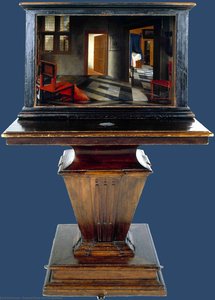
Van Hoogstraten's artistic prowess truly blossomed in his mastery of trompe-l’œil, a technique that translates to “deceive the eye.” His still lifes weren’t simply arrangements of objects; they were meticulously crafted illusions designed to blur the boundaries between reality and representation. He imbued seemingly haphazard collections with deeper symbolic meanings, inviting viewers to contemplate the transient nature of life and the deceptive allure of material possessions. Simultaneously, he became renowned for his creation of “peepshows” or "perspective boxes"—ingenious devices that offered immersive three-dimensional views into miniature worlds. One such box, currently housed at the National Gallery in London, recreates the interior of a typical Dutch house with astonishing realism when viewed through strategically placed peepholes. These weren’t mere novelties; they were sophisticated explorations of perspective and spatial illusion, demonstrating Van Hoogstraten's profound understanding of how the human eye perceives depth and dimension. His architectural paintings, such as his 1652 view of the Vienna Hofburg, further showcased his technical skill and attention to detail.

A Theorist’s Legacy: ‘Inleyding tot de hooge schoole der schilderkonst’

However, Samuel van Hoogstraten's contribution extends far beyond his paintings and perspective boxes. He was a dedicated art theorist who sought to codify the principles of painting in his magnum opus, Inleyding tot de hooge schoole der schilderkonst: anders de zichtbaere werelt (Introduction to the Academy of Painting, or The Visible World), published in 1678. This ambitious treatise stands as one of the most comprehensive and intellectually rigorous explorations of art theory produced in the Dutch Republic during the 17th century. Van Hoogstraten delved into issues of pictorial persuasion, illusionism, the moral responsibilities of the artist, and the relationship between painting and philosophy, drawing upon a vast range of ancient and modern sources. He built upon the foundations laid by Karel van Mander in his earlier work, *Het Schilder-Boeck*, seeking to create a systematic framework for understanding and practicing the art of painting. His writings reflect both international influences gleaned from his travels and contemporary debates within Dutch artistic circles. It was this dedication to articulating the principles behind his craft that cemented his place as a pivotal figure in the history of art theory.

A Lasting Influence

Van Hoogstraten’s influence resonated through subsequent generations of artists, notably through his pupils – including his brother Jan van Hoogstraten, Aert de Gelder, Cornelis van der Meulen, and Godfried Schalcken. His legacy is further preserved in the writings of Arnold Houbraken, one of his students who penned a biography of the artist that serves as a primary source of information about his life and work. Samuel Dirksz van Hoogstraten was not simply a painter; he was a polymath—an artist, poet, theorist, and administrator—who embodied the intellectual ferment of the Dutch Golden Age. His innovative techniques, profound insights into perception, and dedication to articulating the principles of art continue to captivate and inspire audiences today, solidifying his position as a master of illusion and intellect whose work transcends time.

Quick Facts

  • Title: Old Man Looking Through a Window
  • Year: 1653
  • Artist: Samuel Dirksz van Hoogstraten
  • Notable elements or techniques: Illusionistic Window Framing
  • Subject or theme: Isolation and Reflection

Art Quiz

There is only one correct answer for each question.

Question 1:
What artistic style is “Old Man Looking Through a Window” primarily associated with?
Question 2:
The painting depicts an old man gazing through the bars of a window. What emotion is conveyed by his expression?
Question 3:
In what city was Samuel Dirksz van Hoogstraten born and where did he spend most of his artistic career?
Question 4:
What is a notable characteristic of Van Hoogstraten’s approach to artmaking that distinguishes him from other painters of his time?
Question 5:
The painting’s composition utilizes multiple windows. What does this visual element symbolize in terms of the subject's experience?