
 Preview
 Send
Send Share
Share
 Details
 Guide
Guide

 Download
 Similars
 X-Ray
X-Ray Diaporama
 Q&A
Q&A Stats
StatsInvisibile


 Read More
The artwork displayed on this page is protected by copyright law, which means we cannot legally create or sell an identical reproduction. This protection is enforced under international agreements such as the Berne Convention and by national laws, including those outlined by the U.S. Copyright Law - Title 17.
This method fully complies with copyright regulations because it does not involve copying or duplicating the protected artwork. Instead, it is a creative reinterpretation - a new painting that is influenced by the original but not identical to it.
Giclée / Art Print
Museum-quality giclée or canvas print with fast production and flexible finish options. ( Buy Hand Made Painting Switch to Digital Image)




P118B $10

P118H $10

P118W $10

P438Z $10

P508JH $12

P508YH $12

P805H $10

P805Z $10

P919BZ $10

P919G $10

P919XJ $10

P959ZH $10

P968JZ $12

W106C $8

W218G $10

W218JH $8

W218Y $10

W307PJ $10

W316G $10

W316PJ $8

W316Y $10

W398PJ $8

W4111J $10

W500HY $15

W500JH $15

W692G $12

W849H $8

W940BG $15

W953PJ $8




Pick from our preset sizes that match the artwork's original proportions.

Type the width and the height you need, to fit your frame or your wall. A print can only be cut, never made bigger than the picture, so a size with a different shape loses a part of the image. We send you a digital mockup to approve before we print anything. The picture shown on this page does not show the real cut — only the mockup does.
Worldwide Delivery () in 2 weeks instead of standard 4/5 weeks. (1 November)

Free Worldwide Express Shipping

High-Quality Linen Canvas

Full Shipping Insurance

Customs Tax Refund Guarantee

True Color Matching Guarantee

100-Day Return Policy (Defects Only)

100% Money-Back Guarantee

Bulk Discount Offer
 Glass option is only available in size under 110 CM

Invisibile
Giclée / Art Print
Reproduction Size
-


Total Price
$ 81
Salvatore Ferragamo: The Invisible Shoe – A Legacy of Innovation
Salvatore Ferragamo’s “Invisible Sandal,” created in 1947, transcends mere footwear; it embodies the spirit of a bygone era and represents a pivotal moment in the history of Italian design. More than just aesthetically pleasing, this sandal exemplifies Ferragamo's revolutionary approach to shoemaking—a philosophy rooted in meticulous observation and driven by an unwavering commitment to comfort and functionality.
- Subject Matter: The sandal itself is deceptively simple – a pair of sleek black leather sandals adorned with silver straps. However, beneath the surface lies a profound consideration for human anatomy. Ferragamo’s research into foot biomechanics informed every aspect of its design.
- Style & Technique: Ferragamo's signature style—characterized by sculptural forms and innovative materials—is evident in the sandal’s construction. He pioneered techniques like the “shell” sole, which distributes pressure evenly across the foot, dramatically improving comfort for wearers. This technique was revolutionary at the time, challenging conventional shoe manufacturing practices.
- Historical Context: Crafted during World War II and immediately following, "Invisible Sandal" reflects the anxieties of a period marked by scarcity and uncertainty. Yet, Ferragamo’s unwavering belief in craftsmanship and beauty served as an antidote to the pervasive gloom. It represents a defiant assertion of artistic vision amidst challenging circumstances—a testament to resilience and creativity.
- Symbolism: The silver straps symbolize elegance and sophistication, mirroring Ferragamo's reputation for elevating fashion with luxurious materials and meticulous attention to detail. Simultaneously, their subtle shimmer speaks to the transformative power of innovation – a quiet revolution within the realm of footwear.
- Emotional Impact: Wearing “Invisible Sandal” evokes feelings of lightness, freedom, and understated confidence. It’s more than just footwear; it's an embodiment of Ferragamo’s ethos—a celebration of form following function and a profound respect for human comfort. The sandal continues to inspire designers today who strive to achieve similar levels of innovation and artistry.
Ferragamo’s enduring legacy resides not only in his groundbreaking designs but also in his unwavering dedication to pushing the boundaries of what was considered possible. “Invisible Sandal” stands as a poignant reminder that true beauty lies in both form and function—a timeless masterpiece crafted with intellect, compassion, and an unparalleled passion for transforming everyday objects into extraordinary experiences.
Questions & Answers
Did "Invisibile" stay in its artist's homeland?
Yes - the artwork is kept in the artist's home country. Salvatore Ferragamo was born in Italy, and the original "Invisibile" is held in a museum in Italy.
Is there a slideshow for "Invisibile" by Salvatore Ferragamo?
A slideshow is available: the Diaporama page of "Invisibile" by Salvatore Ferragamo.
How is the palette of "Invisibile" by Salvatore Ferragamo described?
"Invisibile" by Salvatore Ferragamo uses a pastels color palette. The palette summarizes the work's overall color character.
Artist Biography
A Legacy Forged in Leather: The Life and Vision of Salvatore Ferragamo
Salvatore Ferragamo, a name synonymous with elegance, innovation, and the golden age of Hollywood glamour, was born into humble beginnings in 1898 in Bonito, Italy. Far from the glittering world he would come to define, young Salvatore’s early life was steeped in rural simplicity, yet it was here that his extraordinary journey began. The eleventh of fourteen children, he displayed an innate fascination with shoemaking, spending countless hours observing the local cobbler – a craft initially discouraged by his father who considered it a trade of low social standing. However, young Salvatore’s passion proved unyielding; at just nine years old, he crafted his first pair of shoes for his sister's First Communion, a testament to his burgeoning talent and determination. This act wasn’t merely the creation of footwear; it was the forging of a destiny. It signaled the birth of an artistic vision that would reshape the landscape of fashion.From Boston to Hollywood: A Transatlantic Ascent
Driven by ambition, Ferragamo emigrated to America in 1915, joining his brothers in Boston before eventually gravitating towards the burgeoning film industry of California. This move proved pivotal. He initially established a repair shop, but quickly recognized an unmet need for exquisitely crafted footwear tailored to the demands of the silver screen. Hollywood’s stars – Lillian Gish, Mary Pickford, and soon, countless others – became his devoted clientele. Ferragamo wasn't simply making shoes; he was crafting illusions, enhancing the on-screen personas that captivated a nation. He understood the power of visual storytelling and how footwear could contribute to a character’s narrative. This understanding led him to study anatomy at the University of Southern California, believing that true comfort and elegance stemmed from a deep comprehension of the foot's structure. His innovative use of steel shanks for arch support revolutionized shoe construction, prioritizing both aesthetics and well-being – a hallmark of his design philosophy.Returning Home: Florentine Renaissance and Artistic Flourishing
In 1927, Ferragamo returned to his native Italy, settling in Florence—a city steeped in artistic tradition and craftsmanship. He established a workshop that quickly became a laboratory for innovation. Despite facing financial hardship during the Great Depression, filing for bankruptcy in 1933, he persevered, driven by an unwavering belief in his vision. Re-establishing his business in 1938 within the historic Palazzo Spini Feroni, Ferragamo embarked on a period of prolific creativity. He fearlessly experimented with unconventional materials – cork, fish skin, even metal – pushing the boundaries of what was considered possible in shoemaking. This willingness to challenge convention became his signature. His designs weren’t merely functional objects; they were sculptural works of art, reflecting a deep appreciation for history and an audacious spirit of modernity. The iconic wedge heel, born from wartime material shortages, stands as a testament to his resourcefulness and ingenuity, earning him the prestigious Neiman Marcus Award in 1947.A Lasting Impression: Legacy and Influence
Salvatore Ferragamo’s impact extends far beyond the realm of footwear. He founded Salvatore Ferragamo S.p.A., a luxury goods empire that continues to thrive today, operating hundreds of boutiques worldwide. While celebrated for his designs for Hollywood icons like Marilyn Monroe – he created her signature stiletto heel – and Audrey Hepburn, his influence resonates in contemporary fashion. His commitment to anatomical comfort, innovative materials, and sculptural forms paved the way for generations of designers. The Ferragamo Museum in Florence serves as a living tribute to his legacy, showcasing not only his groundbreaking shoe designs but also his broader artistic interests, including collections like La Collezione Bonello (Malta) and the Palumbo-Fossati Collection (Venice). His work transcends mere fashion; it is a celebration of artistry, innovation, and the enduring power of Italian craftsmanship. Though he passed away in 1960, Salvatore Ferragamo’s spirit continues to inspire, reminding us that true style lies not just in what we wear, but in the story it tells.Notable Works & Collections
- Pollicino: A vibrant Pop Art shoe sculpture showcasing bold color and playful design.
- Sandal (1952): An iconic example of luxurious craftsmanship and geometric design, embodying the elegance of the era.
- Prototipo di sandalo (1938): A stunning antique shoe demonstrating intricate embroidery and artisanal skill.
- La Collezione Bonello (Malta): A curated collection featuring works by masters like Caravaggio and Alberto Morrocco, reflecting Ferragamo’s appreciation for fine art.
- The Palumbo-Fossati Collection (Venice, Italy): A renowned assembly of European paintings spanning centuries, highlighting Ferragamo's broader cultural interests.

Salvatore Ferragamo
1898 - 1960 , Italy
Quick Facts
- Full Name: Salvatore Ferragamo
- Nationality: Italian
- Date Of Birth: 1898
- Date Of Death: 1960
- Place Of Birth: Bonito, Italy
- Notable Artworks:
- Pollicino
- Sandal
- Prototipo di sandalo.
- Artistic Movement Or Style: Fashion design
- Artists Or Movements Influenced By This Artist: Shoe designers
Related Articles
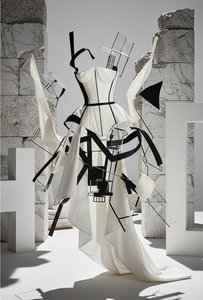
Gianfranco Ferré: Deconstructing Haute Couture – A Legacy of Architectural Form
Explore the revolutionary world of Gianfranco Ferré, 'the architect of fashion.' Discover his architectural approach to haute couture, iconic Dior designs, and lasting influence on luxury style. A deep dive for collectors & enthusiasts.
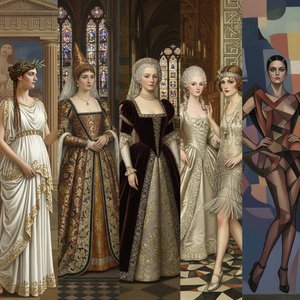
Style Through the Ages: Iconic Artworks That Defined the Evolution of Fashion Design
Explore the breathtaking intersection of fine art and high fashion. Discover how iconic masterpieces from Art Deco to Impressionism have shaped the world of luxury couture and timeless design in this curated visual journey.
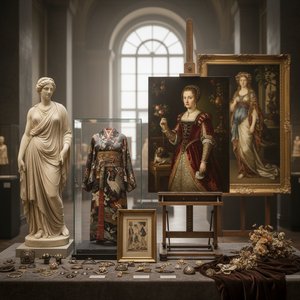
Draped Narratives: Fashion as Symbol & Subject in Historical Art
Explore the fascinating history of fashion as a symbol of power & status in art! Discover masterpieces from Gainsborough to Tissot and learn how clothing shaped societal narratives. Find museum-quality reproductions at OriginalUniqueArt.

Style on Canvas: The Timeless Allure of Fashion Illustration Artworks
Discover the exquisite world of fashion illustration art. From Art Deco elegance to bespoke oil reproductions, explore how timeless sartorial beauty transforms luxury interiors through masterfully crafted canvas works and curated historical masterpieces.

The Lens of Luxury: A Visual Journey Through the Evolution and Artistry of Fashion Photography
Embark on a visual journey through the evolution of fashion photography. Discover how masters like Gianfranco Ferré blended geometry, surrealism, and texture to redefine high-fashion art for collectors and connoisseurs of luxury imagery.


