Preview
 Send
Send Share
Share
 Details
 Guide
Guide

 Download
 Similars
 X-Ray
X-Ray Diaporama
 Q&A
Q&A Stats
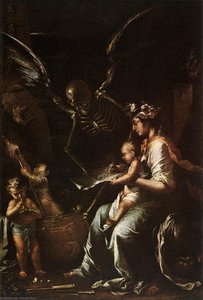
StatsAstraea Leaves The Earth


 Read More
Giclée / Art Print
Museum-quality giclée or canvas print with fast production and flexible finish options. ( Buy Hand Made Painting Switch to Digital Image)




P118B $10

P118H $10

P118W $10

P438Z $10

P508JH $12

P508YH $12

P805H $10

P805Z $10

P919BZ $10

P919G $10

P919XJ $10

P959ZH $10

P968JZ $12

W106C $8

W218G $10

W218JH $8

W218Y $10

W307PJ $10

W316G $10

W316PJ $8

W316Y $10

W398PJ $8

W4111J $10

W500HY $15

W500JH $15

W692G $12

W849H $8

W940BG $15

W953PJ $8




Pick from our preset sizes that match the artwork's original proportions.

Type the width and the height you need, to fit your frame or your wall. A print can only be cut, never made bigger than the picture, so a size with a different shape loses a part of the image. We send you a digital mockup to approve before we print anything. The picture shown on this page does not show the real cut — only the mockup does.
Worldwide Delivery () in 2 weeks instead of standard 4/5 weeks. (2 November)

Free Worldwide Express Shipping

High-Quality Linen Canvas

Full Shipping Insurance

Customs Tax Refund Guarantee

True Color Matching Guarantee

100-Day Return Policy (Defects Only)

100% Money-Back Guarantee

Bulk Discount Offer
 Glass option is only available in size under 110 CM

Astraea Leaves The Earth
Giclée / Art Print
Reproduction Size
-


Total Price
$ 81
A Celestial Departure: The Drama of Astraea
In the grand, turbulent theater of the Baroque era, few moments capture the tension between the divine and the mortal as poignantly as Salvator Rosa’s 1665 masterpiece, Astraea Leaves The Earth. This monumental oil on canvas is far more than a mere mythological illustration; it is a profound symphony of loss, a visual lament for a vanishing age of innocence. As the goddess Astraea—the personification of justice and purity—ascends into the celestial heavens to become the constellation Virgo, she leaves behind a world tarnished by human frailty. The painting captures that precise, heart-wrenching instant of transition, where the light of virtue retreats from the terrestrial plane, leaving humanity to grapple with its own shadows.
The narrative depth of the work lies in its allegorical weight. Rosa, a painter known for his rebellious and often dark philosophical outlook, uses this myth to reflect on the moral decay of his time. The figures anchored to the earth are not merely spectators; they are participants in a tragedy of their own making. Their outstretched arms and upward gazes convey a desperate, futile longing to retain the divine presence, creating an emotional resonance that speaks to anyone who has ever felt the sting of irreversible change or the weight of personal responsibility.
A Masterclass in Baroque Chiaroscuro
Technically, Astraea Leaves The Earth is a triumph of the Baroque style, heavily influenced by the dramatic chiaroscuro pioneered by Caravaggio. Rosa employs a masterful interplay of light and shadow to direct the viewer's soul through the composition. A radiant, ethereal light emanates from Astraea herself, pulling the eye upward toward the swirling, heavenly clouds, while deep, velvety shadows envelop the figures below. This stark contrast does more than create depth; it height precisely defines the spiritual hierarchy of the scene, separating the luminous heavens from the murky, earthbound struggles of man.
The artist’s technique is characterized by a dynamic, almost restless energy. Using loose, expressive brushstrokes, Rosa breathes life into the textures of the piece—from the soft, billowing drapery of the ascending goddess to the rugged, atmospheric clouds that populate the sky. The composition follows a powerful pyramidal structure, providing a sense of stability amidst the surrounding chaos. This geometric strength allows the diagonal lines of reaching limbs and drifting vapors to propel the viewer’s gaze in a continuous, upward motion, mimicking the very ascension depicted on the canvas.
A Palette of Earth and Ether
For the discerning collector or interior designer, the color palette of this work offers a sophisticated balance of warmth and transcendence. The lower portion of the painting is grounded in rich, earthy tones—ochre, deep browns, and muted reds—which symbolize the heavy, material reality of human existence. These colors lend the figures a tactile, visceral presence that anchors the composition.
However, as the eye ascends, this terrestrial weight gives way to a celestial tapestry of blues, grays, and brilliant whites. The shimmering gold accents within the light serve as a divine punctuation mark, suggesting the eternal nature of justice even as it departs the earth. This transition from the somber to the sublime makes the artwork an extraordinary centerpiece for any curated space. Whether placed in a gallery setting or a thoughtfully designed study, Astraea Leaves The Earth provides a profound focal point that invites contemplation, offering a timeless reflection on the eternal struggle between our highest ideals and our earthly limitations.
Questions & Answers
What is the recommended use of a print of "Astraea Leaves The Earth"?
The recommended use of a print of "Astraea Leaves The Earth" is accent.
What space is suggested for "Astraea Leaves The Earth" by Salvator Rosa?
"Astraea Leaves The Earth" by Salvator Rosa is recommended for a living room. This suggestion is based on the work's subject, colors and mood.
How do I download the image of "Astraea Leaves The Earth" by Salvator Rosa?
A download is available for "Astraea Leaves The Earth": the artwork's Download page offers a high-resolution digital image download.
Artist Biography
**early life and training**
salvator rosa, an italian baroque painter, poet, and printmaker, was born in arenella, naples, on either june 20 or july 21, 1615. his mother, giulia greca rosa, was a member of one of the greek families of sicily. despite his father's wishes for him to become a lawyer or priest, salvator showed a preference for the arts from an early age.**artistic career**
salvator rosa's artistic career was marked by his unorthodox and extravagant style, which set him apart from his contemporaries. he was active in naples, rome, and florence, and his work was influenced by the naturalism of ribera and the classicism of poussin. however, he refused to be tied down by any particular style or movement.- pythagoras emerging from the underworld (kimbell art museum, fort worth, united states), one of his most famous works, showcases his unique blend of philosophical and artistic themes.
- his the baptism of the eunuch (chrysler museum of art, norfolk, united states) demonstrates his ability to infuse high drama into even minor bible stories.
**influences and legacy**
salvator rosa's work had a significant impact on the development of baroque art. his influence can be seen in the works of later artists, such as luca giordano, who continued to push the boundaries of artistic expression. **important links:** salvator rosa's profile on OriginalUniqueArt wikipedia: salvator rosa pythagoras emerging from the underworld on OriginalUniqueArt**conclusion**
salvator rosa's life and work continue to fascinate art lovers and historians alike. his unorthodox style and perpetual rebellion against the norms of his time have cemented his place in the annals of baroque art. as a painter, poet, and printmaker, he remains an enigmatic figure, and his work continues to inspire new generations of artists and art enthusiasts.
Salvator Rosa
1615 - 1673 , Italy
Quick Facts
- Full Name: Salvator Rosa
- Nationality: Italian
- Date Of Birth: 1615
- Date Of Death: 1673
- Place Of Birth: Arenella, Italy
- Notable Artworks:
- View of the Gulf of Salerno
- Study for 'Il Genio di Rosa
- Grotto with Cascades
- Artistic Movement Or Style: Baroque art
- Artists Who Influenced This Artist: ['José de Ribera']
- Artists Or Movements Influenced By This Artist: ['Luca Giordano']
Related Articles
OriginalUniqueArt.com F.A.Q.: Premium Giclée Canvas Prints – Archival Quality & Vivid Detail
Discover the technical excellence of OriginalUniqueArt.com's premium Giclée prints. Featuring 12-color archival pigments and museum-grade canvas, our prints offer unparalleled vivid detail and longevity for the discerning art collector seeking world-class reproductions.